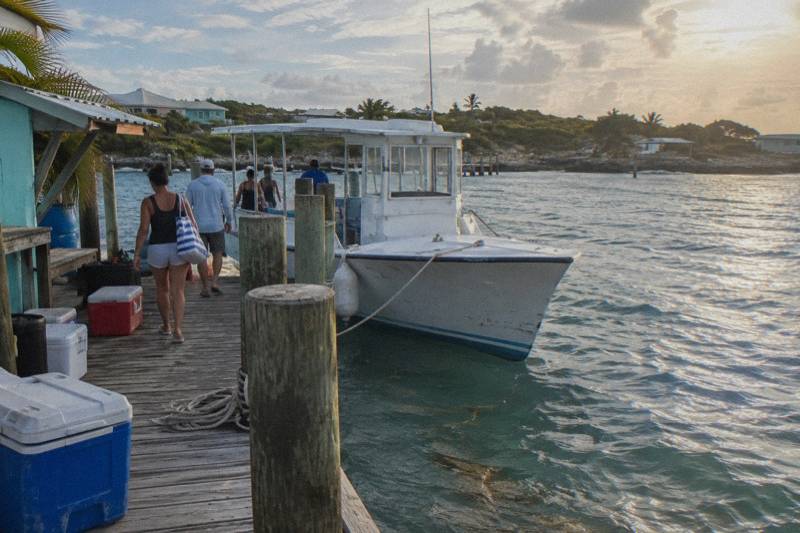
Can You Still Swim With The Pigs In The Bahamas?
Yes, the swimming pigs are still there and tours still run. Current status, the operator rules that apply, and what a day at Pig Beach costs now.
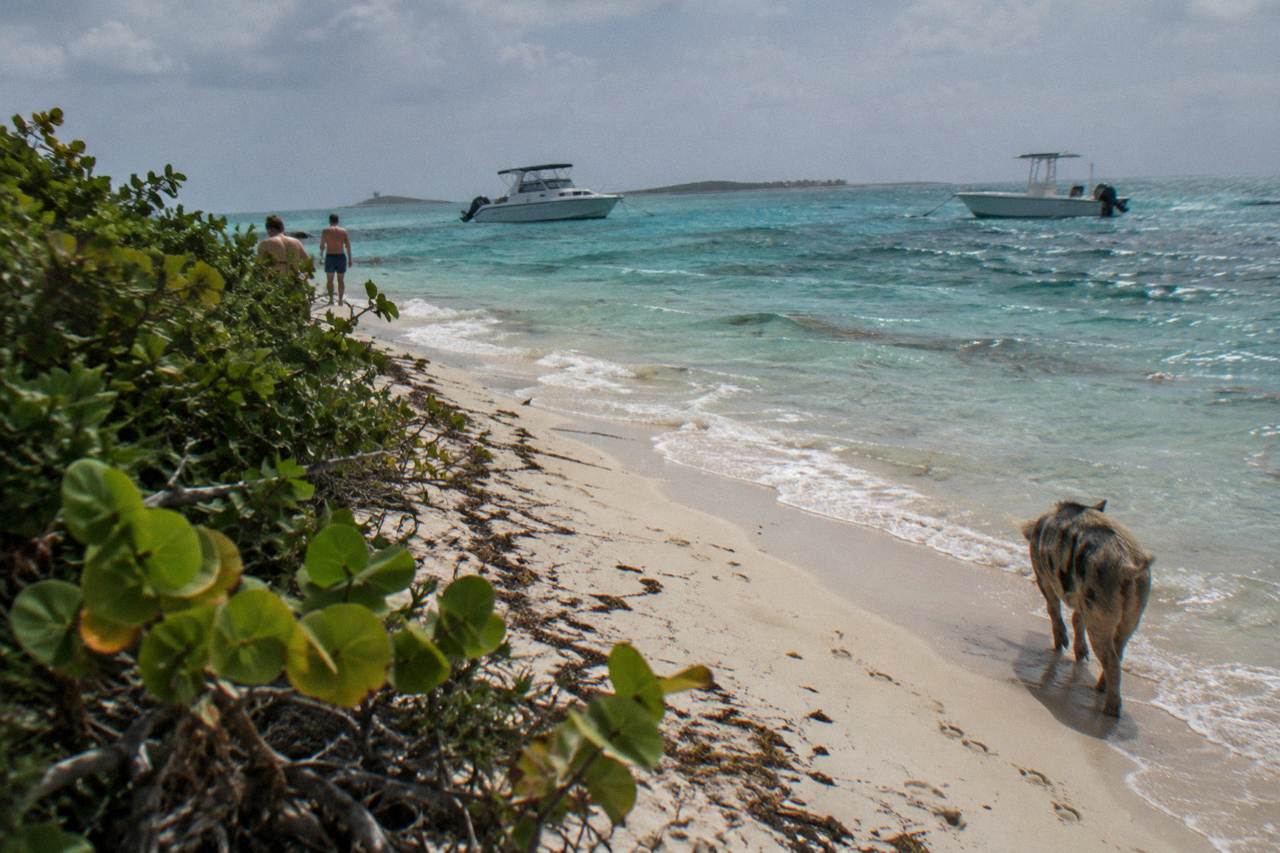
Yes. The pigs are still at Big Major Cay, tours still run year round from both Nassau and Great Exuma, and no official source bans the experience. The Bahamas Ministry of Tourism still actively promotes the pigs, describing about 20 pigs and piglets on the uninhabited cay. What exists instead of a ban is a set of operator-run feeding and behaviour rules on the sand.
That is the short answer, and it is worth being direct about it because the question keeps coming up. Every few months a rumour circulates that the pigs have been removed, that the beach has closed, or that a new law forbids feeding them. The official Bahamas swimming pigs page still presents Big Major Cay as the home of the experience and reachable by boat tour from Nassau or the Exumas, which is not the behaviour of a tourism board promoting something that no longer exists. The colony's origin remains unknown, the page notes, but its present is very much intact.
What does exist is real change around the edges. Feeding rules tightened after pig deaths in 2017 were linked to sand ingestion, and operators now run their beaches with more structure than a decade ago. Hurricane season still bends schedules between June and November. And the range of ways to actually get to the pigs has widened, from $330-ish powerboat days, private-island pigs, to fly-in options and private charters. None of that adds up to a closure. It adds up to a maturing attraction.
For the practical version of all this, the swimming pigs Exuma tour guide on this site breaks down every departure point and stop in detail.
Where Are The Swimming Pigs Now?
The original colony is still on Big Major Cay, the uninhabited cay also called Pig Beach, about 10 to 15 minutes by boat from Staniel Cay in the Exuma Cays. Nothing has moved and nothing has been dispersed. A second set of pig experiences exists closer to Nassau on islands such as Rose Island and Pearl Island, but those pigs are Nassau products with separate animals, not the original colony.
The distinction matters because a lot of confusion about "are the pigs still there" comes from mixing the two. The Big Major Cay pigs are the ones in the famous photographs, the ones in shallow turquoise water beside a white sand spit. The official tourism page puts the colony at roughly 20 pigs and piglets today. They are reachable only by boat, and the way most visitors meet them is a full day trip, roughly 8 hours from Nassau by speedboat, or a shorter ride from Great Exuma or Staniel Cay itself.
Around the original colony, the ecosystem of supporting stops has not gone anywhere either. Thunderball Grotto, the flooded cave named after the Bond film, still sits a short hop away. Compass Cay still has its nurse sharks at the marina dock. Bitter Guana Cay still carries its protected rock iguanas. A pigs tour in 2026 is almost never just a pigs tour; it is an island-hopping loop that uses Pig Beach as its anchor stop.
If you are booking a fly-in pigs trip in that period, the flight logistics may look slightly different from the standard description, and the booking page will state the current arrangement. The pigs themselves, meanwhile, were unaffected; they are, after all, the ones without flight schedules.
What Rules Apply At Pig Beach?
No government regulation on feeding the pigs was found on official Bahamas sources, so there is no official law to quote. What exists is a consistent set of operator-reported rules: feed only food the crew provides, feed in the water or by hand and never on the sand, let pigs approach you rather than chasing them, never pick up piglets, and carry all trash back off the beach.
Those rules trace back to a real event. In 2017 a number of pigs died, and sand ingestion was linked to the deaths, which is exactly why the "never feed on the sand" rule exists in its current form. The concern is straightforward: food dropped or handed out on the beach gets eaten together with sand, and sand accumulates in the animals. Feeding in the water, with operator-provided fruits and vegetables, avoids that. Crews enforce the rules on the beach itself, and captains set the specifics for their own groups.
The iguanas and nurse sharks on neighbouring stops follow the same pattern of operator-run guidance rather than written law. Iguanas on Bitter Guana Cay and similar cays are protected species, named as such on the official ecotourism page, and the standard practice operators describe is offering grapes on the end of a stick rather than by hand. At Compass Cay, visitors get a safety briefing before entering the nurse shark area: no stepping on the sharks, no grabbing or chasing, no sudden movements.
A practical reading of all this: the rules are behavioural, not bureaucratic. You will not be handed a permit application or asked for a licence number. You will be handed a slice of fruit by a crew member and told where to stand. Follow the captain's instructions and you are, in effect, complying with everything that regulates the site.
What Does A Swimming Pigs Tour Day Look Like?
A standard Nassau pigs day runs roughly 8 hours: early morning check-in, a fast boat ride of about two hours each way across open water to the northern Exuma Cays, then a loop of stops that typically includes Pig Beach, an iguana cay, Thunderball Grotto, a nurse shark or sandbar stop, and lunch, returning to Nassau by late afternoon.
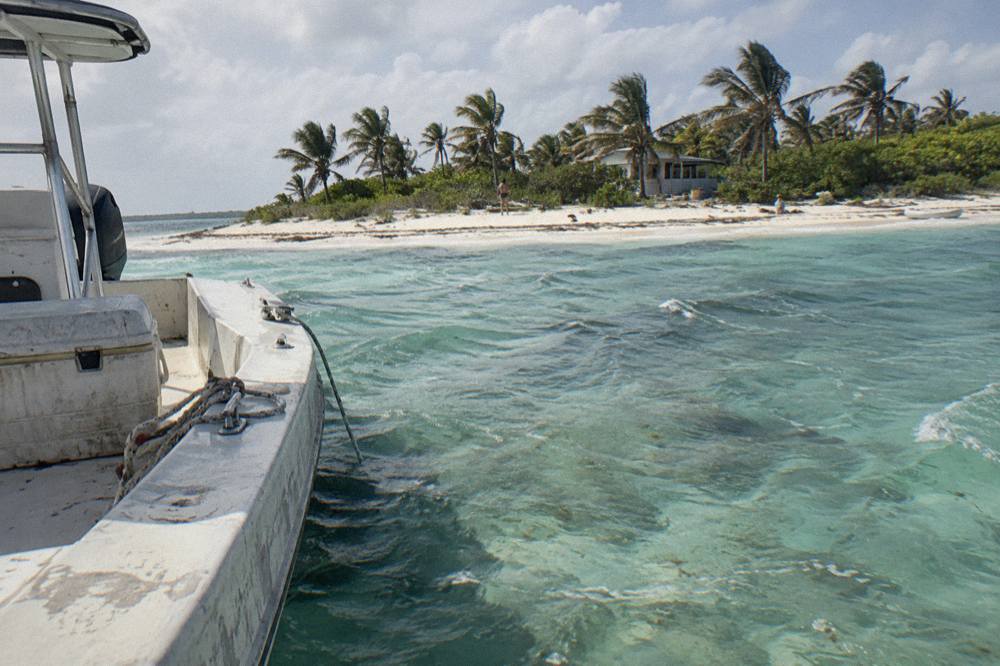
The Nassau version is the long-format experience. Check-in tends to sit around 8:45 in the morning at the Paradise Island ferry terminal area, with departure near 9 and return near 4:30 in the afternoon. The ride out is a genuine offshore run, and that two-hour each-way crossing is the trade you make for not having to fly. Because the day is long and starts early, several listings note that cruise ship passengers with tight port times may not be suitable for it.
The stops themselves are short by design. Pig Beach visits typically run somewhere between 20 and 60 minutes depending on the operator and how many boats are sharing the spit. The grotto snorkel is tide-dependent, calmest within an hour or two of low water. The iguana stop is usually 15 to 30 minutes. Add a beach or sandbar leg and lunch, and the day fills itself.
The Great Exuma version runs differently. Departing from Barraterre Dock on Great Exuma, full-day trips to the original colony at Big Major Cay still run around 8 hours because the distance north is real, but half-day options from Great Exuma often visit closer pig cays such as White Bay Cay instead. And the fly-in version compresses everything: a flight of roughly 45 minutes from Nassau to Staniel Cay, then a 10 to 15 minute boat hop, which is why fly-in guests often reach the beach in quieter morning windows than the speedboat crowd arriving at midday.
For a full comparison of the formats side by side, see how to get to Exuma and the Exuma boat tours compared guide.
How Much Does It Cost To Swim With The Pigs Now?
Speedboat day trips from Nassau to the pigs currently cluster between roughly $330 and $500 per person depending on inclusions, with the most reviewed options from $378 to $438.90 per person. Fly-in premium days start at $838.35 per person, and private charters run from $6,000 per group upward. Pig Beach itself costs nothing to stand on.
Here is what the current pricing landscape looks like across the main bookable formats, so you can compare trips before booking a day on the water:
| Tour | Departure | Duration | Rating | Price |
|---|---|---|---|---|
| Exuma Island Hopping Swimming Pigs Tour with Lunch | Nassau | ~8 hours | 4.8 across 689 reviews | from $438.90 per person |
| Exuma Powerboat Tour from Nassau with Swimming Pigs | Nassau | ~8 hours | 4.8 across 536 reviews | from $439 per person |
| Exuma Day Away, Original Swimming Pigs Excursion | Nassau | ~8 hours 30 minutes | 4.5 across 474 reviews | from $378 per person |
| Original Exuma Powerboat Adventures | Nassau | ~9 hours | 4.7 across 553 reviews | from $328.90 per person |
| Exuma Island and Cays Tour | Barraterre Dock, Great Exuma | ~7 hours 30 minutes | 4.9 across 111 reviews | from $330 per person |
| Exuma Elite Escape, 7-Stop Luxury Tour | Nassau | ~6 hours | 4.8 across 580 reviews | from $850 per person |
| Exclusive Fly-In Trip for a Premium Beach Day | Nassau | ~7 hours | 4.7 across 138 reviews | from $838.35 per person |
| Exuma Cays Private Boat Charter | Nassau | ~8 hours | not rated | from $6,000 per group |
The pattern to read from that table: the sub-$350 tier trades down on stops or format, the $378 to $439 band is where the full classic day lives, and from $838.35 upward you are buying time efficiency or privacy rather than a different beach. Private options are priced per group or per boat, not per person, so the per-head math on a charter of six or eight can land closer to the shared-tour range than the sticker suggests. More of these guides are collected on Exuma Tours.
What the price covers is the boat and the crew, with lunch on several full-day tours. Snorkel gear and landing fees vary from tour to tour, so check what each listing includes before booking. Alcoholic drinks appear on some listings and not others, so check the inclusions line on the booking page before assuming. The "from" figure is also a moving floor, not a fixed price; seasonal demand shifts it.
If you want the full cost anatomy, including what is and is not bundled, the how much does swimming with pigs cost guide takes it apart line by line.
Does Weather Or Season Stop The Pigs Tours?
Tours run all year, but the Atlantic hurricane season from 1 June to 30 November, peaking August through October, brings the rough-sea days when boats reschedule or cancel. Outside that window, December through May is the calmer, clearer-water period. In late October the sea around Exuma was reading about 83.3 degrees Fahrenheit, warm by any standard.
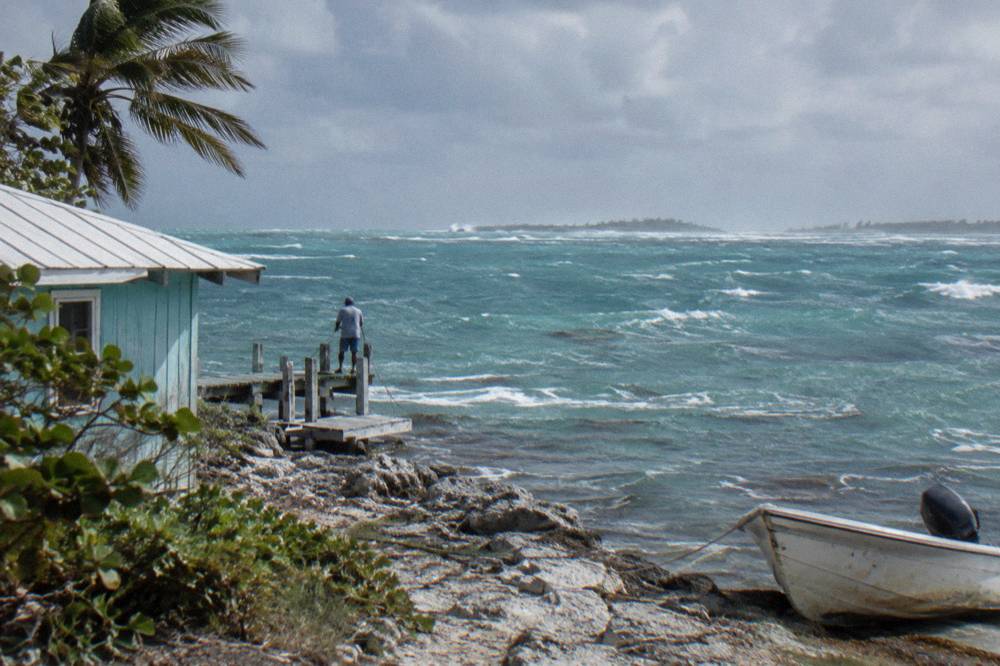
The honest framing is that the pigs do not have an off season, but the boats do. A full-day speedboat run across open water from Nassau is a weather-exposed product, and captains will not run it into rough seas. When a day cancels, operators typically reschedule or refund, and the exact policy is stated on each booking page. If you are travelling in the peak hurricane months, building a flex day into the itinerary is the standard advice.
The shoulder logic cuts the other way too. Operators note that quieter periods can mean fewer boats sharing Pig Beach and better conditions on the water, which is why some travellers deliberately target late autumn or late spring. The trade is weather risk against crowd levels, and only you can price that trade for your own trip.
Water temperature is almost never the constraint. Even at the end of October, the reading around Exuma sat near 83.3 degrees Fahrenheit, and mid-summer readings push higher. Snorkelling in the grotto or swimming out to the pigs is comfortable year round; the question is always whether the boat can get you there comfortably.
Are The Pigs Still Treated Well?
By the current evidence, yes, within the limits of what operator-run rules can do. The feeding protocols introduced after the 2017 deaths remain in force, no new welfare scandal or feeding ban has surfaced in recent reporting, and the official tourism page continues to describe a stable colony of about 20 pigs and piglets. Welfare at Pig Beach is enforced by crews, not by wardens.
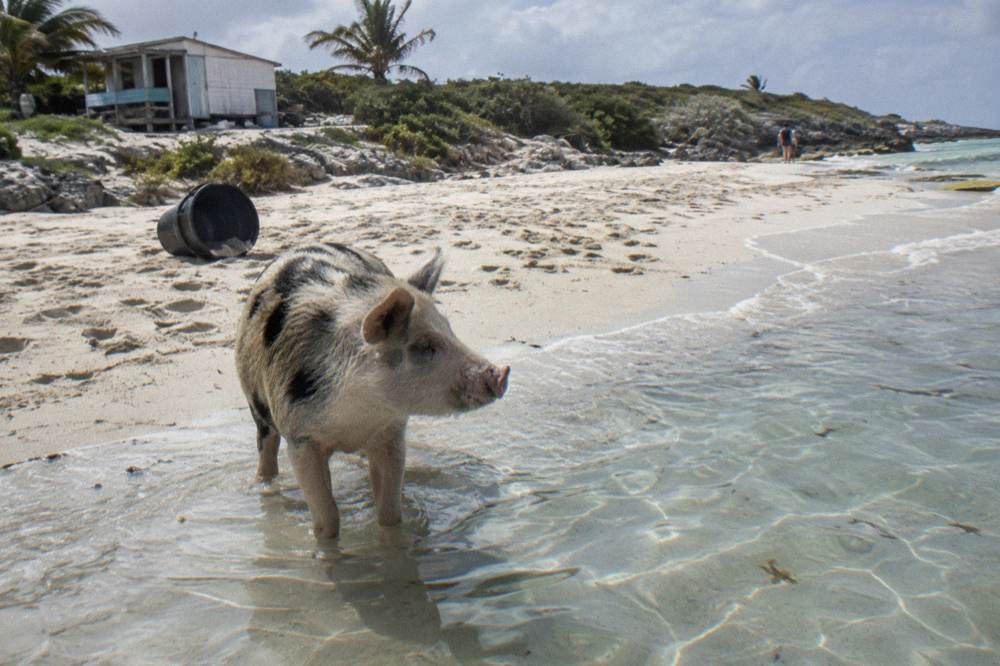
The 2017 deaths remain the defining event in the colony's welfare history, and the feeding rules in place today allow only approved foods supplied by licensed guides. The rule set that followed, operator-provided food only, feeding in the water, no chasing or handling piglets, trash carried off, is the direct descendant of that event. Those feeding rules remain in place, and licensed guides still enforce them at Pig Beach. or that a new welfare incident has occurred.
It is also fair to be precise about the enforcement gap. Pig Beach is not inside the Exuma Cays Land and Sea Park; the park's southern boundary lies north of Big Major Cay, and the park's warden-enforced no-take rules do not extend to the pigs. Operators report the grotto and Pig Beach lie outside the boundary. That means the rules that protect the pigs are the rules the tour industry imposes on itself, which is a genuine limitation worth knowing about rather than glossing over.
For visitors, this resolves into a simple ethic. Go with a crew that briefs you properly, feed only what the crew hands you, in the water, and give the animals the choice to approach. The animals that swim out to your boat are choosing to; the ones that stay on the sand are choosing to as well. If you want the deeper history of the colony and the 2017 event, the guide to Big Major Cay covers it in full.
Which Tour Should You Actually Book?
For most first-time visitors the decision comes down to three proven formats: the full island-hopping day with lunch from Nassau at 4.8 across 689 reviews, the powerboat equivalent at 4.8 across 536 reviews, and the lower-priced Original Excursion at 4.5 across 474 reviews. All three run about 8 hours, all reach the original colony, and the difference is largely inclusions and stop count.
The featured pick on this site is the Exuma Island Hopping Swimming Pigs Tour with Lunch from Nassau, from $438.90 per person, and the reason is the review base: 689 reviews at 4.8 is the deepest pool of evidence among the current options, and the lunch inclusion means the day is self-contained. Check availability
If budget leads, the Original Swimming Pigs Excursion at from $378 per person trims the price while keeping the 8-hour format, rated 4.5 across 474 reviews. If comfort leads instead, the Elite Escape compresses the day to about 6 hours at from $850 per person, trading boat time for a shorter, higher-touch loop. And if you would rather not spend four hours of your day crossing open water at speed, the fly-in format at from $838.35 per person puts you at Staniel Cay in under an hour and often onto the beach before the speedboat fleet arrives.
Whichever way you lean, one habit serves every booking: read the inclusions line and the suitability note on the booking page before you pay. The differences between these products are real but they live in the details, in what is served for lunch, whether drinks are included, whether small children are advised, and what happens if the sea decides otherwise.
Common Questions About Swimming With The Pigs
Can You Still Swim With The Pigs In The Bahamas?
Yes. The colony at Big Major Cay is still in place, the official tourism board still promotes the experience, and tours run year round from Nassau and Great Exuma. What has changed is the set of operator-run feeding rules, not access.
Are The Swimming Pigs Still At Big Major Cay?
Yes, roughly 20 pigs and piglets remain on the uninhabited cay according to the official tourism page. The cay is reachable only by boat, typically a 10 to 15 minute ride from Staniel Cay.
Is It Illegal To Feed The Swimming Pigs?
No official feeding regulation was found on Bahamas government or tourism sources. The rules that apply are set and enforced by tour crews: operator-provided food only, fed in the water rather than on sand, no chasing or picking up piglets.
What Killed The Swimming Pigs In 2017?
The deaths were linked to sand ingestion, which is why feeding on the beach is now discouraged and food is handed out in the water. The operator rules in place today descend directly from that event.
How Much Does It Cost To Swim With The Pigs Now?
Shared full-day tours from Nassau currently run from roughly $378 to $438.90 per person for the classic formats, with shorter or lighter options from about $330. Fly-in premium days start at $838.35 per person and private charters from $6,000 per group.
Do Pig Tours Get Cancelled For Weather?
Yes, mainly during hurricane season from June through November, when rough seas can force reschedules or cancellations. Operators typically rebook or refund, and the policy is stated on each booking page.