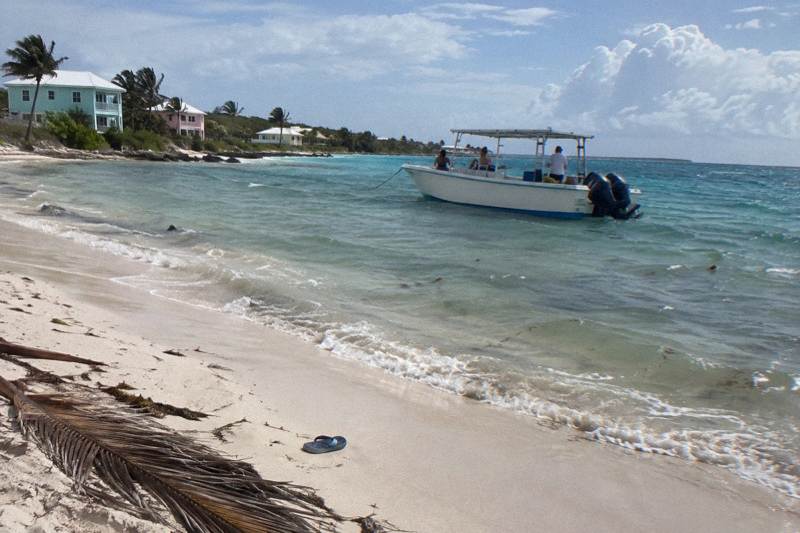
Is Swimming With The Pigs In Nassau Worth It?
A straight verdict on Nassau pig tours: what the day costs, how it compares with the original Big Major Cay colony, and who should book something else.
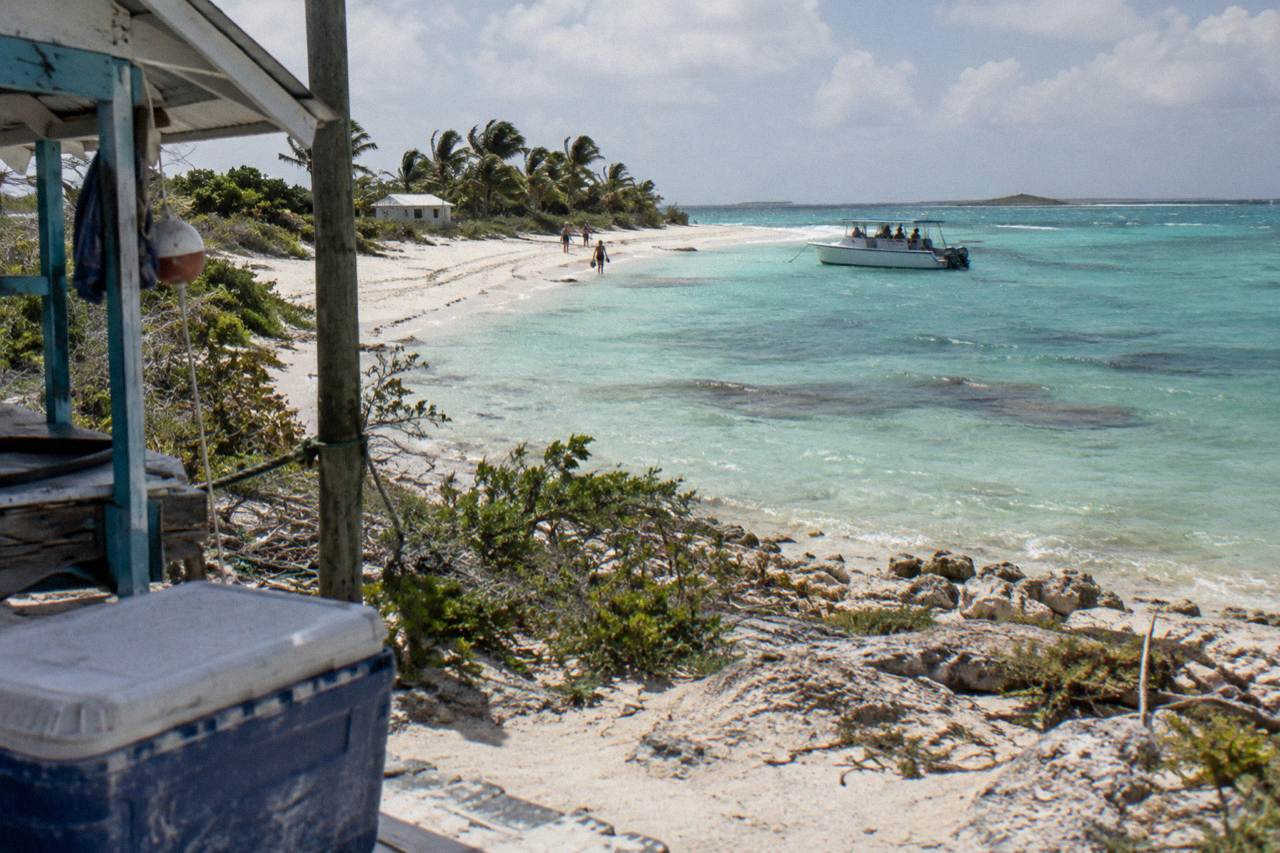
Yes, for most travellers who book the right trip: a full-day tour from Nassau to the original pigs at Big Major Cay delivers the famous scene plus iguanas, sharks and a grotto, and the strongest options run roughly 8 hours from about $378 to $499 per person. It is not worth it if you expected a short hop, because the real colony sits hours away across open water.
The honest answer starts with a geography correction that saves people money. Nassau has no pigs of its own. Every "swim with the pigs" product sold in Nassau is either a run to the original colony at Big Major Cay in the Exuma Cays, a long speedboat commitment of roughly two to three hours each way, or a shorter visit to a separate pig stop closer to Nassau. Those closer options, on cays such as Rose Island and Pearl Island, are different animals on different beaches, and they are not the photographs that made the pigs famous.
So the worth question splits in two. Is the full-day Exuma run from Nassau worth it? For most people, yes: it bundles the pigs, the iguanas of the Exuma Cays, the nurse sharks of Compass Cay and often Thunderball Grotto into one very long, very full day. Is a short Nassau pig visit worth it? That depends entirely on expectations. A family with small children who cannot handle an eight-hour boat day may find the closer stop a fair trade.
The Exuma Island Hopping Swimming Pigs Tour with Lunch from Nassau is the most reviewed full-day trip at rated 4.8 across 689 reviews, from $438.90 per person for roughly 8 hours with lunch. The powerboat alternative from the same departure point is rated 4.8 across 536 reviews, from $439. The Elite Escape compresses the day into about 6 hours at a higher price, from $850, rated 4.8 across 580 reviews.
What A Nassau Pig Tour Day Actually Looks Like
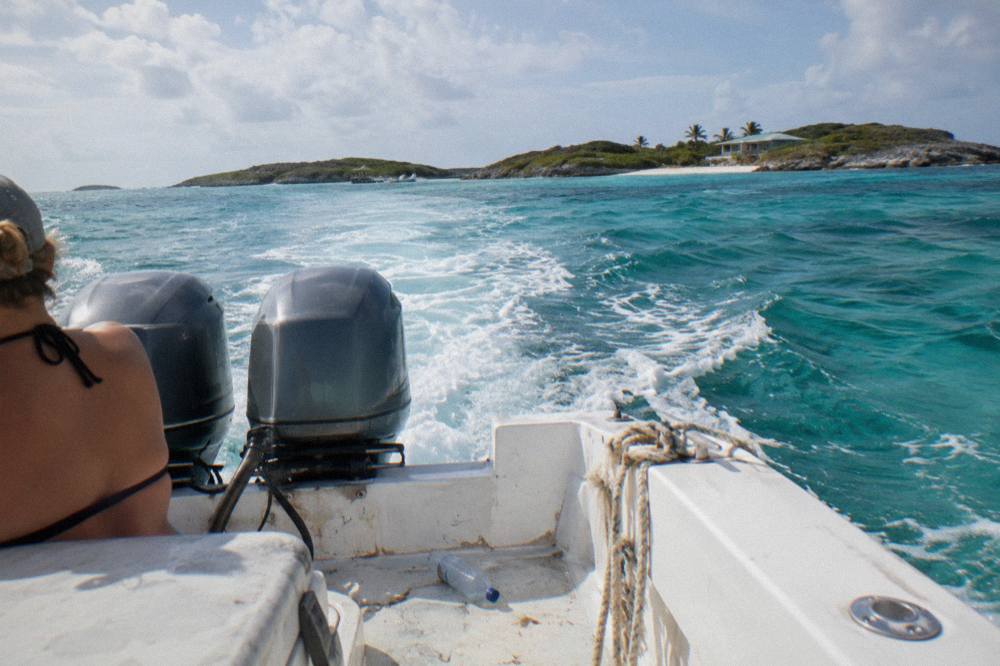
A typical full-day tour checks in at Nassau or Paradise Island around 8:45 AM, departs near 9 AM, and returns around 4:30 PM, which makes it roughly an 8-hour commitment with two to three hours of open-water boating each way. The pigs themselves get a stop of about 20 to 60 minutes. Everything else on the itinerary fills the rest of the day.
That last number surprises people more than any price. The pigs are the headline, but Pig Beach is a single stop on a multi-stop route. Operators describe itineraries that layer in an iguana feeding cay, a nurse shark encounter at Compass Cay, snorkelling at Thunderball Grotto when tide allows, a sandbar, and lunch, often on a private island or at a yacht club. One long-established operator's day includes a private island stop with lunch and an open bar for $329 per person with taxes included, per its listing.
The boat ride itself is part of the product. High-performance powerboats crossing the Exuma Cays are loud, fast and frequently wet, and operators report motion-sickness complaints from guests who underestimated the crossing. Several full-day listings flag the early check-in and the return timing as reasons the trip may not suit cruise ship passengers on tight schedules. If your ship docks at 9 AM and sails at 5 PM, this product is probably not yours to buy.
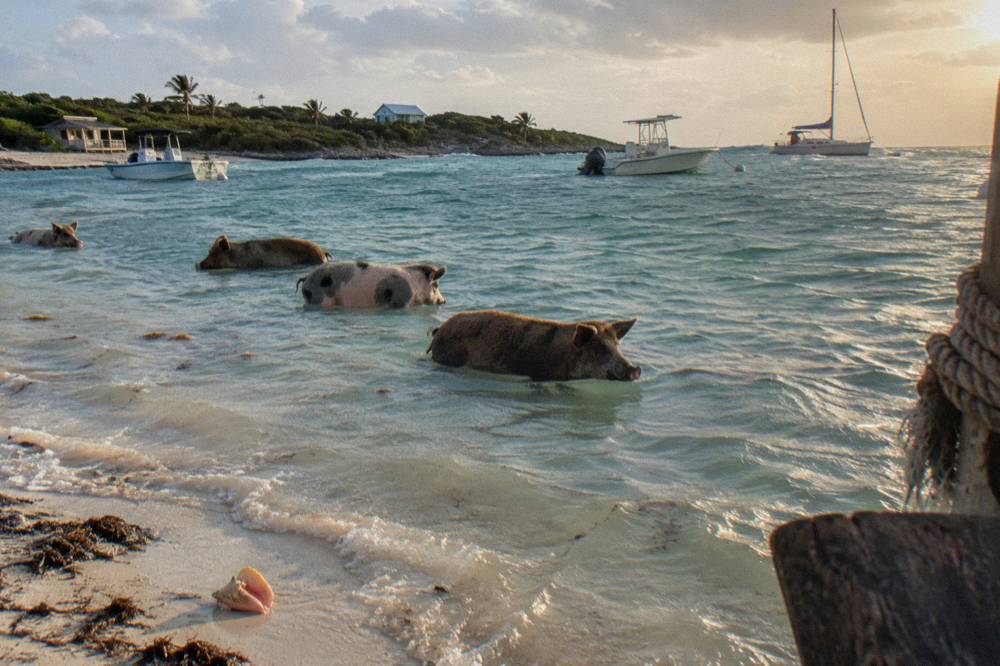
What you get at the beach is genuinely distinctive. The official Bahamas Ministry of Tourism page on the swimming pigs describes a colony of about 20 pigs and piglets on an uninhabited cay, their origin unknown, reachable only by boat. They swim out to approaching boats, and the interaction happens in the water with crew directing the feeding. There is no entrance fee for the beach itself; the entire cost of the experience is the boat and the crew getting you there.
Nassau Pigs Versus The Exuma Original
The original colony at Big Major Cay is the one in the famous photographs, and Nassau tours reach it only after the long crossing. Shorter Nassau-area pig visits go to different colonies on different cays: the animals are real, the water is beautiful, and the scene is smaller and closer. Neither is fake, but they are not the same product at different prices.
This is the distinction worth the most money in the whole decision. A traveller who books a short pig excursion out of Nassau believing they will get the Big Major Cay scene, then finds a handful of pigs on a nearer cay, will feel cheated even though nothing false was sold. A traveller who knows the trade, a shorter day, a lower price, a smaller colony, books the same trip happily.
Big Major Cay sits about 10 to 15 minutes by boat from Staniel Cay, and full-day trips of roughly 8 hours from Nassau or from Great Exuma are what it takes to reach the original colony. The itinerary logic is simple: since the crossing dominates the day, operators stack every nearby highlight into the same run. That is why the Nassau full-day product is actually the richer itinerary compared with many shorter Great Exuma pig trips, which sometimes visit closer pig cays such as White Bay Cay instead.
The Exuma Cays also carry the protection story. On the way south, many routes pass near the Exuma Cays Land and Sea Park, established in 1958 as the first marine reserve in the Bahamas and the wider Caribbean, spanning 112,640 acres of land and sea. It is a strict no-take zone: nothing living or dead may be removed, and the park rules published by the Bahamas National Trust bar fishing, shelling and anchoring on coral. Operators report that Thunderball Grotto and Pig Beach sit outside the park's southern boundary, and park landing fees for day tours, when they apply, are normally absorbed in the tour price.
The comparison in one table:
| Factor | Full-Day Nassau Tour To Big Major Cay | Short Nassau Pig Excursion |
|---|---|---|
| Which pigs | The original Big Major Cay colony | Separate colonies on cays nearer Nassau |
| Day length | Roughly 8 to 9 hours | Half-day or shorter |
| Boat time | 2 to 3 hours each way across open water | Minutes to about an hour each way |
| Other stops | Iguanas, nurse sharks, grotto, sandbar, lunch | Varies, often a beach stop only |
| Typical price | From about $329 to $439 per person | Lower, varies by operator |
| Best for | Travellers wanting the famous scene | Families and tight schedules |
If the full-day crossing is the barrier, a third path exists: flying. A roughly 45-minute flight from Nassau to the Staniel Cay area plus a short boat ride allows quieter, more flexible timing at Pig Beach than the speedboat day trips, according to operator guidance. The fly-in day trip from Nassau covers that option in detail, and one fly-in beach-day product on the current options runs about 7 hours from $838.35 per person, rated 4.7 across 138 reviews.
What The Tours Cost From Nassau
Full-day pig tours from Nassau cluster between roughly $329 and $439 per person, with luxury and fly-in formats from $838.35 to $850, and the price ladder tracks boat speed, stop count and group size rather than the pigs themselves. The pigs are the same; everything you pay extra for is the packaging.
Here is the ladder as it stands:
| Tour | Duration | Price | Reviews |
|---|---|---|---|
| Original Exuma Powerboat Adventures | ~9 hours | from $328.90 | rated 4.7 across 553 reviews |
| Exuma Powerboat Day Trip to a Private Island | ~8 hours | from $328.90 | rated 4.7 across 171 reviews |
| Exuma Day Away, Original Swimming Pigs Excursion | ~8 hours 30 minutes | from $378 | rated 4.5 across 474 reviews |
| Exuma Island Hopping Swimming Pigs Tour with Lunch | ~8 hours | from $438.90 | rated 4.8 across 689 reviews |
| Exuma Powerboat Tour from Nassau with Swimming Pigs | ~8 hours | from $439 | rated 4.8 across 536 reviews |
| Exuma Elite Escape, 7-Stop Luxury Tour | ~6 hours | from $850 | rated 4.8 across 580 reviews |
| Exclusive Fly-In Trip for a Premium Beach Day | ~7 hours | from $838.35 | rated 4.7 across 138 reviews |
Two patterns matter. First, the price band from about $329 to $439 covers the standard full-day product, and within it the differences are itinerary details and operator, not quality tiers: the 4.8-rated trips sit at $438.90, $439 and $850. Second, the $850 tier buys time and exclusivity, a shorter day with more stops, or a plane instead of a boat, not better pigs. The wider set of guides lives on Exuma Tours.
For budget context, independent travel exists but is not cheaper per hour saved. A one-way flight from Nassau to Staniel Cay can be found at about $125 as listed, and mail boats from Nassau to George Town run $40 to $45 one way in cash but take 12 to 14 hours on unpredictable cargo schedules. Neither is a pig tour. For most visitors the packaged day is the only realistic way to do this in one day, which is the entire premise behind the Nassau to Exuma day trip.
Worth, then, is mostly a value calculation: about $330 to $440 buys an 8-hour day with four or five signature Exuma stops and the most famous animal encounter in the country. Against the price of a single excursion at a resort or a cruise-line shore desk, that is competitive; against a half-day beach break, it is a serious purchase.
Among the mid-band options, the Day Away excursion, from $378 and rated 4.5 across 474 reviews, is the value pick for travellers who want the original colony and a full itinerary without stepping up to the $439 tier. Its slightly longer day of about 8 hours 30 minutes is a fair trade for the savings.
Seasons, Weather And Timing
The boat season matters more than the calendar of prices: hurricane season runs 1 June to 30 November with peak disruption August to October, while December to May brings the calmer seas and clearer water that make the crossing comfortable. Sea temperatures stay warm year round, reading around 29 degrees Celsius in late October.
Timing changes the experience more than most buyers realize. The crossing to the Exuma Cays is two to three hours of open water each way, and rough seas turn that crossing from a thrill into an endurance test, with operator rescheduling and cancellations concentrated in the peak hurricane months. By late October the season is nearly over, and no storms were tracked near the Bahamas in the final week of October, but the sea state, not the storm map, is what the operator watches.
The shoulder logic cuts both ways. Quieter periods can mean smaller crowds at Pig Beach, where the typical stop runs 20 to 60 minutes partly depending on how many boats are sharing the sand. Fly-in and Staniel Cay based trips gain the most from off-peak timing, arriving at the beach outside the speedboat rush.
Tide is the other clock. The safest window for entering Thunderball Grotto is at low or slack tide, within an hour or two of low water, when the entrances are most exposed and the interior is calmest. Captains plan the day around it, which is one reason the itinerary order varies trip to trip. No permit is currently required to snorkel the grotto, and operators report it lies outside the marine park boundary, so no park fee applies there.
What to bring barely changes with the season: reef-safe sunscreen, a hat, sunglasses, a towel, a waterproof phone pouch and water shoes appear on essentially every operator's packing list. Non-slip footwear matters on a wet, fast deck.
The Feeding Rules And The Animal Welfare Question
Feeding rules at Pig Beach are set by operators, not by written law: no government regulation of pig feeding, shark interaction or Big Major Cay landings was found on official Bahamas sources, so crews direct everything. The standard rules, feed only crew-provided food, feed in the water never on sand, never chase or pick up piglets, carry out all trash, exist for the animals' welfare.
That last clause has a hard history. The 2017 deaths in the colony were linked in reporting to sand ingestion, and the feeding protocols operators enforce today grew from that incident. The practical version for visitors: take the grapes or feed the crew hands out, offer them in the water, keep distance from mothers, and leave nothing on the beach, since no waste collection exists on the island.
The welfare question recurs in every booking conversation, and the honest answer is that the colony is wild, unrestrained and boat-fed by design. The official tourism description, about 20 pigs and piglets of unknown origin on an uninhabited cay, is itself the whole documented record; there is no government welfare standard to audit against. Travellers for whom that ambiguity is disqualifying should read the welfare discussion before booking, not after.
The same operator-rules pattern repeats down the itinerary. At Compass Cay, the nurse shark encounter at the marina carries a published day-use fee of about $15 per person and begins with a safety briefing: no stepping on sharks, no grabbing or chasing, no sudden movements. At the iguana cays, the protected Bahamian rock iguanas are fed grapes offered on wooden sticks, and chasing or holding them is off limits.
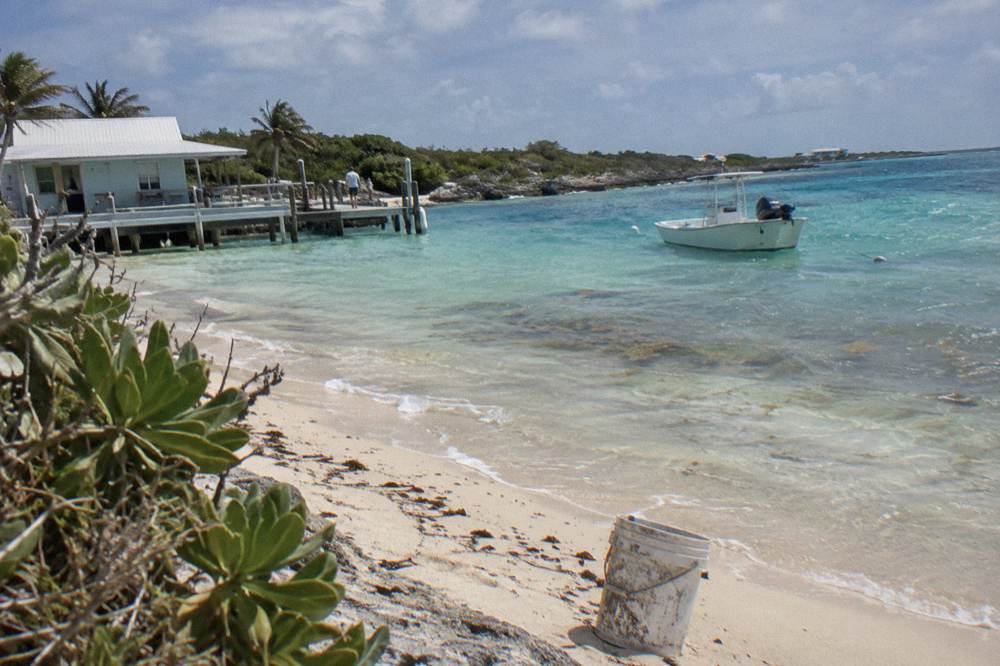
One full-day option that bundles the wildlife stops with a private island lunch, from $328.90 and rated 4.7 across 171 reviews, sits at the accessible end of the price band while keeping the full route. It is a reasonable first pick for travellers who want the complete day without comparison shopping every stop list.
Who Should Skip It
Skip the full-day Nassau pig tour if you are on a short cruise stop, prone to severe motion sickness, travelling with children under about five, or unwilling to spend eight hours on a boat for twenty to sixty minutes of pigs. In those cases a shorter Nassau-area excursion, a Great Exuma based half-day, or a different excursion entirely is the better buy.
The cruise timing problem is structural. A 9 AM departure and a 4:30 PM return do not fit most port windows, and several listings explicitly flag cruise guests among those the full day may not suit. The motion-sickness problem is equally structural: the crossing is fast and open, and no itinerary change fixes two to three hours of head sea. Operators of group boats commonly advise against the full day for very young children.
The counter-cases are equally clear. If your trip is hotel based in Nassau, this is the single most efficient way to see the Exuma Cays' signature list in one day, and the entry requirements are simple for US, Canadian and UK visitors: a passport valid six months beyond entry, no visa for stays under three months, and a $29 departure tax per person aged six and over, usually collected in the airfare.
The verdict, restated: worth it for the full-day product bought knowingly, overpriced friction for anyone who wanted a quick beach stop. The decision is really about your boat tolerance, and no marketing page can make that call for you.
Common Questions About Swimming With The Pigs In Nassau
Is Swimming With The Pigs In Nassau Worth It?
For most travellers, yes, if you book a full-day tour to the original colony at Big Major Cay and accept an 8-hour commitment. The strongest options run from about $329 to $439 per person and are rated 4.7 to 4.8 across hundreds of reviews. It is poor value if you expected a short beach stop or cannot handle hours of open water.
Can You See The Famous Pigs On A Tour From Nassau?
Yes. Full-day tours from Nassau cross to Big Major Cay in the Exuma Cays, roughly two to three hours each way by powerboat, and stop at the original colony for about 20 to 60 minutes along with iguanas, nurse sharks and snorkel stops.
How Long Is The Boat Ride From Nassau To The Pigs?
Roughly two to three hours each way across open water for tours reaching Big Major Cay, making a full day of about 8 to 9 hours. Shorter Nassau pig excursions visit closer cays and involve far less boat time, but they are different colonies.
Is It Safe To Swim With The Pigs?
The interaction happens in shallow water with crew directing it, and operators enforce feeding rules for both animal and guest welfare: feed only crew-provided food, in the water, never chase or pick up piglets. No official government regulation was found on the feeding or landings; the crews set and enforce the rules.
Are The Nassau Tours The Same Pigs As In Exuma?
The full-day Nassau tours visit the same original Big Major Cay colony that made the pigs famous. Shorter Nassau-area excursions visit separate pig colonies on cays nearer the city, which are smaller, closer, and a different experience.
When Is The Best Time Of Year To Book?
December to May brings the calmer seas and clearer water that suit the long crossing. Hurricane season runs 1 June to 30 November with the roughest conditions from August to October, and operators reschedule or cancel in rough weather.