What James Bond Movie Was Filmed At Thunderball Grotto?
Thunderball Grotto got its name from the Bond film Thunderball. Here is the film history, how to visit the grotto on a tour, and what the day costs.
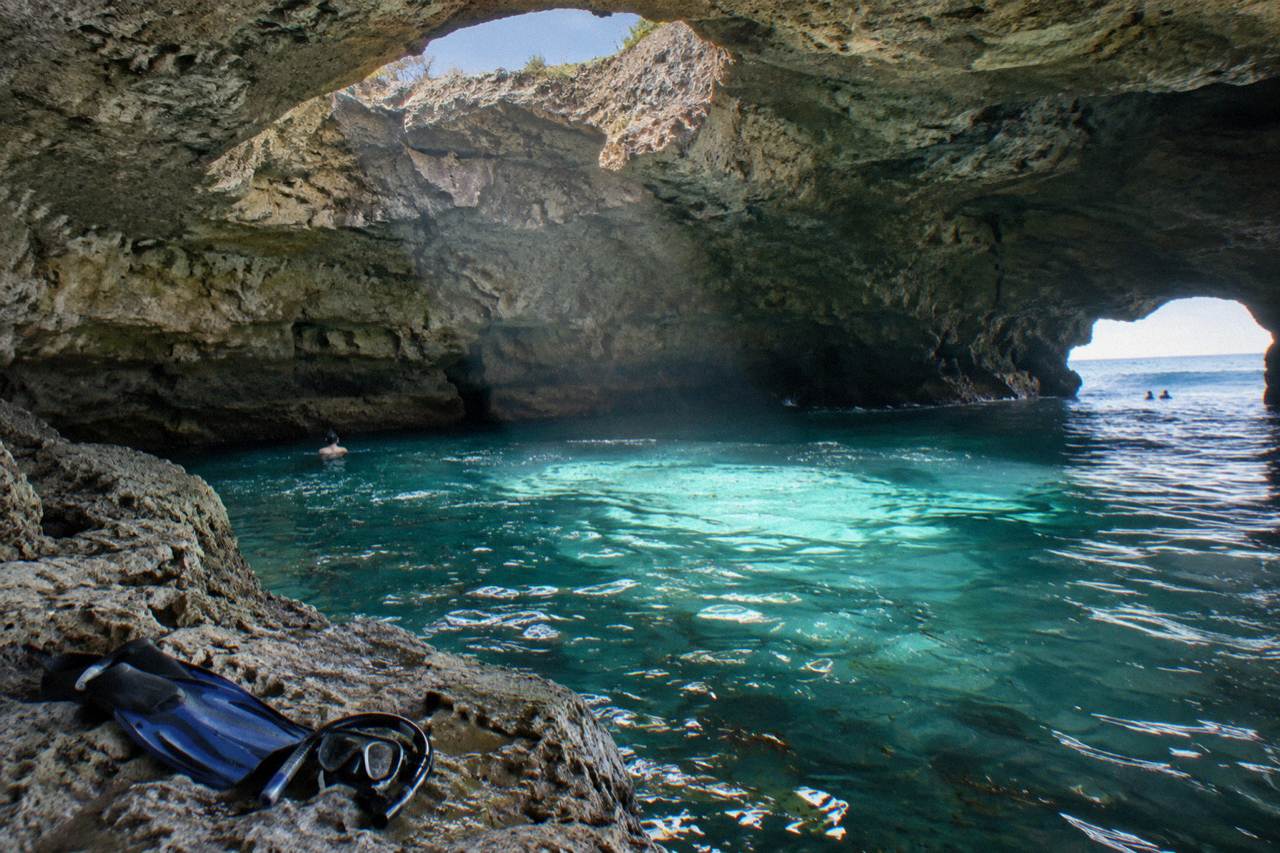
The film was Thunderball, the fourth official James Bond movie, released with Sean Connery in the lead role. Its underwater battle sequences were shot in and around a limestone sea cave near Staniel Cay in the Exuma Cays, and the cave has been called Thunderball Grotto ever since. The grotto is now a regular snorkel stop on Exuma boat tours, reachable only by water.
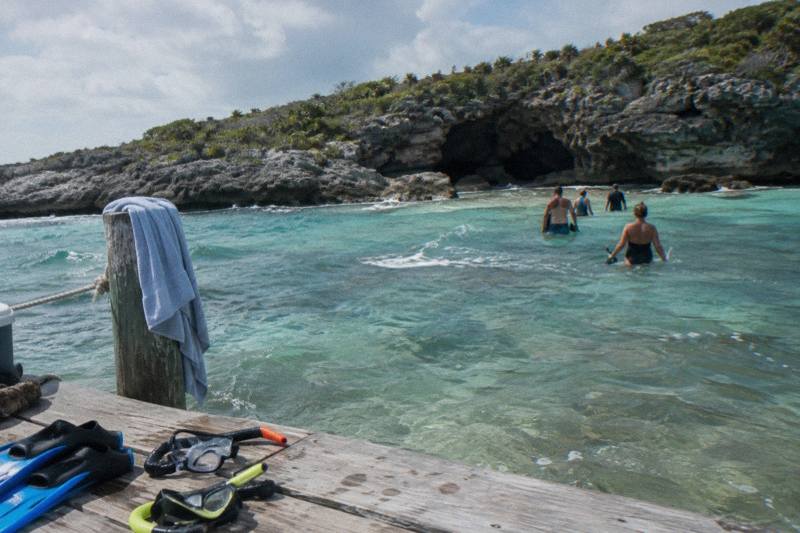
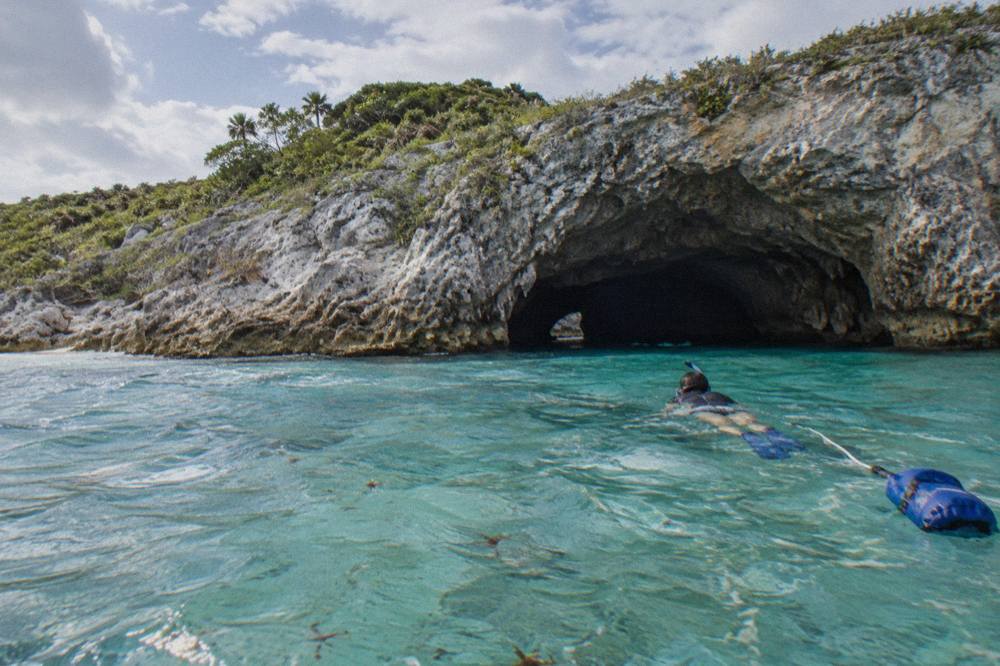
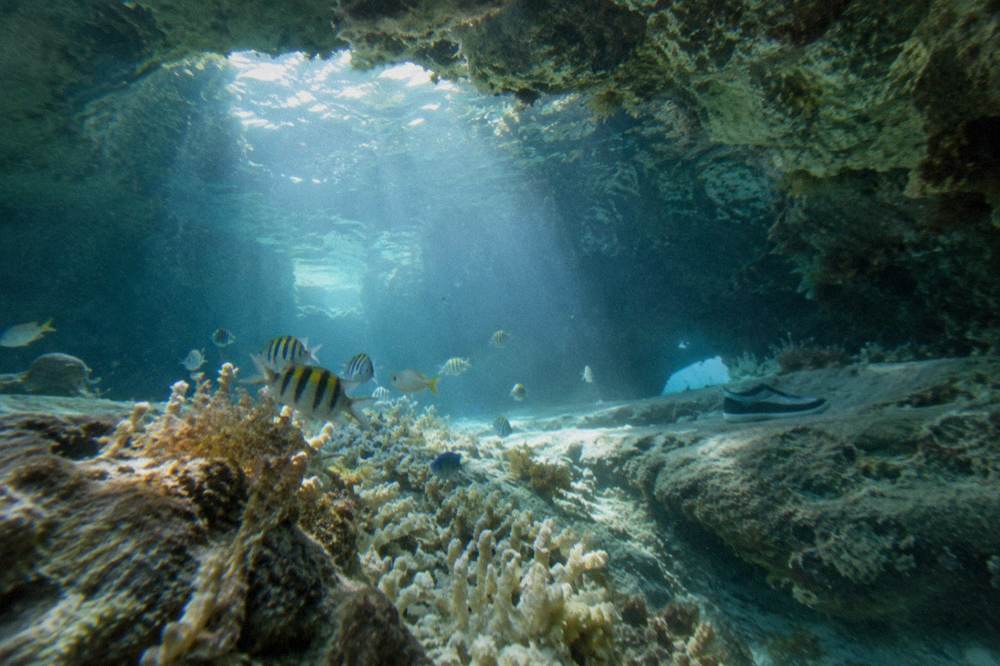
The grotto sits in the northern Exuma Cays, a short boat ride from Staniel Cay, and it is one of the stranger film locations in the Caribbean: a hollow limestone cay with openings in its roof, through which sunlight pours onto a sheltered interior pool. At the right tide the water inside is calm and clear enough that you can swim in through one of the low entrance holes and surface inside a natural cathedral of light. That quality, the shafts of sun hitting the water from above, is exactly what the underwater camera crews were after when they shot here.
Thunderball was, at the time of its release, the most successful Bond film yet, and a large share of its runtime takes place underwater. The Bahamas stood in for the film's fictional Caribbean settings, and the production used locations across New Providence and the cays. The grotto's interior and the surrounding shallows appear in the film's extended diving sequences. Before the film the cave was simply an unnamed hollow in the rocks; afterward, the movie's name stuck to it permanently, which is a rare case of a film renaming a physical place on the map.
The name recognition cuts both ways. Because the grotto is famous, it appears on nearly every island-hopping itinerary in the central and northern cays, and boats from Nassau and from Great Exuma both stop there. Because it is small, timing matters: a grotto with three boats rafted outside it is a different experience from one visited early or in the shoulder season. The practical sections below cover how the visit actually works, what it costs, and how the tide and the season shape the day.
Most visitors reach the grotto on fly-in day trips or on boat tours based in Great Exuma and Staniel Cay, which often pair the stop with Pig Beach and other cays in a single long day on the water. The three options below are the ones that fit a film-location mission best: the powerboat day that packs the classic route into about nine hours, a full-day boat tour of about eight hours, a private plane trip priced per group, and a shorter luxury fly-in built around smaller groups.
Where Is Thunderball Grotto And How Do You Reach It?
Thunderball Grotto sits just south of Staniel Cay in the northern Exuma Cays, roughly 10 to 15 minutes by boat from the Staniel Cay docks. There is no airstrip on the cay itself and no ferry link; every visitor arrives on a tour boat, a charter, or a rental skiff from Staniel Cay. From Nassau that means either a long speedboat run of roughly two to three hours each way or a short flight plus a boat hop.
The geography explains the logistics. The grotto is a few hundred metres from Staniel Cay, the small cay with the famous yacht club that anchors the whole central cays touring circuit. Boat tours from Nassau run out across the bank and the open water to reach this cluster: Pig Beach on Big Major Cay, the iguanas of Bitter Guana Cay or Allen's Cay, the nurse sharks at Compass Cay, and the grotto itself are all within a short run of one another. A full-day Nassau tour is usually eight to nine hours door to door because the crossing eats half of it.
Fly-in options shorten the water part dramatically. If you are booking a fly-in trip for the coming season, it is worth checking the operator's booking page to confirm which airport the flight uses on your date. Titan Air has listed daily Nassau to Staniel Cay flights at $125 one way and $240 round trip, VAT included, for travellers assembling their own day.
The tides, not the distance, decide the quality of the visit. Operators time their grotto stops to low or slack tide, within about one to two hours of low water, because that is when the entrance holes are most exposed, the currents are weakest, and the interior pool is at its calmest. At high tide the entrances sit deeper and the swim in becomes harder work. Captains watch the tide tables and shuffle the order of the day's stops around them, which is one reason the same itinerary can visit the grotto first thing on one day and late afternoon on another.
For the full picture on the cave itself, including the tide logic in more depth, the Thunderball Grotto snorkeling guide covers entry technique and what the interior looks like underwater, and the Staniel Cay tours guide covers the tours that base themselves on the cay closest to the cave.
What Does A Tour Day That Includes The Grotto Look Like?
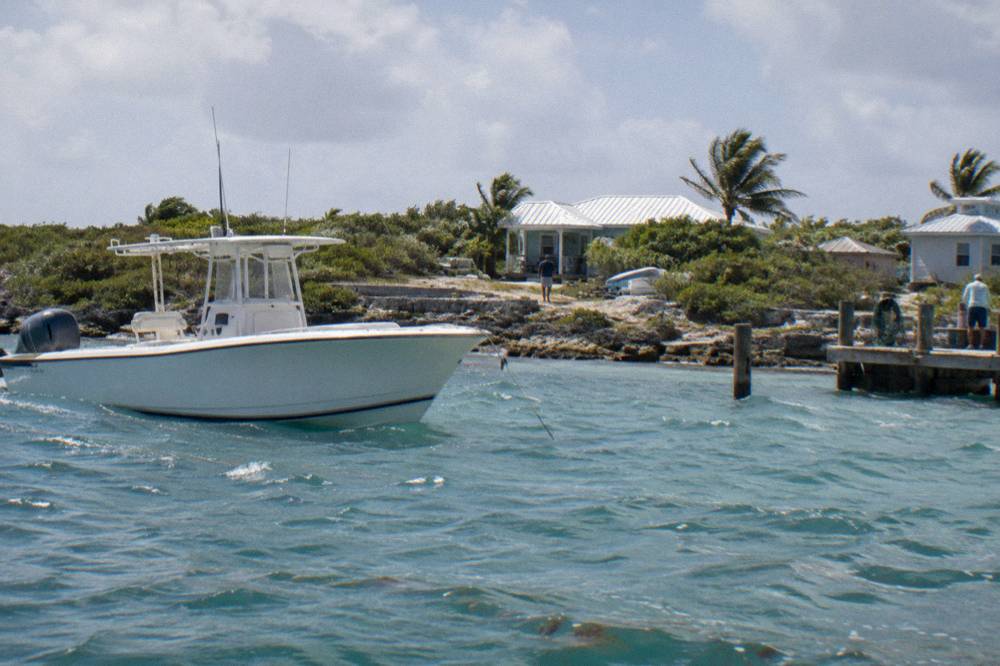
A typical Nassau powerboat day runs about eight to nine hours: early check-in around 8:45 AM, a departure near 9 AM, then the crossing to the cays, followed by two to four stops among the pigs, iguanas, nurse sharks, a sandbar and the grotto, with lunch and drinks served on board or on a private island, and a return to the dock near 4:30 PM. The exact order depends on tides, weather and crowds.
The check-in time is worth taking seriously. Tours list early-morning starts and some operators note that full-day Exuma powerboat trips may not suit cruise ship passengers, precisely because the check-in and return times leave little slack against a ship's schedule. If you are staying in Nassau, plan to be at the dock, generally in the Paradise Island ferry terminal area, well before the stated time; the boats leave on schedule because the day is long.
Once across, the stops come in quick succession. A common sequence is an iguana cay first, where the Bahamian rock iguanas come down to the waterline and are fed grapes on wooden sticks under crew supervision, then the pigs at Big Major Cay, then Compass Cay for the nurse sharks at the marina dock, then the grotto on the right tide, with a sandbar or a private island lunch wedged in between. Snorkel gear is normally included; confirm on the booking page whether wetsuits or flotation are provided if anyone in your group needs them.
The Original Exuma Powerboat Adventures day runs about nine hours, but its itinerary centers on private Ship Channel Cay rather than the grotto, rated 4.7 across 553 reviews, from $328.90 per person. It is a long day and a fast boat, so anyone prone to seasickness should medicate early; the crossing can be bouncy depending on the wind, and the crew will say so plainly on the morning of. See the Original Exuma Powerboat Adventures tour page for the full stop list and current inclusions, and check availability if the date matters.
Is the grotto worth that long a day on the water? The honest answer is that the grotto is the quiet highlight of it. The pigs get the photos, the sharks get the adrenaline, but the grotto is the one stop where you float in place, look up, and understand why a film crew chose this cave. For a deeper look at the full stop list, the Nassau to Exuma day trip guide breaks down what each visit actually feels like hour by hour.
How Much Does It Cost To Visit Thunderball Grotto?
The grotto itself has no admission fee and no permit is currently required to snorkel it, so the entire cost is the transport: full-day Exuma tours from Nassau run from roughly $329 to $489 per person depending on the operator and inclusions, fly-in premium days from $838.35, and shorter luxury tours from $850. Chartering a private boat for your own grotto schedule starts at $6,000 per group.
The no-fee point surprises people. The grotto lies outside the boundary of the Exuma Cays Land and Sea Park, whose southern boundary ends near Compass Cay, so the park's landing and mooring fees do not apply to a grotto stop. The park itself, established in 1958 as the first marine reserve in the Bahamas and the wider Caribbean, charges charter vessels a day-tour landing fee, BSD 6.36 per person at most locations and BSD 12.73 at Warderick Wells with a guided tour, and operators normally absorb those fees in the tour price where a route touches the park. The Compass Cay nurse shark stop, which most grotto itineraries include, carries a published $15 per person day-use fee at the marina, likewise usually bundled in.
| Tour | Duration | Rating | Price |
|---|---|---|---|
| Original Exuma Powerboat Adventures | ~9 hours | rated 4.7 across 553 reviews | from $328.90 per person |
| Exuma Powerboat Day Trip to a Private Island | ~8 hours | rated 4.7 across 171 reviews | from $328.90 per person |
| Exuma Cays Swimming Pigs and Iguanas Tour | ~8 hours | 12 reviews | from $378 per person |
| From Nassau: Exuma Island Hopping Tour with Swimming Pigs | ~8 hours | rated 4.9 across 53 reviews | from $489 per person |
| Exclusive Fly-In Trip for a Premium Beach Day | ~7 hours | rated 4.7 across 138 reviews | from $838.35 per person |
| Exuma Elite Escape: 7-Stop Luxury Swimming Pigs Tour | ~6 hours | rated 4.8 across 580 reviews | from $850 per person |
| Exuma Cays Private Boat Charter From Nassau | ~8 hours | no reviews yet | from $6,000 per group |
Two things to read carefully in that table. First, the per-person and per-group prices are different animals: the private charter at $6,000 per group is not divided by headcount in the listing, and neither is any other per-group figure. Second, the price bands reflect what changes between them. The $329 to $378 tours are big-boat, fixed-itinerary days. The $489 tier tends to mean smaller groups or more stops. The $838.35 fly-in trip from Nassau replaces the two to three hour speedboat crossing with a flight, which buys you calmer legs and more time at the stops for roughly two and a half times the powerboat price.
When Is The Best Time Of Year To Visit The Grotto?
The calmest water and best visibility in the Exumas generally run December through May, outside hurricane season. Hurricane season spans 1 June to 30 November with peak activity August through October, and boat operators reschedule or cancel trips in rough weather, so late autumn bookings carry the most schedule risk and shoulder-season months often mean fewer boats at the grotto itself.
Sea temperature is a small but real factor. Readings around Exuma in late October sat near 29°C, with daily figures in the 29 to 29.9 range, and water that warm means most snorkelers are comfortable without a wetsuit even in winter, when it cools only a few degrees. The bigger seasonal variable is the sea state on the crossing, since a grotto visit from Nassau lives or dies on whether the bank is flat enough for a fast run.
Crowds track the season too. The grotto is small, and on a peak winter day several tour boats may cycle through the same entrance holes in sequence. Operators report that early-morning and off-peak timings, which the fly-in and Staniel Cay based trips can offer more easily than the Nassau speedboats, give a quieter cave. The trade is price: the fly-in premium day costs more than the powerboat day, and what it buys is partly that timing flexibility. The best time to visit Exuma guide goes deeper on the month-by-month picture if your dates are flexible.
What Rules And Preparations Apply At The Grotto Stops?
No official government regulation governs swimming at the grotto, but tour crews set firm practical rules: enter near low tide as the captain directs, follow your captain's instructions before you swim inside the grotto, and at the wildlife stops feed only crew-provided food, feed the pigs in the water and never on sand, do not chase or pick up piglets, and take all rubbish back to the boat. Park waters proper are a strict no-take zone.
The pig-feeding rules have a serious background. Operators trace today's strict feeding guidance to the 2017 deaths of pigs at Big Major Cay linked to sand ingestion, after which crews standardized the practice: only food provided by the captain, handed over in the water or from the hand, never on the beach, with no junk food or alcohol, and no chasing or cornering animals. The official Ministry of Tourism page for the swimming pigs describes the colony, roughly 20 pigs and piglets on an uninhabited cay, but publishes no feeding regulation; the rules as you will meet them are the operator's rules, and the crew will brief them before each stop.
At the iguana cays, the rock iguanas are protected species, named as such on the official Bahamas ecotourism pages, and crews feed them grapes placed on wooden sticks so the animals do not associate hands with food. At Compass Cay the nurse shark interaction starts with a safety briefing: no stepping on sharks, no grabbing or chasing, no sudden movements. If any of this sounds like a lot of rules, it reads differently on the water; the stops are short, usually 20 to 60 minutes at Pig Beach depending on the operator and crowds, and the crew runs each one.
Packing is simple. Operators recommend reef-safe sunscreen, a hat, sunglasses, a towel, a waterproof phone pouch and water shoes. Bring cash as a backup even where cards are accepted. If your route enters the Exuma Cays Land and Sea Park, remember nothing living or dead may be removed, which includes shells and coral, and the park rules are enforced by wardens. The Bahamas National Trust park page states the no-take rules in full. Entry to the Bahamas itself requires a passport valid six months beyond arrival, and a departure tax of $29 per person aged six and over applies on the way out, usually collected within the airfare; the official entry requirements page covers the documents.
Is A Grotto Tour Worth It For A Film Fan?
For a Bond fan the answer is yes with one caveat: no tour is a film tour, and operators do not stage Bond-themed visits. What you get is the same cave the Thunderball production used, snorkelled on your own terms, stacked alongside the pigs, iguanas and sharks. The grotto stop is typically 20 to 60 minutes, long enough to swim in and take it in.
The caveat matters because expectations shape the day. The grotto is a natural cave, not a set; there is no signage, no plaque and no museum. What remains is the thing the location scouts chose: the light. On a clear midday with the sun high, beams drop through the ceiling holes into the interior pool, and the tropical fish school in them. Snorkellers who time it right describe the interior as the single most photogenic stop of the day, which is why so many itineraries refuse to drop it even though it costs the crew tide-watching effort to include.
Choosing among the formats is about time and budget more than anything else. The Original Exuma Powerboat Adventures day from Exuma Tours is the proven option, rated 4.7 across 553 reviews at from $328.90 per person for roughly nine hours. Travellers who want the grotto with less boat time and a quieter crowd should consider the fly-in format, and travellers short on hours can take the condensed luxury route.
The Exuma Elite Escape compresses the classic route into roughly six hours with seven stops, rated 4.8 across 580 reviews, from $850 per person. It suits a visitor with one free afternoon and a preference for small groups over the big-boat circuit.
The fly-in alternative replaces the crossing entirely. The Exclusive Fly-In Trip for a Premium Beach Day runs about seven hours, rated 4.7 across 138 reviews, from $838.35 per person, flying from Nassau to the cays and picking up the boat stops on the other side. It is the closest thing to how a film crew would have done it: arrive by air, work the water, fly home.
Whichever format fits, the underlying advice is the same. Book the day that matches your tolerance for a long boat ride, trust the captain on tide timing, and treat the grotto as the centerpiece rather than one more checkbox. Long after the cameras left, the cave still does the performance on its own.
Common Questions About Thunderball Grotto
What James Bond Movie Was Filmed At Thunderball Grotto?
Thunderball, the James Bond film starring Sean Connery. The movie's underwater sequences were shot in and around the cave, and the film's title became the cave's permanent name.
Can You Swim Inside Thunderball Grotto?
Yes. Snorkellers enter through low holes in the rock, ideally within one to two hours of low tide when the entrances are most exposed and the interior is calmest. Tour captains time the stop to the tide tables.
Do You Need A Permit Or Pay A Fee To Visit The Grotto?
No permit is currently required and the grotto itself has no admission fee. It lies outside the Exuma Cays Land and Sea Park boundary, so the park's landing fees do not apply; the nearby Compass Cay shark stop carries a published $15 per person day-use fee that tours normally include.
How Far Is Thunderball Grotto From Nassau?
By boat it is roughly two to three hours each way across open water from Nassau, which is why full-day tours run eight to nine hours. Fly-in trips replace the crossing with a short flight to the Staniel Cay area, subject to the airport arrangements on your travel date.
Is Thunderball Grotto Worth Seeing If You Have Not Seen The Film?
Most guests think so. The shafts of light through the roof openings and the schooling fish make it one of the most striking snorkel stops in the cays, film connection or not, and it usually shares an itinerary with the swimming pigs and nurse sharks.
What Should You Bring For A Grotto Tour Day?
Reef-safe sunscreen, a hat, sunglasses, a towel, a waterproof phone pouch and water shoes, plus cash as a backup. Snorkel gear is normally provided; confirm specifics on the operator's booking page before you go.