Can You Jump Into Thunderball Grotto?
Yes, you can enter Thunderball Grotto, but the tide decides how. This guide covers the entry points, tide windows, fees and rules, and the guided tours that time the stop right.
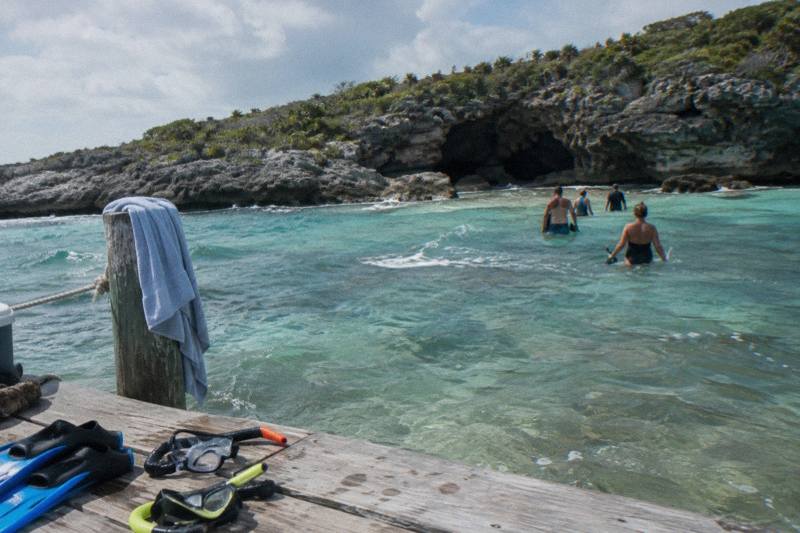
Yes, you can jump into Thunderball Grotto, and most visitors enter the water one way or another, but only when the tide cooperates. The cave sits near Staniel Cay in the Exuma Cays, its roof pierced by holes that light the interior from above. At low or slack tide the entrances sit shallow and exposed, so a jump from the rocks or a wade from the boat works. At high tide the openings shrink underwater and entry becomes a short swim or dive instead.
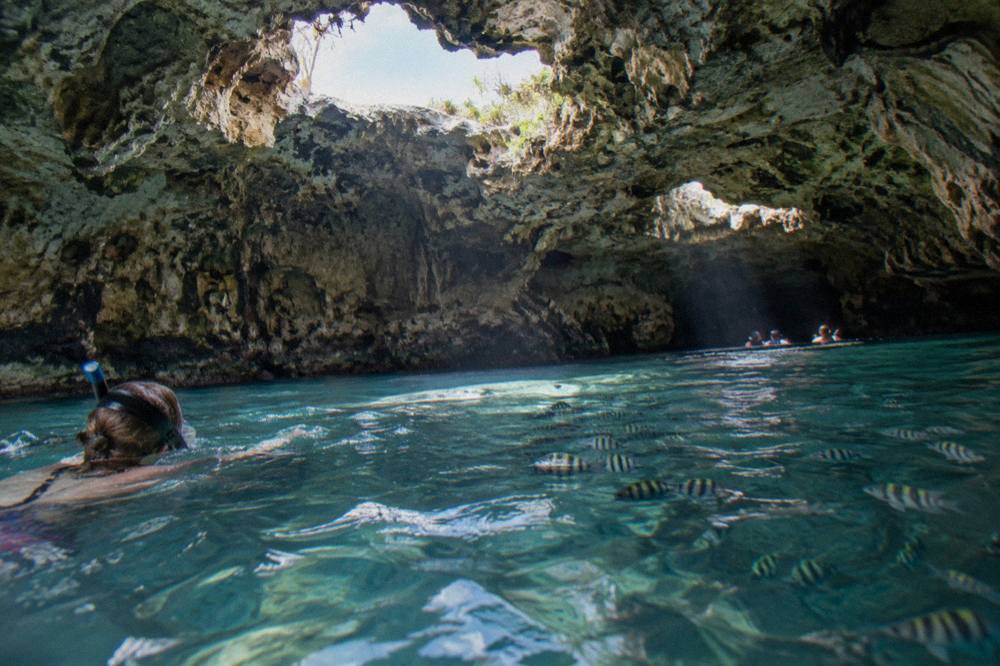
The grotto earned its name honestly. It served as a filming location for the James Bond film Thunderball, and snorkelers still pass through the same flooded chambers the production used. Inside, shafts of daylight fall through the ceiling onto schools of Sergeant Majors and yellowtail snapper, and the water glows a blue that photographs almost unreal. It costs nothing to visit on its own; there is no admission gate and no permit currently required for snorkeling or diving there, though tourism management rules can change, so confirm with your crew on the day.
What the grotto does not have is a dock, a beach or a ticket booth. It is a rock in the sea. Everything about the visit, from how you arrive to when you enter, depends on a boat and on the tide table, which is why nearly everyone experiences it as one stop on a guided day trip rather than a standalone destination. Operators report that the grotto and Pig Beach lie just outside the southern boundary of the Exuma Cays Land and Sea Park, which matters for fees, more on that below.
That dependence on a boat is also why the choice of tour matters more than the choice of swim stroke. A Nassau speedboat day gives you the grotto bundled with pigs, iguanas and nurse sharks in one long loop. A fly-in trip gets you there faster and at quieter hours.
Where Are The Entry Points Into The Grotto?
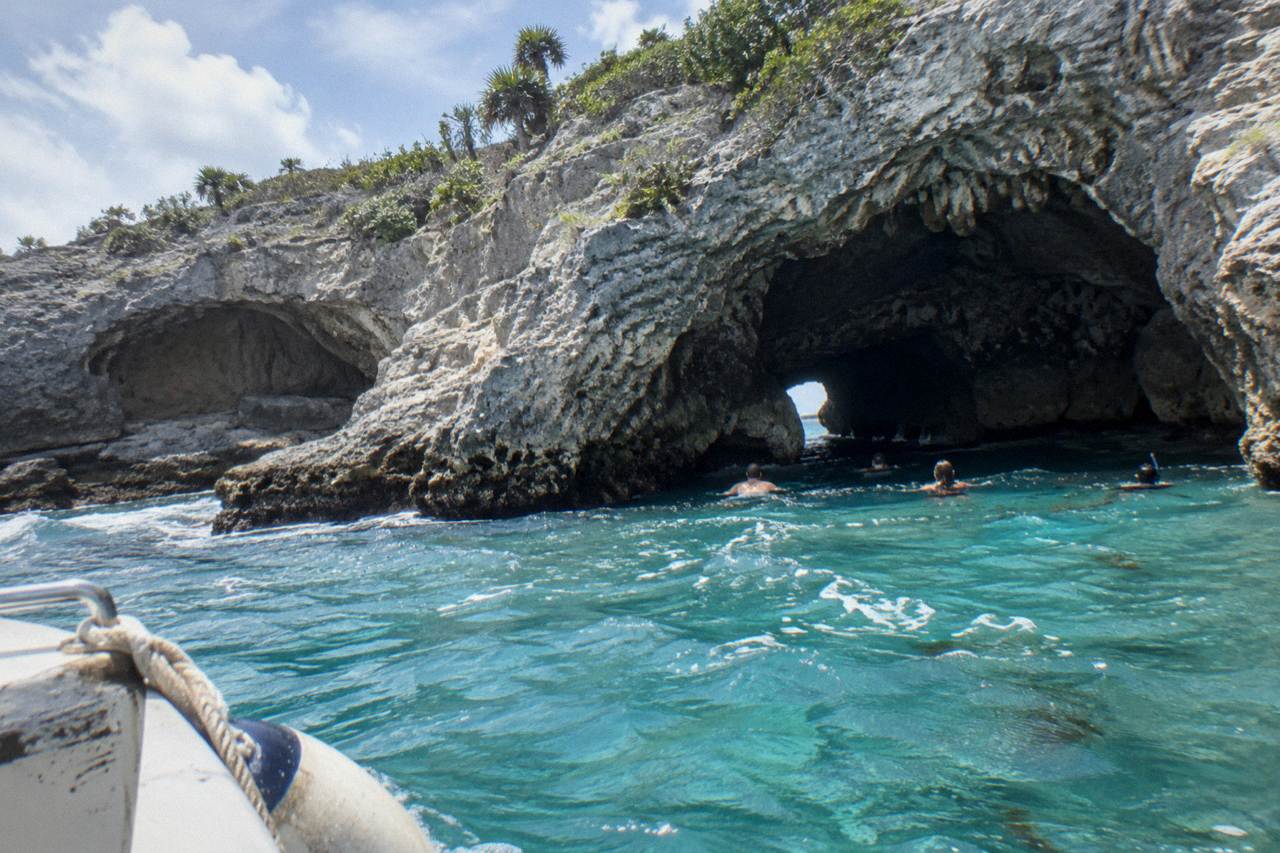
Thunderball Grotto has several openings: a main shoreline entrance sits at water level and serves as the primary way into the cave, while smaller holes open through the cave roof overhead. In short, the entry points consist of the main water-level shoreline entrance plus the smaller openings that pierce the roof of the grotto itself. The main entrance is a low gap in the rock face that you swim or wade through depending on the tide, while the ceiling holes are what bathe the interior in light. Jumping in through a roof hole is possible at the right water level, but captains typically direct guests to enter at the main gap for safety, feet first and clear of the rock.
The main entrance sits on the leeward side of the rock, sheltered from the open Exuma Sound swell, and boats anchor or hold station a short distance off. From the boat it is usually a brief swim of a few strokes to the gap. Inside, the cavern opens into a hollow dome lit from above. Daylight pours through the openings in the roof and falls in shifting beams across the water below, giving the whole space a glow that peaks around midday, which is why so many grotto photographs look like cathedral interiors.
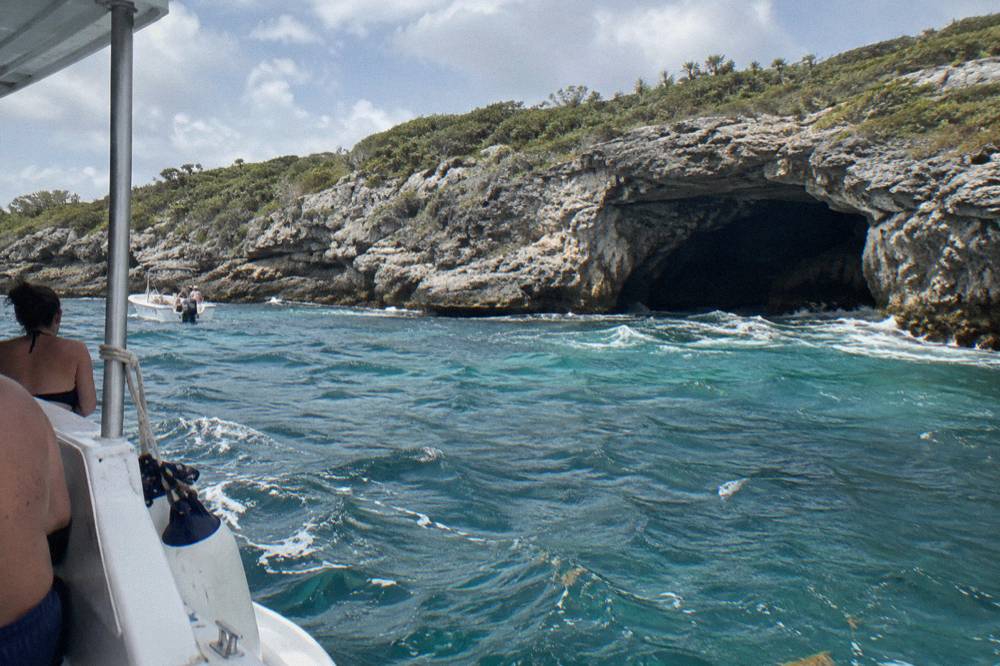
Guides usually brief guests before anyone leaves the boat: enter feet first, never dive headfirst into an unfamiliar opening, keep fins below the surface near the rocks, and stay clear of the entrance gap when another group is passing through. The rock is sharp limestone covered in barnacles, and the single most common injury here is a scraped hand or knee from grabbing the walls. Water shoes or fins protect both ways.
The interior is genuinely popular with fish because guides have fed the same spots for years, and the snapper and Sergeant Majors swarm around snorkelers in the enclosed chamber. Snorkel gear is standard on the tours that stop here, and the visibility is typically excellent in calm weather, easily good enough to see the full chamber from any point inside it.
| Entry point | Where it is | How you use it | Best tide |
|---|---|---|---|
| Main shoreline gap | Water level, leeward side | Wade or swim a few strokes from the boat | Low or slack |
| Roof holes | Through the ceiling above the dome | Jump or controlled entry only when water is deep enough | Mid tide |
| Seaward side pockets | Deeper pockets near the outer wall | Snorkel through only with a guide | Slack |
How Do Tides Decide Whether You Can Get Inside?
The tide is the single fact that governs the whole visit: it alone decides whether you can get inside safely. Low or slack tide is the entry condition, and the safe, recommended window falls within roughly one to two hours of the low, so time your arrival around it. At that point the entrances are most exposed, currents are weakest and the interior is calmest. Around high tide the openings sit deeper underwater and entry becomes difficult, sometimes requiring a dive under the rock lip, which is why crews plan the stop around the tide table rather than the clock on the wall.
This is worth internalizing before you book anything. Two identical tours on two different days can deliver completely different grotto experiences purely because of when the tide fell. A trip that reaches the cave an hour after low water gets an easy wade and glassy interior. The same trip a day later might arrive at rising water and get a careful duck-and-swim, or a skip of the interior in favor of snorkeling the outside wall. Operators reschedule the stop order on the fly to hit the window, moving the pig beach or iguana cay earlier or later as the tide demands.
Tidal range in the Exumas is modest, often around two to three feet, but the grotto's openings sit so close to mean water level that those two to three feet change everything. Wind matters too. A stiff blow from the wrong quarter pushes swell into the entrance gap and can close entry even at the right tide, and late-summer weather systems do this several times a season. This is one reason hurricane-season months carry higher chances of a reshuffled itinerary, while December to May typically brings the calmer seas and clearer water that make the interior look its best.
Guided crews watch tide apps and local knowledge together, and a good captain will call the grotto slot the night before or on the morning of the trip. If you are traveling independently by rental boat, you take that judgment call on yourself, and the safe default is simple: go in the window near low water, stay out when the entrance is submerged, and never force a dive entry. For more on the stop itself, see the thunderball grotto snorkeling guide.
If you would rather have the tide timing handled for you, a full-day speedboat option from Nassau with an experienced crew is the straightforward route, and Exuma Tours covers the details.
What Rules And Fees Apply At The Grotto?
No permit is required to snorkel or dive at Thunderball Grotto, and no admission fee is charged to visit the site, according to operators. The grotto lies outside the boundary of the Exuma Cays Land and Sea Park, which is why visitors do not need park permission or pay park fees to enter. The park, established in 1958 as the first marine reserve in the Bahamas and the wider Caribbean, ends at its southern boundary, just north of Compass Cay, so its fee schedule and strict no-take rules do not reach the grotto itself. Confirm the stop's current status with your operator, since park boundaries and management rules can shift.
Fees do appear next door. If your tour enters the park proper, for example at Warderick Wells, day-tour landing fees run BSD 6.36 per person at most park locations, or BSD 12.73 per person with a guided tour at the headquarters, plus 10% VAT at checkout, and operators normally absorb these in the tour price. The Bahamas National Trust publishes the current schedule on its park payment page. The distinction matters only if your itinerary crosses the line, which most pig-and-grotto loops from Nassau do not.
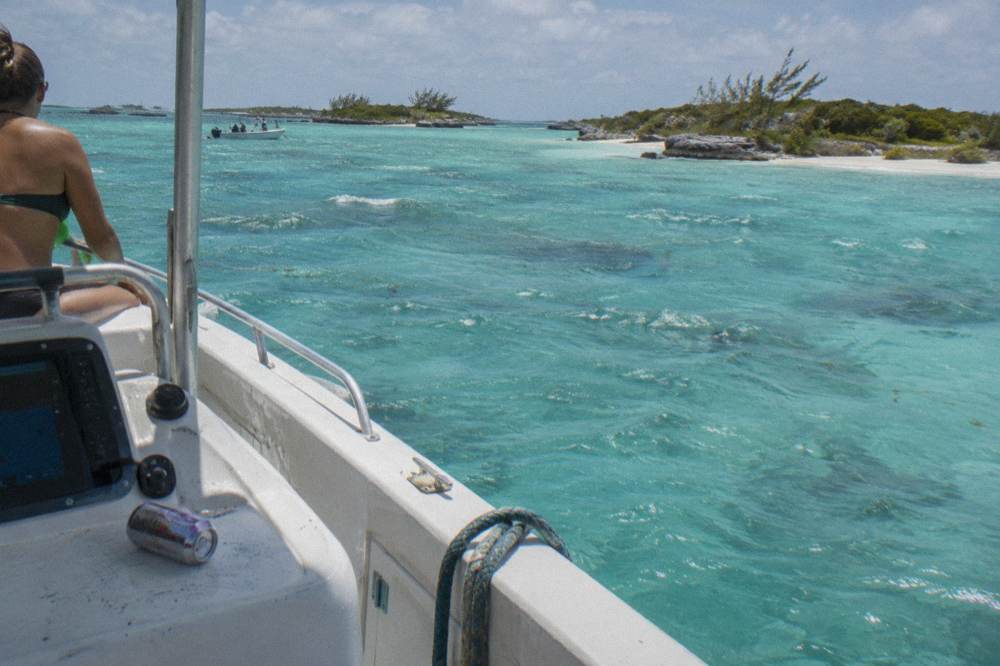
Behavioral rules at the grotto are crew-set rather than law. No government regulation on visitor conduct inside the cave was found on official Bahamas sources, so the briefings your captain gives are the operative rules, and they are consistent across operators: no touching or standing on coral inside the entrance channel, no feeding fish in the enclosed chamber beyond what the crew provides, feet-first entries near the rocks, and life jackets for weak swimmers. Adjacent wildlife stops carry their own norms, from the operator-provided food rules at Pig Beach to the protected status of the Bahamian rock iguana, named on the official Bahamas ecotourism page.
Fly-in travelers should check how their arrival airport affects the grotto timing on the day.
What Does A Grotto Day Look Like On A Guided Tour?
A guided grotto day usually runs roughly eight to nine hours from Nassau, pairing the cave with several other highlights in a single outing. After the grotto stop, groups typically continue on to Pig Beach, an iguana cay, and a nurse shark stop, then finish with lunch at a sandbar or on a private island. The grotto slot usually lands mid-afternoon or mid-morning, whichever the tide table prefers, and lasts perhaps 30 to 45 minutes in the water. The rest of the day is the transit and the other stops that make the long ride worth it.
The most direct route into the grotto is by air. Exuma Elite Escape: 7-Stop Luxury Swimming Pigs Tour from Nassau runs about 6 hours, is rated 4.8 across 580 reviews, and prices from $850 per person. Flights land in the cays and the boat day works inward from there: pigs, iguanas, a sandbar stop, and the grotto timed to the tide so you can swim through the cave openings while the water is calm. The crew calls the exact order on the morning based on conditions.
The premium alternative compresses the transit. Exclusive Fly-In Trip for a Premium Beach Day swaps two hours of boat each way for a flight from Nassau, runs about 7 hours total, is rated 4.7 across 138 reviews, and starts from $838.35 per person. Fly-in trips reach the Staniel Cay area with more of the day left for the water, and operators note that Staniel Cay based or fly-in tours allow quieter, more flexible morning or off-peak timing at Pig Beach and the grotto than the big speedboat loops can manage.
The third route is the luxury compressed day. Exuma Elite Escape: 7-Stop Luxury Swimming Pigs Tour from Nassau runs about 6 hours, is rated 4.8 across 580 reviews, and prices from $850 per person. Shorter days mean tighter stop timing, so if the grotto is your priority, tell the crew when booking; tide windows do not stretch to fit an itinerary.
| Tour | Duration | Rating and reviews | Price basis |
|---|---|---|---|
| Original Exuma Powerboat Adventures | ~9 hours | 4.7 across 553 reviews | from $328.90 per person |
| Exclusive Fly-In Trip for a Premium Beach Day | ~7 hours | 4.7 across 138 reviews | from $838.35 per person |
| Exuma Elite Escape: 7-Stop Luxury Tour | ~6 hours | 4.8 across 580 reviews | from $850 per person |
Each format reaches the same rock; the differences are transit time, group size and how much slack exists to wait out a tide. Speedboat days cost the least and pack in the most stops. Fly-in days buy back hours. Luxury days buy comfort and pace. For help matching the format to your trip, the best Exuma tour comparison breaks the decision down stop by stop.
Which Season Gives The Calmest Water?
December through May is your best window for calm water, since this stretch typically brings the calmest seas and the best water clarity for the grotto. From June to November, hurricane season raises the odds of rough conditions, with the peak falling between August and October, when stops are more likely to be reshuffled or cancelled. The grotto itself does not close for season; the sea simply decides how pleasant the entry is on any given morning. Late October sits near the end of the season, and no active tropical systems were listed near the Bahamas in the final week of the month.
Water temperature is on your side almost all year. Recent readings around Exuma ran in the 29 to 30 degree Celsius range in late October, and even winter months stay warm enough for a swim without a wetsuit for most people. The seasonal trade-off is not cold water, it is sea state. A swell at the entrance gap turns an easy wade into a bump-and-scrape, and a storm hundreds of miles away can send a long-period swell that closes interior entry for days at a time even in sunshine.
Crowds follow a similar curve. The December to April window brings the busiest boats, and midday at the grotto can see several tours rotating through the same small entrance. Shoulder months trade a little weather risk for fewer boats in the water, and operators sometimes note these quieter periods offer better conditions and lighter crowds. Sea state and crowds are conditions, not promises, so treat them as likelihoods and let the crew make the day's calls.
Packing is the same in every season: reef-safe sunscreen, a hat, sunglasses, a towel, a waterproof pouch for the phone and water shoes for the limestone. Those six items are the standard operator recommendation, and water shoes matter more at the grotto than anywhere else on the route. The what to bring on an Exuma boat tour guide covers the full list.
Is Jumping The Right Way In For You?
Jumping in is the right way in for you if you are a confident swimmer, the tide and water depth are right, and you can handle an overwater entry along with the swim back to the boat; if any of that does not describe you, jumping in is the wrong choice. The ceiling holes allow a jump only when the water beneath is deep enough, which the crew will judge on the spot rather than in advance. Most guests, including families with school-age kids, enter through the main gap with fins on, and lose nothing by it.
Honest self-assessment beats bravado here. If you can swim comfortably in open water, tread water for a few minutes and climb a boat ladder, the grotto is well within reach, since the interior is calm and the exit is a short swim away. If any of those are shaky, a life jacket from the crew turns the stop into a float through the dome rather than an athletic event, and the fish and light are the same either way. Crews handle nervous swimmers constantly; say so upfront and the stop gets built around you.
Age and group logistics are worth one more thought. Some full-day powerboat tours from Nassau list cruise ship guests among those for whom the trip may not suit, because of the early check-in, full-day commitment and return timing. That is a schedule constraint rather than a grotto constraint, but it shapes who ends up at the cave at all. If you are anchored in Nassau for a single day, check the return time against your all-aboard before booking anything.
For most travelers the answer to the original question is simply yes, with the tide as the fine print. Pick a tour whose crew times the stop, listen to the briefing, put on the water shoes, and take the jump if the water is deep and the captain nods.
Common Questions About Jumping Into Thunderball Grotto
Can You Jump Into Thunderball Grotto?
Yes, when the tide and water depth allow. Jumping through a roof hole is possible at sufficient depth, but the standard and safer entry is feet first through the main water-level gap, which is easiest near low or slack tide. Your crew judges the conditions on the day.
Do You Need A Permit To Snorkel Thunderball Grotto?
No permit is currently required to snorkel or dive the grotto, though sources note this could change for tourism management. The site charges no admission fee, and operators report it lies outside the Exuma Cays Land and Sea Park boundary, so park landing fees do not apply to the stop.
When Is The Best Tide To Enter The Grotto?
The recommended window is low or slack tide, roughly within one to two hours of the low, when entrances are most exposed and currents weakest. Near high tide the openings sit submerged and entry becomes difficult, sometimes requiring a dive, so tours plan the stop around the tide table.
Is Thunderball Grotto Safe For Kids And Weak Swimmers?
Generally yes, with a life jacket and a crew briefing. The interior is sheltered and calm at slack tide, and the swim from the boat to the entrance is short. The main hazards are sharp limestone and swell at the entrance gap, which fins, water shoes and sensible timing address.
How Long Do You Spend At The Grotto On A Tour?
Typically 30 to 45 minutes in the water as one stop on a full-day itinerary. Speedboat days from Nassau run about 8 to 9 hours total with pigs, iguanas, sharks and lunch packed around the grotto slot, while fly-in options reach the area faster and allow more flexible timing.
What Movie Was Filmed At Thunderball Grotto?
The James Bond film Thunderball used the cave, which is where the name comes from. The flooded chamber and its light shafts are the same features snorkelers swim through today. The Bond filming story covers the production history in detail.