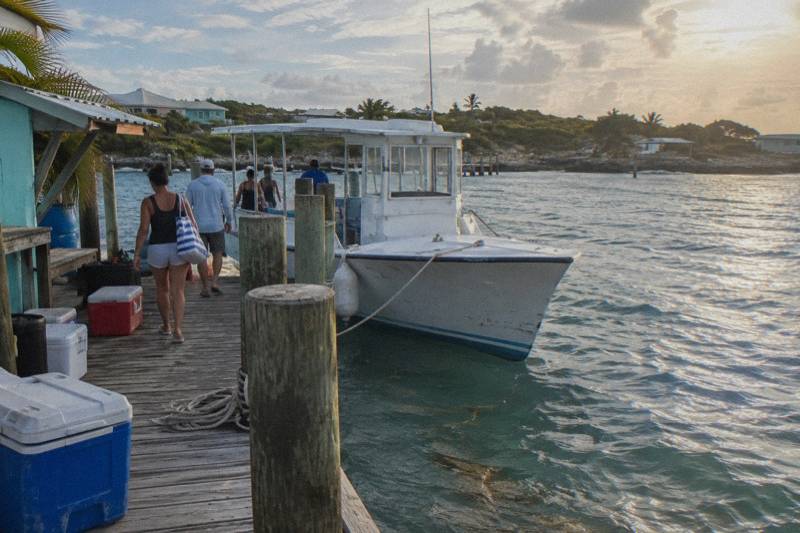
Bahamas Entry Requirements For An Exuma Trip
Getting into the Bahamas is straightforward for most visitors, but the details that trip people up, passport validity, the arrival card and the departure tax, are worth confirming before you book a boat day.
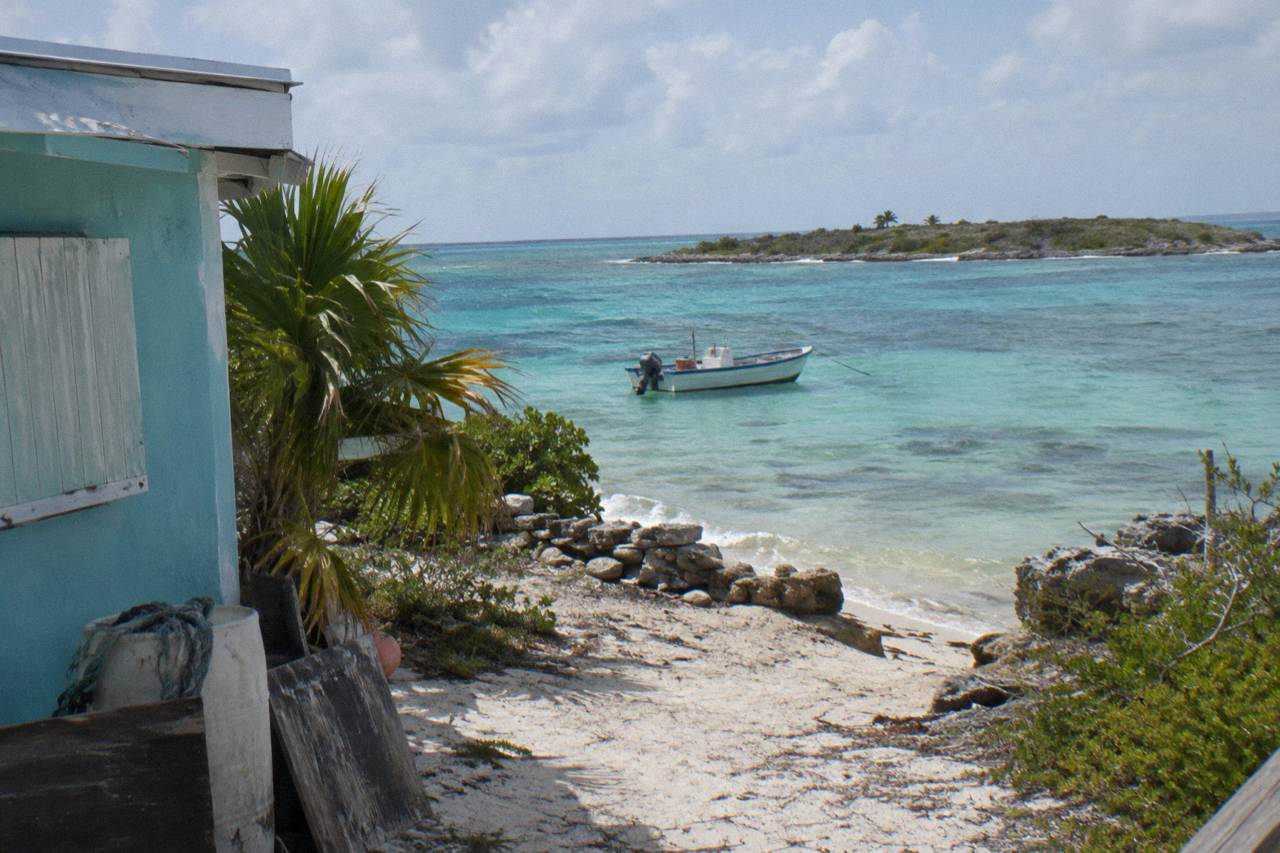
Short answer
US, Canadian and UK visitors need a passport valid for at least six months beyond entry, with no visa for stays under three months. An arrival and departure card is required, and everyone aged six or over pays a departure tax of $29, usually bundled into the airfare.
The paperwork for a Bahamas trip is light compared with many island destinations, and that is exactly why it catches people out. Travelers assume a quick weekend hop works like a domestic flight, then discover at check-in that their passport expires in four months, or that the airline asks for a card they never printed. Every rule on this page comes from official Bahamas immigration and tourism sources, not from forum threads, so you can sort the documents in one sitting and get back to the interesting part, which is choosing between Pig Beach, Thunderball Grotto and a sandbar lunch stop. The same rules apply whether you land at Exuma International Airport, fly into Nassau first, or arrive on a cruise ship, though a few details differ by route. This guide walks through each requirement in the order you will actually meet it, from the booking screen to the departure gate home. If you are also mapping the sea legs of the trip, the Nassau To Exuma Day Trip Guide covers the boat and flight options in detail, and Exuma Tours carries the full picture across this site.
What Documents Do You Need To Enter The Bahamas?
Most visitors need exactly two things: a passport valid for at least six months beyond the entry date, and a completed arrival and departure card. Citizens of the United States, Canada and the United Kingdom need no visa for stays under three months, and the card is handed out on arrival or completed digitally where the pilot program applies. Passport cards are not accepted.
That is the whole picture for a typical American or Canadian visitor flying into Exuma or Nassau for a week of boat tours. The six-month validity rule is the one that causes the most trouble, because a passport that still has two or three months left on it will not clear check-in for a Bahamas flight even though the trip itself is short. The Bahamas immigration department states plainly that passport cards, the wallet-size documents issued to US citizens for land and sea entry to nearby countries, are not accepted for entry; you need the book. Children need the same documents as adults, and each traveler completes their own card.
The visa picture is generous but not unlimited. Canadians may stay up to eight months before a visa becomes necessary, while US and UK visitors hit the visa threshold at three months, far beyond any tour itinerary. Other nationalities should check the official entry page directly, since the list of visa-exempt countries is long but not universal. The How To Get To Exuma Guide explains the flight routes that get you to the immigration desk in the first place, including the Nassau connections most Exuma visitors pass through.
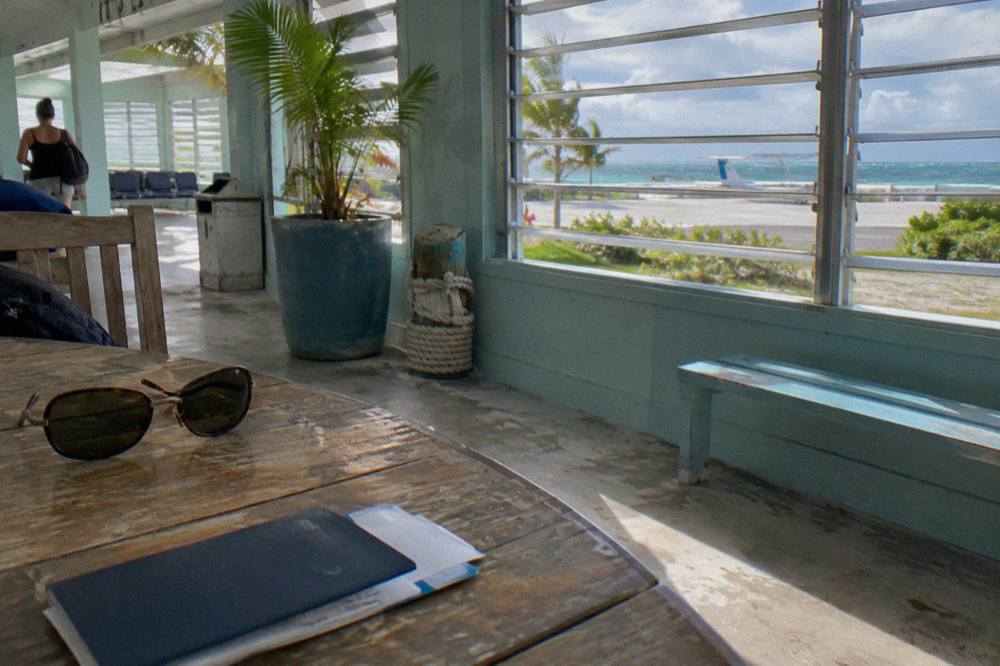
The official statement of these rules lives on the Bahamas Ministry of Tourism entry page at bahamas.com/entry-requirements, with the document detail on the immigration department's own page at immigration.gov.bs. Print or screenshot the key points before travel, since airport wifi at smaller Bahamian terminals can be slow. Here is how the documents break down by traveler type.
| Traveler | Passport (6 months validity) | Arrival and departure card | Visa needed? |
|---|---|---|---|
| US citizen | Required, book format only | Yes, one per traveler | No, stays under 3 months |
| Canadian citizen | Required | Yes | No, stays under 8 months |
| UK citizen | Required | Yes | No, stays under 3 months |
| Children | Required, own passport | Yes, completed by guardian | Same rules as adults |
One point of confusion worth clearing up: returning US citizens do not need six months of validity to re-enter the United States, but they do need it to enter the Bahamas, and the airline checks both directions before boarding. The rule that matters: your passport must stay valid for six months past your arrival date, not merely on the day you enter.
Does Your Passport Need Six Months Validity For The Bahamas?
Yes. The Bahamas requires passports to remain valid for at least six months beyond your date of entry, and airlines enforce this at check-in before you ever reach a Bahamian immigration officer. A passport with four or five months remaining will be treated as expired for travel purposes, and there is no discretion at the counter for a four-day itinerary.
This rule is published by the Bahamas immigration department and is not softened for close-in travel from the United States or Canada. If your passport expires within six months of your arrival date, renew it before booking flights, because the renewal timeline becomes the critical path for the whole trip. Routine renewal is the safe path; expedited services exist but add cost and stress that nobody wants two weeks before a boat tour. The check happens twice in practice, once at the departure gate where the airline can be fined for boarding improperly documented passengers, and once at Bahamian immigration on arrival.
The reason behind the rule is administrative rather than hostile. Countries use the buffer so that a traveler stranded by illness, weather or a hurricane-season flight cancellation never overstays a document. In the Bahamas that buffer matters more than most places, since September and October storms can pause flights for days at a time and the hurricane window runs through the end of November. Build the six months as a hard floor, not a target, and you will never think about it again.
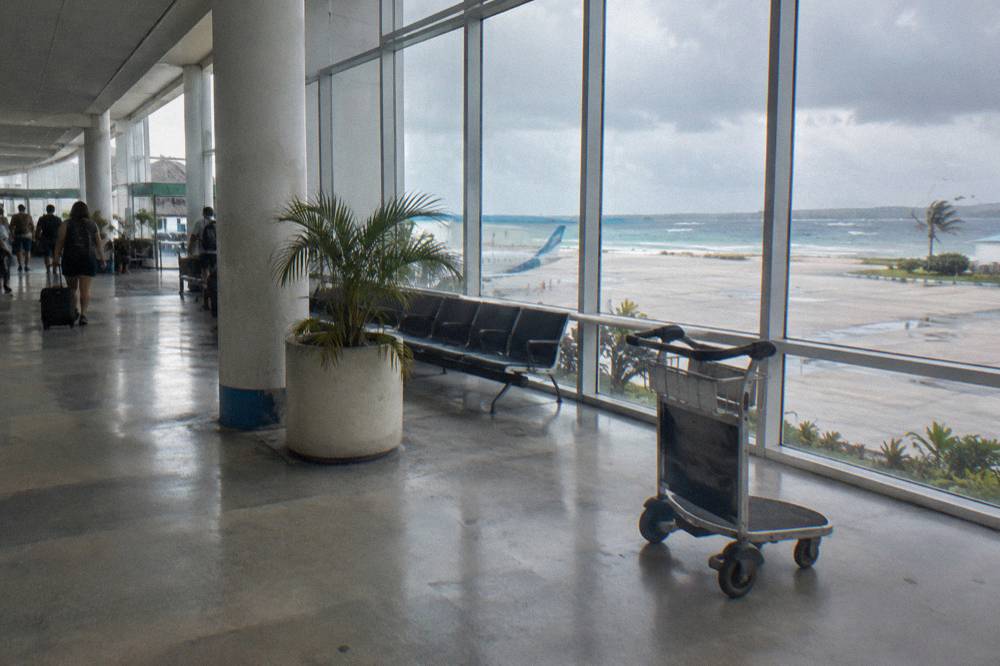
For travelers connecting through Nassau to Exuma, the immigration inspection happens at the first point of entry, which is Nassau on most itineraries. The domestic hop from Nassau to Exuma International Airport is treated like a local flight, with no second passport control, so the six-month check happens once and you are done. Visitors planning a fly-in tour day rather than a stay should note that the same document rules apply, since even a day trip across the border is an international entry. The Exuma Day Trip By Plane From Nassau Guide covers that option.
For many travelers, the day that follows the paperwork looks something like this: an early check-in, a flight south, and a boat already waiting.
What Is The Bahamas Digital Arrival Card?
The Bahamas has begun replacing its paper arrival and departure card with a digital version, the Bahamas Digital Arrival Card, which rolled out in a pilot phase for select visitors in 2026. The paper card remains the fallback for travelers outside the pilot, and completion of one or the other is mandatory for every arriving visitor.
The soft launch is a genuine change rather than a rumor. The Ministry of Tourism announced the pilot as a first for the destination, with the digital card combining the immigration card and the customs declaration into a single submission for participating travelers. Because a pilot is by definition partial, the practical advice is simple: complete the paper card handed out on your flight unless your airline or tour operator tells you the digital route applies to you, and check the immigration department site shortly before travel to see whether the program has expanded to your route. Either way, the information requested is basic: name, passport details, where you are staying, and the purpose and length of your visit.
Have your accommodation address written down before you fly. The card asks for it, and travelers arriving for a boat tour day sometimes only have a tour name in hand, which slows the desk down. If your trip is built around a specific excursion, the operator's confirmation email usually lists a local office address that works for the form. This is one of those small preparations that turns a slow queue into a fast one, and it costs nothing.
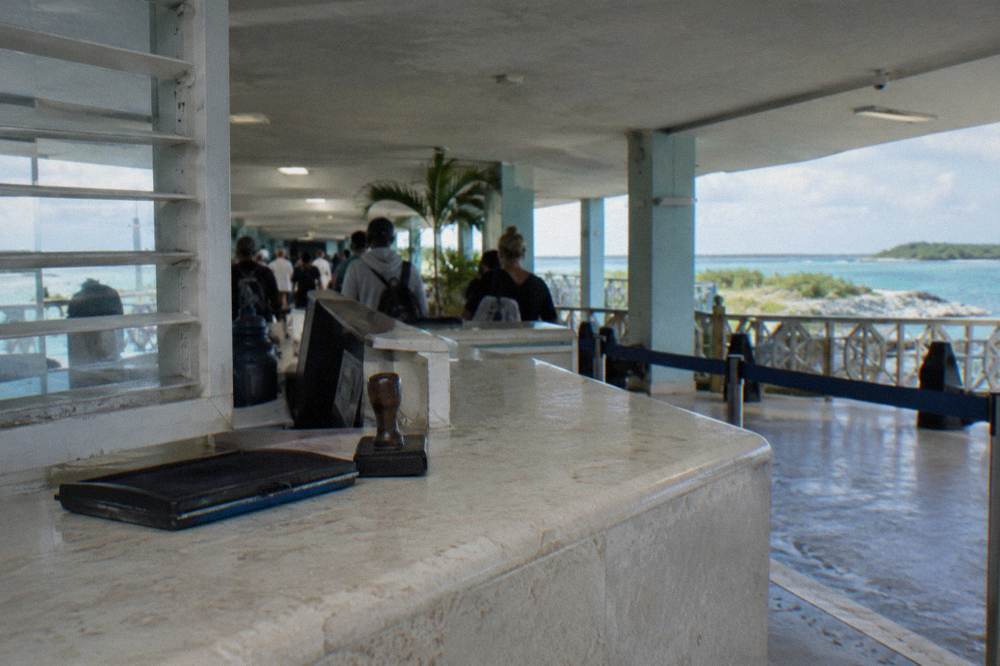
The official announcement of the digital card pilot is on the Ministry of Tourism pressroom at bahamas.com/pressroom. Nothing about the card changes the underlying rules: the passport requirement, the visa exemptions and the departure tax all sit alongside it unchanged.
Once the card is done, the border work is finished for most visitors, and planning shifts to the water. The What To Bring On An Exuma Boat Tour Guide is the natural next read, since a day on the cays has its own short list of essentials.
Do You Pay A Departure Tax Leaving The Bahamas?
Yes. Every traveler aged six or over pays a departure tax of $29 when leaving the Bahamas, and for airline passengers it is almost always collected within the ticket price rather than at the airport counter. Private flights and some charter arrangements handle it differently, so charter passengers should confirm with the operator before departure day.
The tax is official policy, published on the Ministry of Tourism's aviation pages, and it applies to visitors and residents alike from the age of six. The phrase to look for on your airline receipt is buried in the taxes and fees section, where the Bahamas departure charge appears alongside security and facility fees. Because it is prepaid, the overwhelming majority of travelers never handle it directly and never think about it again. The exceptions matter mostly to people flying private or semi-private, including some fly-in tour arrangements, where the operator may pass the charge through as a line item or collect it at the field. If your itinerary includes a small-plane leg, ask the operator how the departure tax is handled when you book.
The $29 departure tax is per person, and it applies to travelers aged six and over. For a standard fly-in, tour, fly-home trip it is a single charge homeward. Travelers under six are exempt, which families juggling documents for several children occasionally appreciate hearing.

The full set of official figures for a standard Exuma visit stacks up like this.
| Item | Amount | Who pays | When |
|---|---|---|---|
| Departure tax | $29 per person | Travelers aged 6 and over | Leaving the Bahamas, usually in the airfare |
| Passport validity buffer | 6 months beyond entry | All non-citizen visitors | Checked at airline check-in |
| Visa | None | US, UK stays under 3 months; Canada under 8 | Not applicable |
| Arrival card | No fee | Every traveler | On arrival, paper or digital |
A useful habit is to keep your boarding passes and receipts until after you land home. If a charge was missed or doubled, the paperwork is what resolves it, and the tax line is clearly labeled on the ticket breakdown.
Are There Entry Rules For The Exuma Cays Land And Sea Park?
Day visitors on a guided tour pay nothing at the gate, because tours normally absorb the park's landing fees into the ticket price, but the Exuma Cays Land and Sea Park is a strict no-take zone where fishing, shelling, conching and lobstering are prohibited and nothing living or dead may be removed. Charter passengers pay per-person day fees that operators usually include.
The park, established in 1958 as the first marine reserve in the Bahamas and the wider Caribbean, spans 112,640 acres of cays and shallow banks, and its rules are enforced by wardens and Royal Bahamas Defence Force officers. The fee schedule is set by the Bahamas National Trust: a day-tour landing fee with a guided tour at Warderick Wells runs BSD 12.73 per person, other park locations carry BSD 6.36 per person, and charter vessels pay an additional BSD 14.00 per person per day for mooring and anchorage, all subject to 10% VAT at checkout. The Bahamian dollar is pegged one to one against the US dollar, so the numbers read the same in either currency. Private vessels mooring in the park pay from about $27.27 per day for boats under 40 feet, and the park takes no reservations for moorings.
For someone on a booked tour, none of this requires action. Operators report that landing fees are included in the tour price, and the crew handles check-in with the park office at Warderick Wells, which keeps Sunday office hours in two sessions. What every visitor does own is the no-take rule itself. Do not pocket a shell, a piece of coral or a sand dollar, even a dead one washed up on the beach, because inside the park boundary removal of anything natural is prohibited, and the fines are real. The rules also bar anchoring on coral and require idle speed through mooring fields.
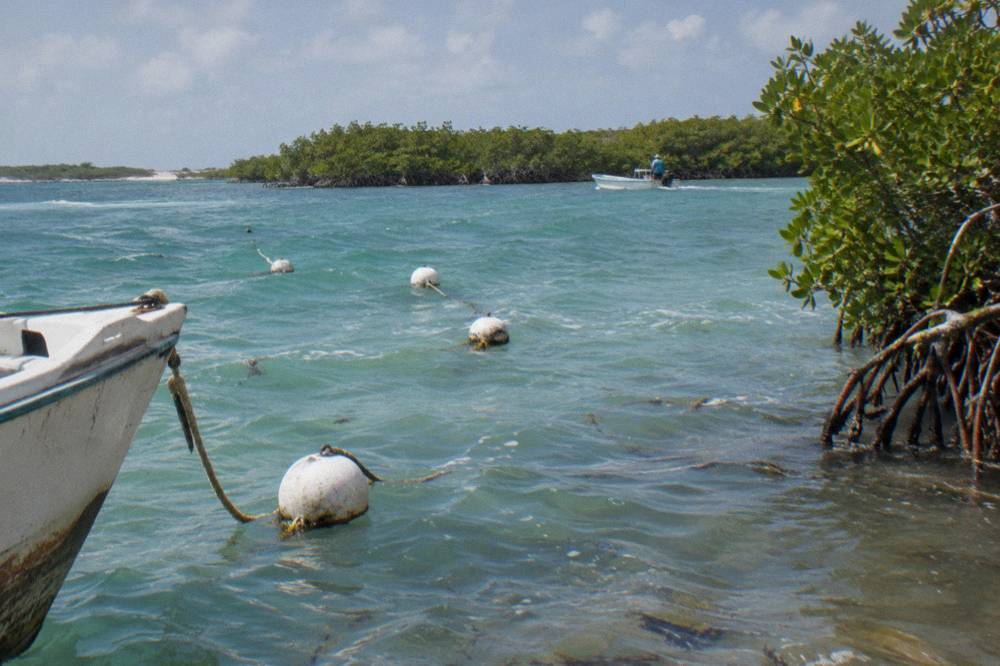
One boundary detail shapes which stops carry park rules: Thunderball Grotto and Pig Beach at Big Major Cay lie outside the park's southern boundary, according to operators, though not on an official park page, so the no-take zone applies to the southern cays and Warderick Wells rather than the famous pig stop. The Exuma Cays Land And Sea Park Tour Guide maps the boundary in full. The official rules are published by the Bahamas National Trust at bnt.bs.
For a shorter park-adjacent day that still touches the headline stops, the Exuma Island and Cays Tour runs about seven and a half hours, is rated 4.9 across 111 reviews, and starts from $330 per person.
What Can You Bring On An Exuma Boat Tour?
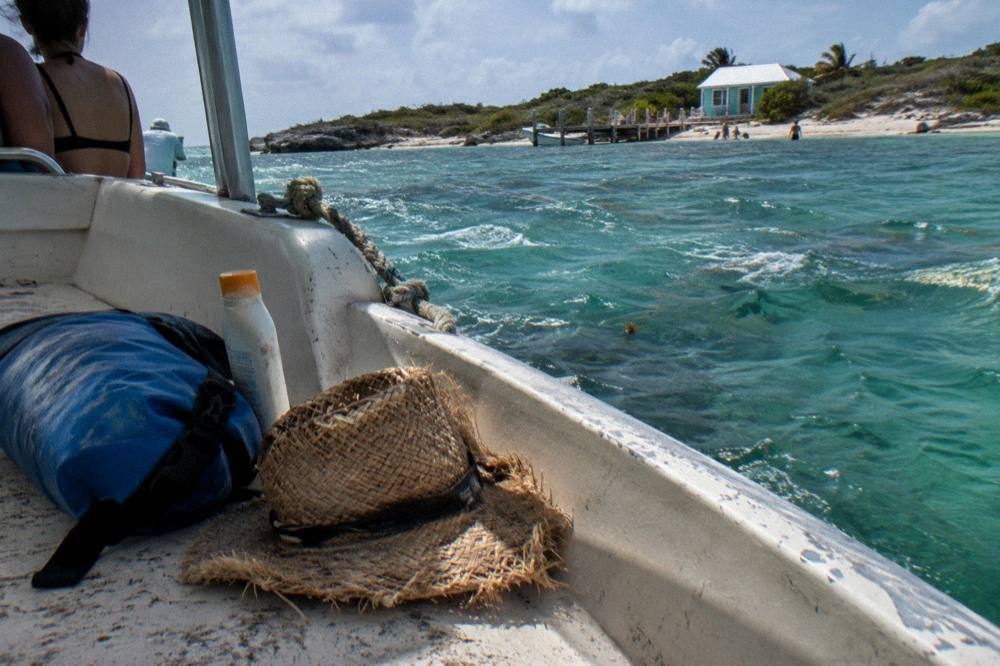
There is no border rule restricting what you carry onto a tour boat beyond normal customs limits, but the practical list is short: reef-safe sunscreen, a hat, sunglasses, a towel, a waterproof phone case and water shoes, per the packing guidance published by local operators. Power boats run fast and wet, so anything loose should be secured or left at the hotel.
The customs allowance for entering the Bahamas is generous for personal effects, and a day bag for a boat tour raises no questions. The restrictions that matter are environmental and operator-set rather than governmental. Reef-safe sunscreen is the standard ask across Exuma operators, both for the park's waters and for the snorkel sites outside it, and several crews keep a bottle aboard for guests who arrive with the wrong kind. Water shoes earn their space at rocky stops like Thunderball Grotto, where the entry is over uneven coral rock, and at sandbar stops where the surface shifts underfoot. A dry bag or a good phone pouch protects the one item most travelers cannot afford to soak.
Food and drink rules are set by each operator rather than by law. Most full-day tours include lunch and drinks, so the question answers itself, but on shorter trips the crew may ask you to skip glass containers and to take every wrapper back off the beach with you. The carry-out rule applies everywhere in the cays, not only inside the park boundary, and it exists because none of the uninhabited cays have waste collection of any kind. Whatever lands with you leaves with you.
| Item | Bring it? | Why |
|---|---|---|
| Reef-safe sunscreen | Yes | Standard operator ask, protects snorkel sites |
| Water shoes | Yes | Rocky grotto entries and shifting sandbars |
| Waterproof phone case | Yes | Power boat spray and swim stops |
| Towel | Yes | Multiple swim stops per day |
| Glass containers | No | Operator rule on most boats |
| Drone | Check first | Some operators and park areas restrict use |
Families should also confirm age minimums with the operator before booking, since some group boats are not recommended for very young children on the long Nassau runs. The Exuma With Kids Family Tours Guide collects the age policies in one place.
Do Cruise Passengers Follow Different Bahamas Entry Rules?
Cruise passengers are generally covered by the ship's manifest process and do not complete individual arrival cards at the port, but a passport is still required under Western Hemisphere Travel Initiative rules for US citizens re-entering by sea, and the same six-month validity recommendation applies to any passenger booking an independent Exuma excursion that departs from Nassau.
The distinction that matters here is ship-organized versus independent. Passengers who book excursions through the cruise line are processed as a group and carry their passport or, where rules permit, a passport card for the sea return. The catch for this site's readers is that the best Exuma days from Nassau are independent tours, and the full-day speedboat trips leave early, around a 9 AM departure with a check-in close to 8:45 AM, which does not fit every port call. Several operators list cruise passengers among those for whom a full-day trip may not be suitable, precisely because the return timing sits close to typical all-aboard hours.
If your ship overnights in Nassau, the picture improves completely, and a full Exuma day becomes the obvious move. The Best Excursions From Nassau Guide ranks the options that work around a port schedule. For everyone else, shorter Nassau-based water trips or a fly-in day with a hard return time are the realistic choices, and both need the same documents as any other visitor. It is worth saying plainly that immigration formalities for cruise passengers on a closed-loop sailing can differ from airline procedures, so confirm your specific document requirements with the cruise line rather than relying on general advice, including anything printed here.
For a fly-in styled day with a premium finish, the Exuma Elite Escape runs about six hours across seven stops, is rated 4.8 across 580 reviews, and starts from $850 per person.
What Happens If Weather Disrupts Your Entry Or Tour?
Hurricane season runs from 1 June to 30 November with peak activity from August to October, and boat tours can be rescheduled or cancelled in rough seas, while flights can pause for days during storm passages. Immigration rules do not change in bad weather, which is exactly why the six-month passport buffer exists.
Late October sits near the season's end, and in practice most autumn weeks run calm, with sea temperatures holding close to 29 degrees Celsius and no active tropical systems listed near the islands. The risk is not the average day but the tail of a storm curve: a single October system can scrub a week of sailings. Operators handle this with rescheduling and refunds rather than arguments, and the booking pages carry each trip's cancellation terms, which typically allow free cancellation within a window before departure. Travel insurance that covers weather disruption is worth the premium in peak season, particularly for the expensive private charters where the financial commitment is large.
Document-wise, a weather delay is where preparation pays. A traveler whose passport has eight months of validity absorbs a three-day delay without a thought. A traveler with six months and a two-week trip still clears the rule, but a longer forced stay starts to squeeze the math. Keep digital copies of your passport, your tour confirmations and your return ticket in your email, so that an airline desk or a consulate can help without the paper originals. The Best Time To Visit Exuma Guide lays out the month-by-month tradeoff between crowds, prices and storm odds for anyone with flexible dates.
For travelers weighing a budget-friendly option that still covers the headline stops, the Exuma Day Away original excursion runs about eight and a half hours, is rated 4.5 across 474 reviews, and starts from $378 per person.
Three entry-cost realities are worth having in your pocket before you finalize dates and bookings.
Common Questions About Bahamas Entry Requirements
What Documents Do You Need To Enter The Bahamas?
A passport valid for at least six months beyond entry and a completed arrival and departure card. US, Canadian and UK citizens need no visa for short stays. Passport cards are not accepted.
Do You Need Six Months On Your Passport For The Bahamas?
Yes, the six-month validity requirement is enforced at airline check-in, and there is no discretion for short trips. Renew first if your passport is inside the window.
What Is The Bahamas Digital Arrival Card?
A digital replacement for the paper arrival and departure card, launched as a pilot for select visitors in 2026. Most travelers still complete the paper card handed out on the flight.
How Much Is Bahamas Departure Tax?
$29 per person aged six and over, leaving the Bahamas. Airline passengers almost always pay it inside the ticket price rather than at the airport.
Do Cruise Passengers Need A Passport For The Bahamas?
Closed-loop cruise passengers may sail under different document rules set by the cruise line, but cruise passengers should confirm document rules with their cruise line; several listings note they're not recommended for cruise travelers.
Is There An Entry Fee For The Exuma Cays Land And Sea Park?
Day visitors on tours normally pay nothing extra, because operators absorb the per-person landing fees. The park is a strict no-take zone, so nothing natural may be removed.