Are The Pigs In The Bahamas Treated Well?
An honest look at pig welfare in Exuma: the 2017 deaths, the operator feeding rules that followed, and how to pick a tour that treats the animals well.
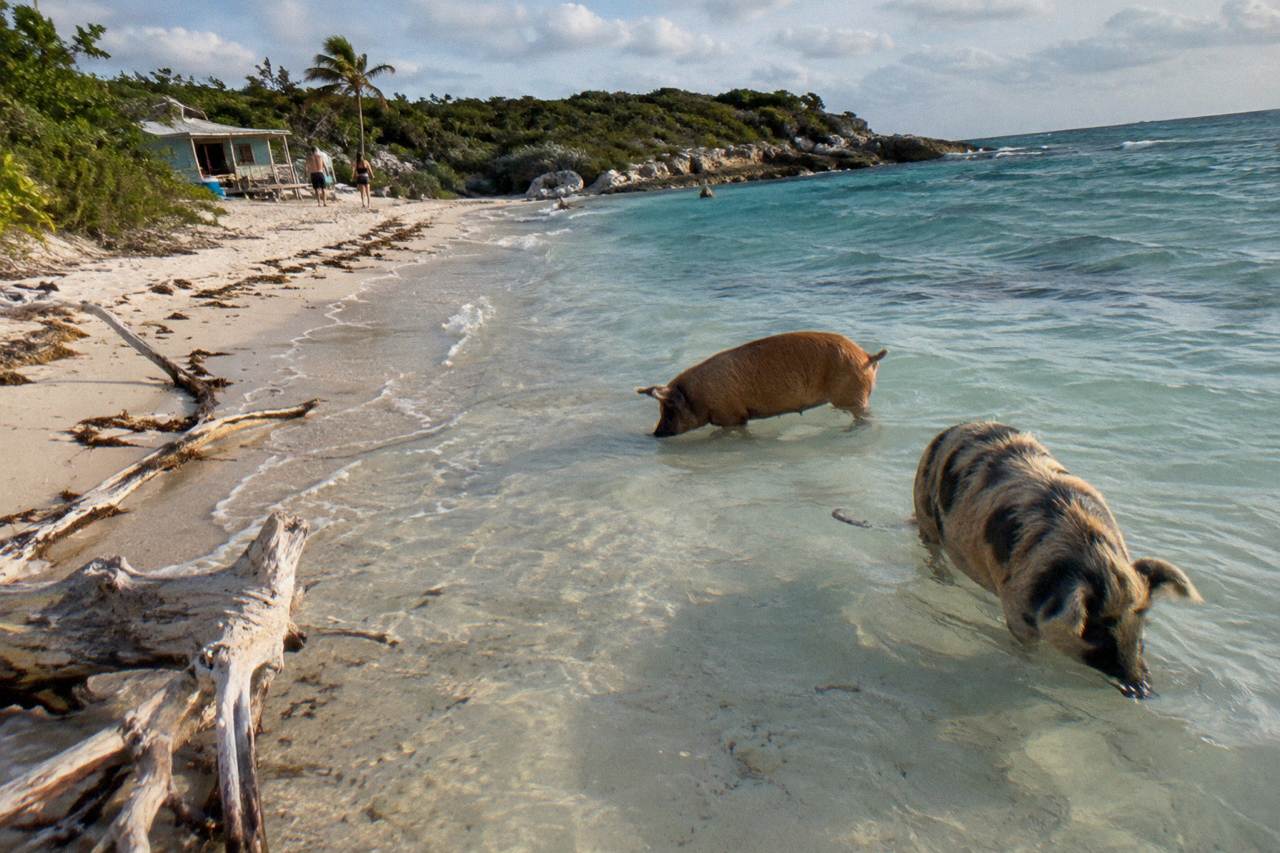
On balance, yes, but welfare is not guaranteed by any law and it varies by operator. The Bahamas Ministry of Tourism describes about 20 pigs and piglets living wild on uninhabited Big Major Cay, reachable only by boat. No government feeding or interaction regulation exists on official pages, so the pigs' day-to-day treatment rests on the tour crews who bring them food and manage how guests behave.
That answer surprises a lot of people. The image most visitors carry is of pigs living a charmed life on a postcard beach, paddling out to boats for snacks. The reality is more complicated, and more interesting. These are feral animals on an island with no fresh supermarket of natural forage, no permanent human caretaker, and no veterinary clinic. Their welfare hinges on a loose system of tour operators who feed them, vets who make occasional visits organized by tourism stakeholders, and guides who set the rules on the sand.
The honest version of the story includes a hard chapter. In 2017, a number of the pigs died, and reporting at the time linked the deaths to sand ingestion, the animals swallowing large amounts of sand along with food thrown to them on the beach. That event reshaped how responsible operators run their pig stops today, and it is the reason the feeding rules you will hear on a good tour are so specific. If you want to understand exactly what happened on that beach and why the rules changed, our full account of what killed the swimming pigs walks through the investigation and what tour operators do differently now.
This piece walks through what is actually known: where the pigs came from, how they live, what the 2017 deaths changed, what the current operator-reported rules are, and how to tell a welfare-minded tour from a careless one. Along the way it points to the questions worth asking before you hand over money, because on this topic the buyer really does shape the outcome. If you're also wondering whether the tours still run and what a day there looks like now, the guide to swimming with the pigs in the Bahamas today lays out the current operator rules and what a visit typically costs.
Where The Pigs Live And Who Looks After Them
The swimming pigs live on Big Major Cay, an uninhabited island in the Exuma Cays reached only by boat, roughly 10 to 15 minutes from Staniel Cay. There is no resident caretaker, no official feeding program run by government, and no animal welfare law specific to them, according to the Bahamas Ministry of Tourism's own page on the pigs.
The Ministry of Tourism describes a colony of about 20 pigs and piglets of unknown origin. The founding story, a farmer supposedly leaving pigs on the cay decades ago, is folklore nobody can verify, and the official page does not commit to it. What is verifiable is the setup today: the pigs are the cay's only large residents, they cannot leave, and their food arrives by boat.
Think about what that means. A feral pig population on a small Bahamian cay depends on natural forage plus whatever humans bring. Tour operators have effectively become their food supply, which cuts both ways. The regular visits mean the pigs are unlikely to starve, and the structured tours mean somebody is watching their condition week to week. The same dependence also means a careless crew throwing chips and beer at the animals, or letting forty guests chase piglets, directly harms them.
Welfare monitoring exists but it is informal. Routine veterinary care is not documented; what is documented are feeding rules enforced after past incidents, yet there is no standing government program published on any official Bahamas page we could find. When something goes wrong, it tends to be the operators and local stakeholders who respond, which is exactly what happened after the 2017 deaths.
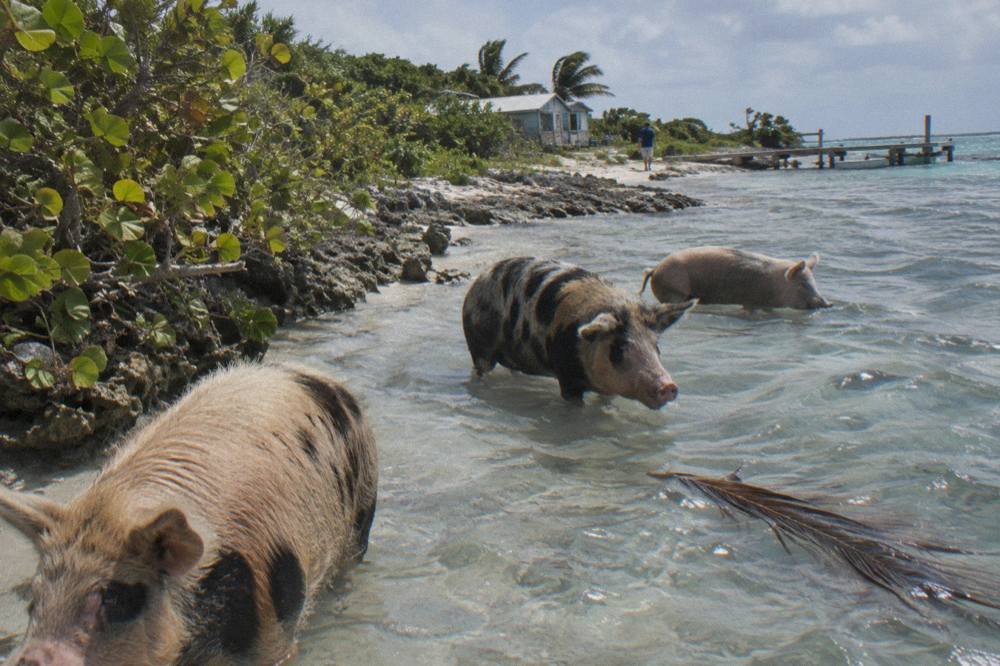
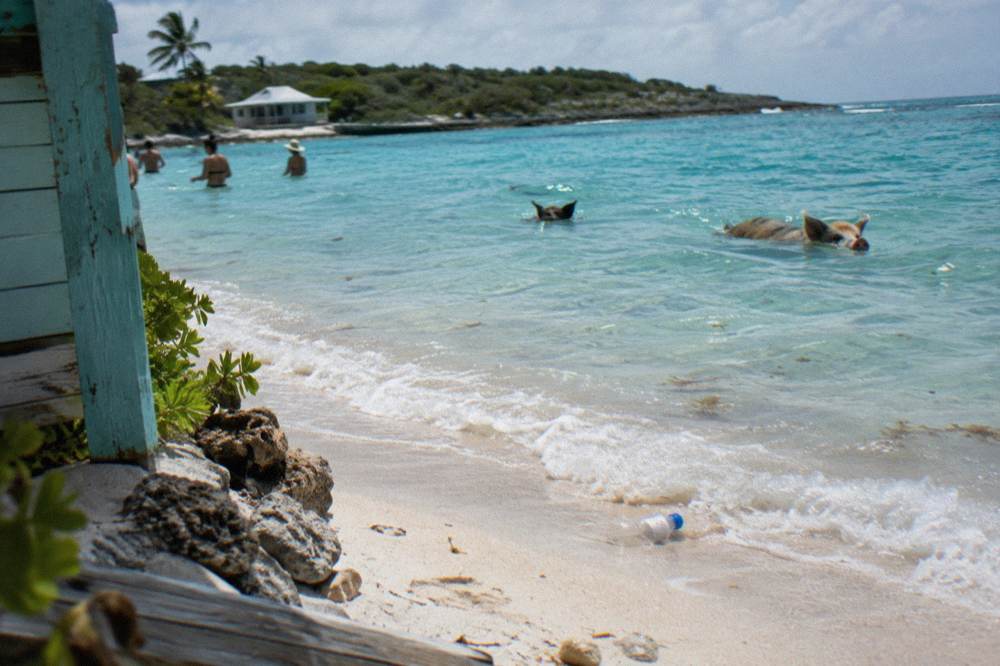
There is also a second welfare layer visitors often miss: the water itself. The pigs swim out to approaching boats because they have learned boats mean food. Operators ask crews to approach slowly and to feed the pigs in the water, never on the sand, precisely because of what happened in 2017. You can read more about the visit itself in the guide to Big Major Cay and Pig Beach, or start with the wider swimming pigs tour guide if the destination is new to you.
What The 2017 Deaths Changed
In 2017 a group of the Big Major Cay pigs died, and reporting linked the deaths to sand ingestion, pigs swallowing sand along with food fed to them on the beach. Today's operator rules are clear on this point: approved food only, fed in the water or as your guide directs, never on the sand.
Details here are limited, and that is worth saying plainly: the pig deaths were linked to sand ingestion. It does not support inventing a precise death toll, a single culprit, or a dramatic beyond-the-headlines cause, and we will not pad the story with guesses. What the episode demonstrably changed is practice on the water.
Before 2017, the standard tourist move was to toss food onto the beach and photograph the pigs scrambling for it. The problem with that method is mechanical rather than malicious: a pig eating off sand ingests sand, in quantity, repeatedly, and a diet laced with swallowed grit can kill a pig slowly. After the deaths, operators and local stakeholders changed the routine. Food goes into the water or is handed to the pigs directly, so the animals swallow food and not the beach underneath it.
The rules that grew out of that shift are consistently described across current operator guidance, and they line up with what's known about how the pigs are cared for:
| Rule | What it looks like in practice | Why it exists |
|---|---|---|
| Feed only crew-provided food | Fruits, vegetables or proper pig feed supplied by the operator; no guest snacks | Guest food can be harmful, and unmanaged feeding led to past harm |
| Feed in the water or by hand | Never toss food onto the sand | Sand ingestion was linked to the 2017 deaths |
| Let pigs approach you | No chasing, cornering or herding the animals | Feral pigs stress easily, especially mothers |
| Do not pick up piglets | Hands off the young entirely | Piglets are fragile and protective sows can react badly |
| Take all trash with you | No waste left on the cay | There is no collection service on an uninhabited island |
One important framing point: these rules are operator practice, not law. No government regulation on feeding the pigs appears on the official Bahamas pages, including the Ministry of Tourism's own page about them, and no official Bahamas page publishes any feeding regulation for the swimming pigs. That is worth knowing as a visitor, because it means a rule-bound experience is a sign of a disciplined operator rather than a legal minimum everyone must meet. The blog piece on what killed the swimming pigs goes deeper on the 2017 timeline if you want the full story.
The Feeding Rules You Should Hear On The Boat
A welfare-conscious crew will brief you before you land: only they hand out food, it goes in the water or from your hand, never on sand, you do not chase pigs or touch piglets, and all rubbish comes back to the boat. If your crew gives no briefing at all, that silence is the single clearest warning sign.
The briefing is the tell. Operators cannot control the pigs, the weather or the crowd, but they can control what their own guests do in the water, and the good ones do it out loud, on the ride over, before anyone is holding food. Current operator guidance, consistent across multiple 2026 sources, emphasizes the same handful of instructions, and they trace directly back to animal welfare concerns following the 2017 incident.
The food itself matters as much as the method. Crews bring fruits, vegetables or proper pig feed. What the pigs must not get is tourist junk food or alcohol, and a responsible operator simply does not allow guests to feed them personal snacks. If a tour advertises "feed the pigs" as a free-for-all where anything goes, that is a tour that has decided spectacle beats welfare.
The distance rules matter too, especially around piglets. The pigs on Big Major Cay are feral animals, not a petting zoo. Sows with young can react badly to crowding, and a cornered pig is a strong pig. Operators ask guests to stay a respectful distance from mothers, let the animals come to them, and keep the whole encounter on the pigs' terms. A pig choosing to swim to your boat is the experience working; a guest wading after a pig to force the photo is the experience failing.
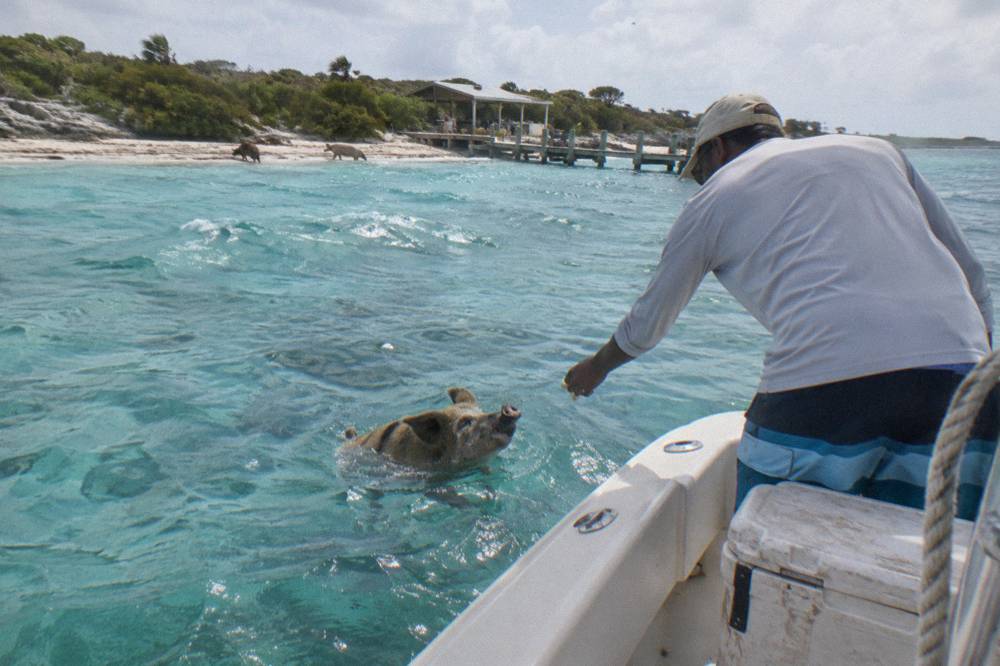
It is worth saying plainly that no official text mandates any of this. No Bahamas government rule restricts feeding the pigs, interacting with them, or landing at Big Major Cay. The welfare guidelines you hear on the day come from your captain and tour operator. Everything in this section is operator-reported practice, and the operator-reported rules are exactly what separates a good tour from a bad one. Treat the briefing as the product you are buying.
The Exuma Powerboat Tour from Nassau with Swimming Pigs, rated 4.8 across 536 reviews at from $439 per person, is an example of a structured full-day option where crews run the animal stops. Details of what food is provided and how the pig stop is managed vary, so check the booking page for the current description.
How To Spot A Tour That Treats The Pigs Well
Look for three signals: a pre-landing briefing on feeding and behavior, crew-only control of the food, and time limits on the stop that keep the encounter short rather than an all-afternoon circus. Tours with disciplined schedules tend to be the same tours with disciplined animal handling.
The practical reality of a Pig Beach visit is that it is short. Operators typically spend roughly 20 to 60 minutes at the cay depending on the crew and the crowds, because a full island-hopping itinerary has other stops, iguanas, a grotto, nurse sharks, a sandbar, and because a short, calm visit is better for the animals than a long one. A tour that lingers for hours with wave after wave of guests is putting volume above welfare.
Here is a useful comparison of what separates the two styles of operator, drawn from what current operator guidance and the verified facts support:
| Signal | Responsible pattern | Pattern that should give you pause |
|---|---|---|
| Briefing | Crew explains feeding and behavior rules before landing | Guests handed food with no instructions |
| Food | Operator-supplied produce or pig feed, water-fed | Guests allowed to toss any personal snack |
| Piglets | Strictly hands-off, distance from mothers | Photos holding or chasing piglets encouraged |
| Stop length | Roughly 20 to 60 minutes as part of a wider itinerary | Extended stop built around maximum photo throughput |
| Crowd handling | Small groups, staggered approach | Overloaded boats, everyone in the water at once |
Price is a weak proxy, which is worth stating honestly. Nassau powerboat day trips run from $328.90 to $499 per person for full-day island-hopping tours with a pig stop, and the cheapest is not obviously worse for the animals than the dearest. What you are paying for across that range is boat type, group size, lunch and stop count. Welfare comes from the crew's habits, which you cannot see on a price tag, which is exactly why the questions in the next section matter.
The length of the voyage is also part of the ethics, in a way people rarely consider. Speedboat day trips from Nassau involve roughly two to three hours each way across open water for a full 8 to 9 hour day, and some listings note the format may not suit cruise ship passengers because of the early check-in and return timing. A shorter encounter with rested, calmly managed pigs beats a marathon that runs guests and animals ragged. The Exuma Day Away Original Swimming Pigs Excursion, from $378 per person and rated 4.5 across 474 reviews, runs about 8 hours 30 minutes including lunch; check the booking page for how the pig stop is structured on your date.
Questions To Ask Before You Book
Ask the operator, by email or through the booking page, four things: who supplies the pig food and what is it, where do guests feed the pigs, how long is the stop, and what are guests told not to do. A tour that answers these crisply is a tour that has thought about welfare; vague answers are their own information.
None of these questions are awkward, and none of them require specialist knowledge. They work because each one has a right answer that the operator community itself has converged on since 2017.
Who supplies the food, and what is it? The answer you want is the crew, with produce or proper feed. If the answer is "you can bring whatever," that operator has outsourced animal nutrition to strangers.
Where does feeding happen? Water or hand, never sand. If the answer is vague or the crew does not know why that matters, the 2017 lesson has not landed with them.
How long is the pig stop? Around 20 to 60 minutes is typical. An operator that cannot say, or that promises unlimited time with the animals, is selling a fantasy that the pigs pay for.
What are guests told not to do? You want to hear about not chasing pigs, not touching piglets, and keeping distance from mothers. A crew that has rules it is willing to state in writing is a crew that will state them again on the beach, which is when it counts.
For context on the wider ecosystem of animal encounters, the Bahamian rock iguana is a named protected species on the Ministry of Tourism's ecotourism page, and iguana-feeding rules on tours, grapes offered on wooden sticks only, are likewise operator practice rather than something you will find in a statute. The pattern across Exuma's wildlife stops is consistent: the official protections are thin on paper, the operator discipline is thick where it exists, and your choice of crew is the mechanism that rewards the good operators. The Bahamas National Trust, which does publish binding rules for the Exuma Cays Land and Sea Park, is the body to watch for any future formal protection of the cays' wildlife.
One last framing thought. The pigs' situation is genuinely unusual: wild animals whose food web now includes tour boats, on a cay with no facilities, photographed again and again by visiting boats. The system that keeps them healthy is social rather than legal, made of crew habits, tourist behavior and occasional veterinary intervention. That is fragile by design, and it is why this site, Exuma Tours, keeps pointing readers toward operators that brief their guests properly.
If a full-day trip from Nassau is your plan, these are the three pig-focused tours worth comparing first:
Common Questions About Pig Welfare
Are The Pigs In The Bahamas Treated Well?
On balance, yes, but treatment varies by operator and no law guarantees it. The pigs live wild on Big Major Cay with no resident caretaker, and their welfare depends on tour crews who feed them correctly and manage guest behavior. Responsible tours follow strict feeding rules; careless ones do not, and nothing official stops them.
Is It Safe For The Pigs To Eat Tourist Food?
No. Operator guidance is explicit that the pigs should eat only crew-provided food such as fruits, vegetables or pig feed. Junk food and alcohol are off limits, and after the 2017 deaths linked to sand ingestion, feeding moved into the water or by hand so the pigs do not swallow sand with their food.
Are There Laws Protecting The Swimming Pigs?
No government regulation on feeding the pigs, interacting with them, or landing at Big Major Cay was found on official Bahamas pages, including the Ministry of Tourism page about them. The feeding rules you hear on tours are operator practice, not law, which is why choosing a disciplined operator matters so much.
Can You Hold Or Pet The Piglets?
Responsible operators ask guests not to chase, corner or pick up piglets, and to keep a respectful distance from mothers. The pigs are feral animals, and handling young or crowding sows stresses them and can provoke defensive reactions. Hands-off is the welfare standard.
Do The Pigs Get Veterinary Care?
Occasional veterinary checks have been organized through tourism industry channels, but no standing government care program appears on official pages. Day-to-day welfare monitoring falls largely to the operators who visit the cay, which is another reason the tour you choose shapes how the pigs live.