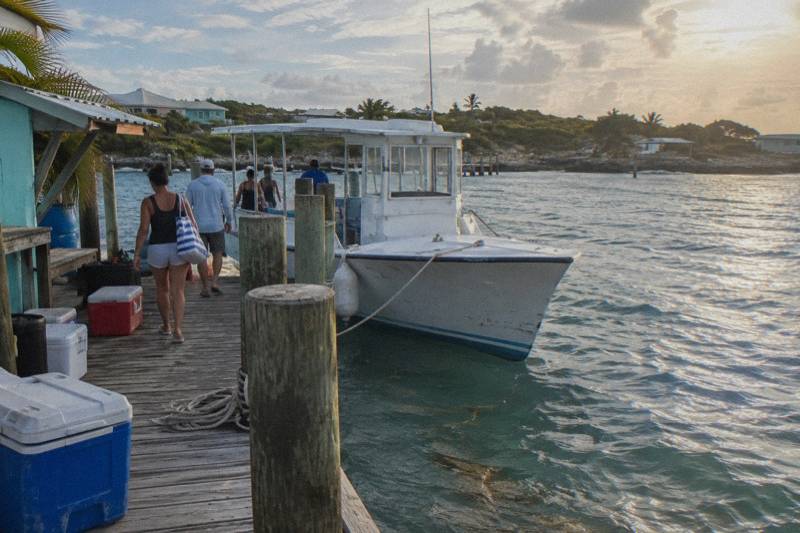
Is It Safe To Swim With The Pigs In The Bahamas?
A straight answer on swimming pig safety in Exuma and Nassau: bites, briefings, the 2017 deaths, the rules crews enforce, and what a safe tour day looks like.
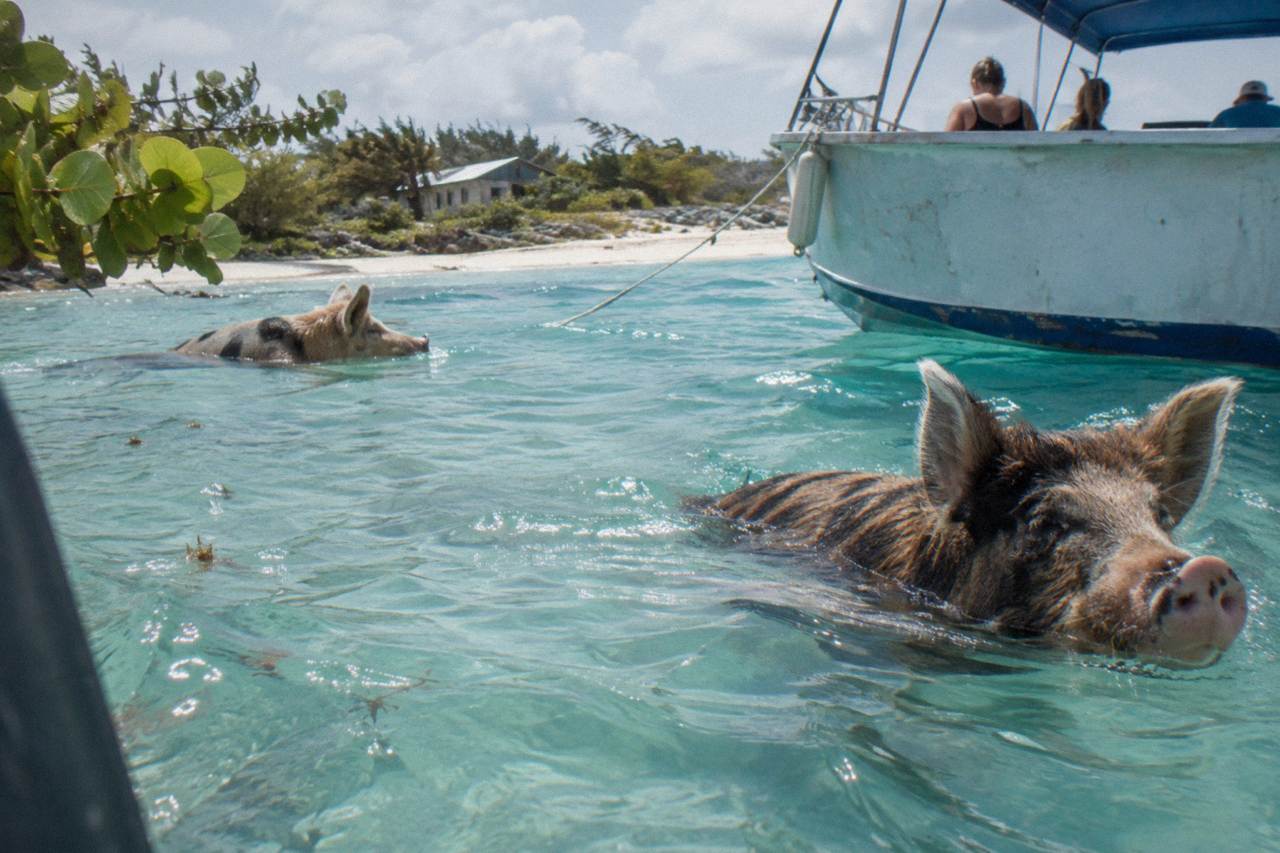
The honest answer is that swimming with the pigs in the Bahamas is a low-risk activity for most visitors when it is done on a guided tour, and the risks that do exist are manageable ones: a nip from an eager pig, a slip on wet sand, a long open-water boat ride to get there. The pigs themselves, roughly twenty adults and piglets living wild on the uninhabited Big Major Cay, are habituated to humans and to arriving boats, and pigs are large, food-motivated animals, and nips or bites have been reported, so guide instructions matter. What makes the difference between a calm swim and a chaotic one is almost entirely the crew you travel with, because no government regulation governs how the pigs are fed or handled. The rules that protect both you and the animals are the ones operators set and enforce on the beach.
Yes, swimming with the pigs is widely considered safe for healthy adults and children on a guided tour, and the pigs are habituated rather than tame, which means behaviour depends on how feeding is managed. No official Bahamas regulation governs pig feeding or interaction, so the safety framework is the briefing and the food discipline your crew brings. Roughly twenty pigs live on Big Major Cay.
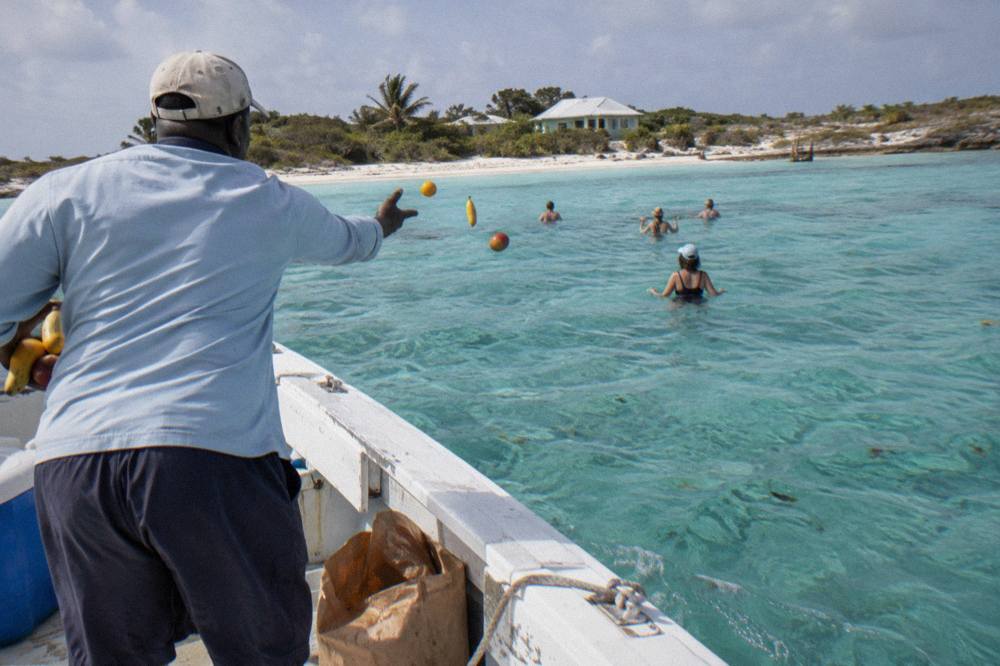
The pigs are feral animals that have learned over years that boats mean food. That conditioning is what makes the encounter possible at all, and it is also why the way your tour handles food matters so much. When crews feed the pigs in the water, the animals swim out calmly and take food from hands or from the surface. When food hits the sand, or when visitors bring their own snacks, the dynamic changes: pigs crowd, jostle and root, and a rooting pig near bare feet is how most minor nips happen.
The Ministry of Tourism describes the colony on its official page about the swimming pigs, noting the cay is uninhabited and reachable only by boat, but the government publishes no feeding regulation, no permit system for landings and no interaction code. Everything that keeps a pig swim orderly comes from operators, and the established operators take it seriously because their business depends on healthy, calm animals. Guides brief guests before the beach stop, hand out only the food they brought, and set the timing and the group size on the sand.
For a reader weighing whether to book at all, a guided trip is the cautious choice, and it is essentially the only practical choice: Big Major Cay has no ferry, no dock and no independent access. The full-day options from Nassau run around eight hours and include the crew, the boat, the food discipline and usually lunch. Exuma Tours covers these trips in depth, and the island hopping trip with lunch, about 8 hours from $438.90 per person and rated 4.8 across 689 reviews, is the standard guided format most first-timers book: a full island hopping pig tour from Nassau.
Do The Pigs Bite?
Pigs can and occasionally do nip, but bites on guided tours are rare and almost always minor, and they cluster around two causes: food handled on the sand and visitors bringing their own snacks. Fingers get mistaken for food when people tease or hand-feed carelessly. Crews reduce this to near zero by keeping food in the water and off the beach.
A pig's mouth is built for rooting and grinding, not for tearing, so a nip is a pinch rather than a wound. Still, the possibility is real and worth taking seriously, because the animals are big: adult Big Major pigs are large, powerful animals, so give them space, and a pig that has learned food comes from hands will pursue those hands. The operators' guidance is consistent across the board. Feed only what the captain supplies, and feed it in the water or directly from an open hand, never scattered on the sand, because sand ingestion is precisely what harmed the colony in 2017 and it is also what puts rooting snouts next to bare feet.
The other behaviors crews manage are crowding and pursuit. Pigs will swim out to an arriving boat expecting food, which looks delightful and mostly is, but guests are asked not to chase pigs, corner them, or pick up piglets, and to keep a respectful distance from mothers. A piglet squealing in a visitor's arms is how a defensive adult gets involved. Follow the captain's instructions and the encounter stays calm; ignore them and you are improvising with a large feral animal.
For planning purposes, it helps to see the safety measures side by side:
| Risk | How likely on a guided tour | What controls it |
|---|---|---|
| Minor nip or pinch | Rare | Feed only crew-supplied food, in the water, never on sand |
| Being bumped or crowded | Common but harmless | Crews spread the group, manage feeding timing |
| Defensive adult near piglets | Avoidable | Do not chase, corner or pick up piglets |
| Slip on wet sand or rocks | Possible | Water shoes, take your time on entry |
| Rough seas on the crossing | Seasonal | Operators reschedule or reroute in bad weather |
None of this is a reason to stay on the boat. It is a reason to treat the pigs as animals rather than props, which is exactly what a good crew will tell you within the first five minutes of the beach stop.
Is Swimming With Pigs In Nassau Safe?
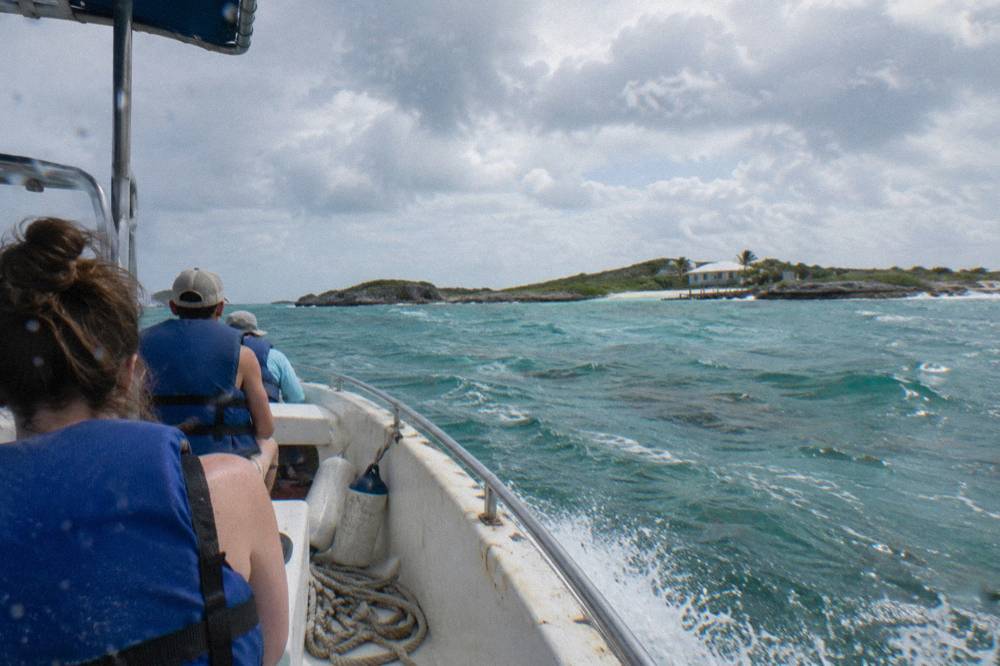
Swimming with pigs on a Nassau-departed tour is as safe as the Exuma original, because most Nassau trips travel to the same Big Major Cay colony, roughly two to three hours each way by speedboat. The pig interaction itself carries the same rules. The different risk is the long open-water crossing, which is weather dependent and fatigue inducing. To see how a pig swim stacks up against other boat excursions from the city, the guide to Nassau attractions and Exuma day trips walks through what each option involves and how the day actually unfolds.
The question "is swimming with pigs in nassau safe?" is really two questions. The pig part: identical, because the boats from Nassau tie up at the same beach with the same animals and the same crew-enforced feeding rules. The boat part: a full-day powerboat trip from Nassau spends four to six hours of its eight or nine crossing the Exuma Cays bank and open water, and that is where weather, seasickness and stamina enter the equation. Operators report rescheduling or rerouting when the forecast turns, and some full-day Nassau departures list cruise ship guests among those for whom the trip may not suit, given the early check-in and fixed return time. If the long crossing gives you pause, our guide to the best excursions from Nassau compares shorter alternatives so you can weigh the tradeoffs before committing to a full day on the water.
If long boat rides are a concern, the fly-in format solves it. A roughly 45-minute flight from Nassau to Staniel Cay plus a short boat hop puts you at Pig Beach with a fraction of the water time, and operators report the morning slots from Staniel Cay tend to be quieter than the midday arrivals of the Nassau speedboats. Our guide to day trips to Exuma from Nassau breaks down the boat versus plane trade-offs in detail.
The strongest Nassau-departed option by review volume is the powerboat trip from $439 per person, rated 4.8 across 536 reviews over about 8 hours, and the day-away original excursion from $378, rated 4.5 across 474 reviews. Both put a crew on the beach with you.
A separate point worth knowing: some Nassau products visit closer pig sites such as Rose Island or Pearl Island rather than the original Big Major colony. Those are different beaches with different animals, and the safety logic transfers, but the experience is not the Exuma one. If the original colony is what you want, check the itinerary on the booking page for Big Major Cay or Pig Beach by name.
What Happens At The Tour Briefing?
Before the beach stop, crews brief guests on feeding rules and animal behavior: use only operator-supplied food, feed in the water or from an open hand, never on sand, do not chase or corner pigs, do not pick up piglets, and carry all trash back to the boat. The briefing is short, explicit and it is the safety system, since no official regulation exists.
The briefing usually happens on the boat during the final approach, and it covers the same points whether you depart from Nassau, Great Exuma or Staniel Cay. Food comes from the crew: fruits, vegetables and pig feed, not personal snacks, junk food or alcohol. Feeding happens in the water or hand to snout, because food dropped on sand gets eaten with sand, and sand ingestion is what killed a number of the pigs in 2017. Guests let pigs approach voluntarily rather than wading after them. Mothers get distance. Piglets stay on the ground. Every wrapper and scrap goes back to the boat, because there is no rubbish collection on an uninhabited cay.
It is worth understanding why these rules exist, because they are often misreported as law. They are not. No feeding regulation, landing permit system or interaction code appears on the Bahamas Ministry of Tourism or Bahamas National Trust pages; the official tourism description of the pigs mentions none. What exists is operator practice that hardened after the 2017 deaths, and the better-known operators enforce it because their livelihood depends on the colony surviving. When a guide tells you not to drop food on the sand, they are protecting the animals and you at the same time.
The briefing is also where group management happens. Good crews stagger their guests onto the beach, keep the feeding in a controlled patch of water, and time the stop, typically twenty minutes to an hour depending on the operator and crowds, so the pigs are neither swarmed nor starved of attention. If you want the fuller story on how the animals are cared for, our piece on whether the pigs are treated well goes deeper.
Are The Pigs Safe For Kids?
Children can safely swim with the pigs on family-oriented tours, with age minimums and supervision rules set by each operator rather than by law. The practical controls are: keep small children beside an adult in the water, keep crew-supplied food in adult hands, and choose a boat whose crossing time suits your child. Some group trips discourage under-fives.
Kids and pigs get along well when the food discipline holds, and most families report the beach stop as the highlight of the trip. The realistic cautions are about scale and excitement rather than aggression. A hundred-pound animal swimming toward a five-year-old holding food is intimidating even when it is gentle, so the standard practice is that adults hold and distribute the food, and small children stay within arm's reach in shallow water. Water shoes matter more for children than anyone: the entry at Pig Beach is wet sand and shell fragments, and a slipped child is far more likely than a nipped one.
The boat ride is the bigger planning question for families. From Nassau it is a full day, roughly eight to nine hours door to door with two to three hours of open water each way, and operators report that some full-day group trips are not recommended for children under five on shared boats. Great Exuma departures and Staniel Cay fly-in formats shorten the water time considerably, and a shorter crossing with a small child is often the wiser call. Our guide to Exuma with kids and family tours compares the family-friendly formats.
Two habits keep kids safe around any wildlife stop. First, brief them before the beach, not on it: no chasing, no grabbing, no feeding from their own pockets. Second, keep them back during the first minutes of a feeding, when the pigs are most eager, and let them into the water once the initial rush settles. Crews manage this naturally, but a prepared child makes everyone's day easier.
How The 2017 Deaths Changed The Rules
In 2017 a number of Big Major Cay pigs died, and the welfare rules followed past incidents, and feeding now happens with approved food in the water rather than on the sand. Afterward operators tightened feeding rules: crew-supplied food only, feeding in the water, nothing on sand. Those operator rules, not a government law, are the safety framework today.
The deaths were a turning point for the colony and for the industry around it. Before 2017 the beach worked on informal lines: visitors arrived with whatever food they carried, dropped it on the sand, and the pigs rooted it up along with the sand underneath. The aftermath produced the briefing every serious operator now gives, and it is why the "never on sand" rule is repeated so emphatically. The full story is covered in our article on what killed the swimming pigs.
Since then the feeding standard has become consistent: fruits, vegetables and proper pig feed, supplied by the operator, offered in the water or hand to snout. Alcohol and junk food are off the menu entirely. The colony today, about twenty pigs and piglets per the official tourism description, continues as an uninhabited-cay population dependent on boats for its food supply, which is precisely why crews control the food supply rather than letting guests improvise.
For a visitor, the history matters because it explains the rules instead of presenting them as bureaucracy. When your captain says the food stays in the water, that instruction has a body count behind it. Treat it accordingly.
What Does A Safe Tour Day Actually Look Like?
A safe pig swim day runs roughly eight hours from Nassau: early check-in, a two to three hour speedboat crossing, then staggered stops at iguana cays, nurse shark sites and Pig Beach, each with its own briefing, before lunch and the return run. The crew sets timing at each stop, typically twenty to sixty minutes at the pigs.
The shape of the day is worth knowing before you book, because most of the safety is structural rather than improvised. The flagship island hopping format from Nassau checks in early, departs around 9 AM, and returns mid to late afternoon. Along the way the same briefings repeat at each wildlife stop: iguanas at Allen's or Bitter Guana Cay fed grapes on sticks, nurse sharks at Compass Cay with a no-grabbing, no-stepping-on-sharks talk and a published $15 per person day-use landing fee at the marina, and the pigs at Big Major Cay with the feeding rules above. Lunch is included on most full-day trips. Every element is crew-run, which is exactly what a cautious reader should want. That kind of crew-run structure goes a long way toward safety, but whether the day justifies its price is a separate question, and our honest take on whether the Nassau pig tour is worth the money walks through the comparison with the original colony.
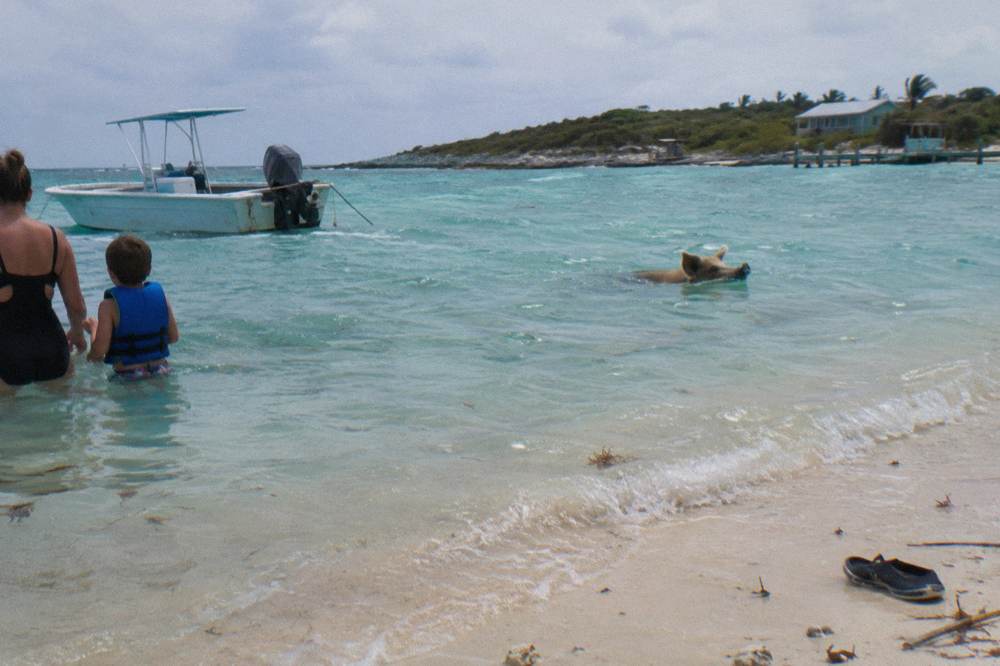
The table below shows how the common formats compare on the variables that affect safety and comfort:
| Format | Duration | Crossing | Who it suits |
|---|---|---|---|
| Full-day speedboat from Nassau | ~8 hours | 2-3 hrs each way | Adults, sturdy teens, strong stomachs |
| Fly-in from Nassau to Staniel Cay | ~6-7 hours | ~45 min flight + short boat | Families, cautious travellers, time-poor |
| Great Exuma departure | ~8 hours | Shorter runs to the cays | Visitors already on Exuma |
| Private charter | ~8 hours | Varies by route | Groups wanting control of pace and timing |
Sea state is the one variable no operator controls. Hurricane season runs 1 June to 30 November with its peak August to October, and trips get rescheduled or rerouted when the bank kicks up; calmer conditions and better water clarity are typical December through May. Operators monitor the forecast and make the call, and a reputable crew would rather move your date than run an unsafe crossing. If late-season travel is on your calendar, build a spare day into the itinerary and check the booking page's weather policy.
Packing for the day is safety adjacent too: reef-safe sunscreen, a hat, a waterproof pouch for your phone and water shoes appear on essentially every operator's recommended list, and the shoes earn their place at the Pig Beach entry. Our what to bring on an Exuma boat tour guide covers the full kit.
The day-away original excursion format from $378 per person, rated 4.5 across 474 reviews, is the budget-conscious way into the same crew-managed day.
The bottom line on safety is unglamorous: the pigs are not dangerous, the sea can be, and the crew is the reason both stay manageable. Book a guided trip, listen to the briefing, keep the food in the water and your hands off the piglets, and the encounter is one of the calmest wildlife experiences in the Caribbean. For more background before deciding, see whether it is okay to swim with nurse sharks and the official Bahamas home of the swimming pigs page.
Common Questions About Swimming Pig Safety
Is It Safe To Swim With The Pigs In The Bahamas?
Yes, for most visitors on a guided tour. The pigs are habituated to boats and people, no serious visitor injury is on record, and the risks that exist, minor nips, slips and a long boat crossing, are managed by crew-supplied food rules, water shoes and weather calls made by the operator.
Is Swimming With Pigs In Nassau Safe?
The pig interaction is as safe as the Exuma original, since most Nassau tours visit the same Big Major Cay colony. The added variable is the crossing: two to three hours of open water each way on a full-day trip, which is weather dependent and tiring. Fly-in formats cut the water time to minutes.
Do The Swimming Pigs Bite?
Occasionally, and the bites are minor pinches. Nips almost always follow food being handled on the sand or visitors teasing with snacks. Crews prevent this by keeping feeding in the water with operator-supplied food, which keeps snouts away from feet and fingers.
Is It Safe For Children To Swim With The Pigs?
Yes, on family-oriented tours with adult supervision. Keep crew-supplied food in adult hands, keep small children within arm's reach in shallow water, and fit them with water shoes. Some full-day group boats from Nassau discourage children under five because of the crossing length.
Is There A Law About Feeding The Pigs?
No. No government regulation on feeding, handling or landing at Big Major Cay was found on official Bahamas sources. The rules you will hear, crew food only, feed in the water, never on sand, no touching piglets, are operator-set standards that hardened after the 2017 deaths.
What Is The Safest Way To Book A Pig Swim?
Book a guided tour with an established operator, read the itinerary to confirm Big Major Cay by name, and check the weather policy on the booking page. The crew manages food, timing and sea conditions, which is the entire safety framework for the experience.