Compass Cay Nurse Sharks: What The Stop Is Like
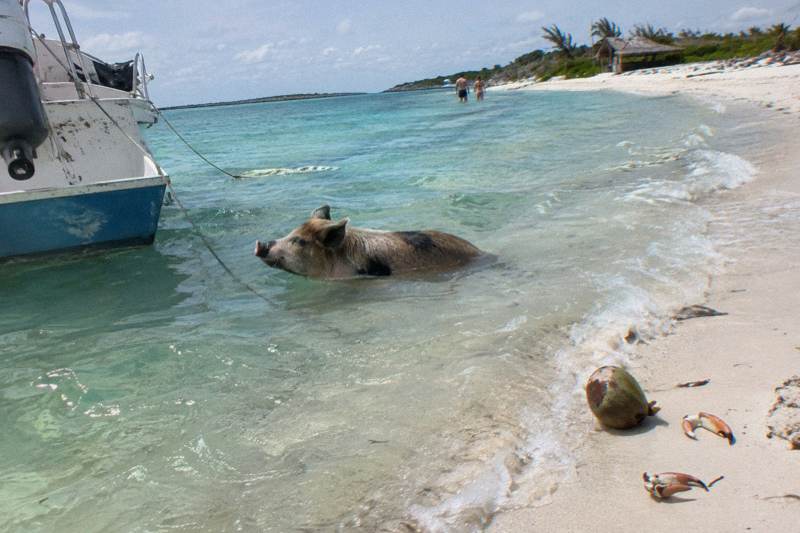
The Compass Cay sharks are the stop most Exuma day trips quietly build their itinerary around, and it works differently from every other stop on the route: the encounter happens at a marina, not a beach, and the rules are set by the crew and the cay's owners rather than any marine law.
Short answer
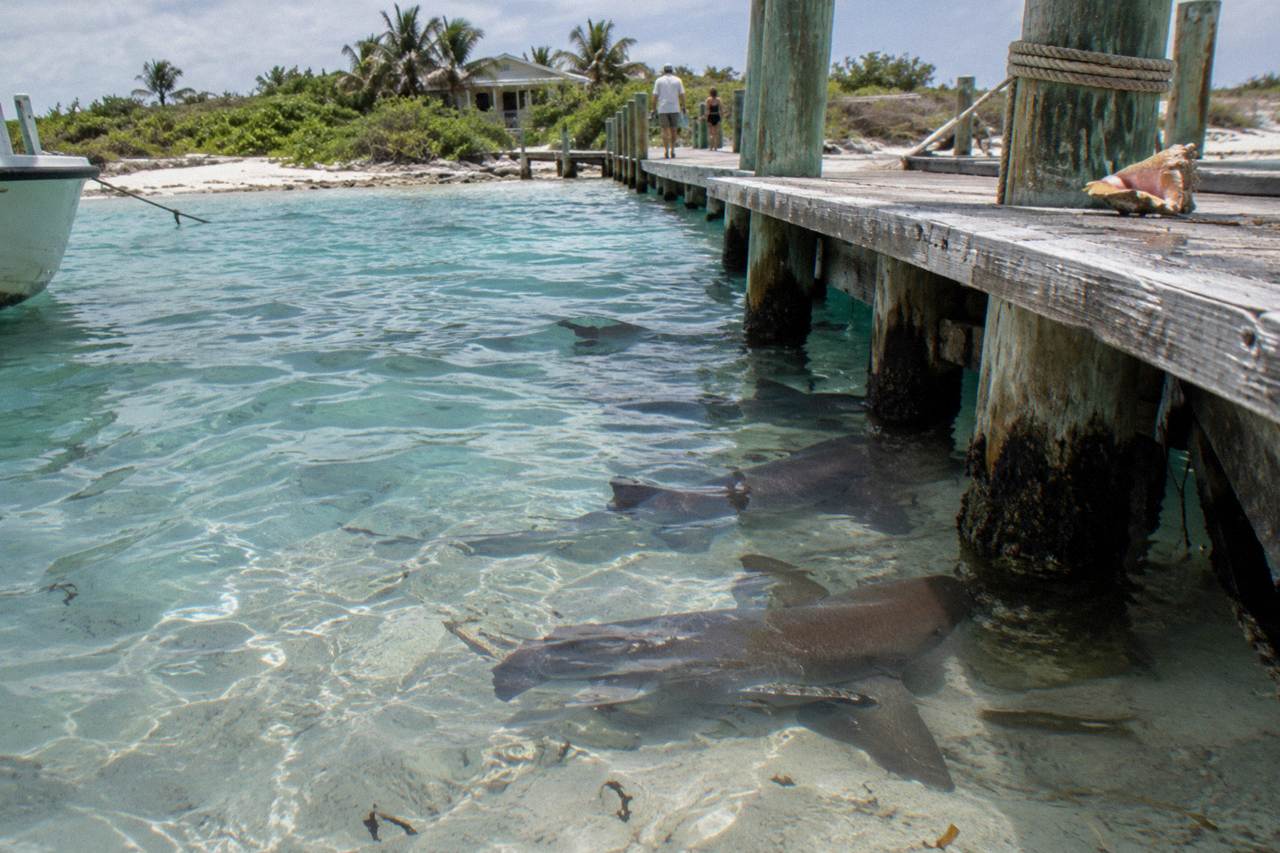
Compass Cay's nurse sharks gather at the marina dock in shallow, clear water, and most full-day Exuma tours from Nassau include the stop alongside Pig Beach and an iguana cay. Expect a landing fee of about $15 per person, usually absorbed in the tour price, a safety briefing, and a short, closely supervised swim.
Where Are The Compass Cay Sharks And Why Do Tours Stop There?
Compass Cay sits in the northern Exuma Cays, a short boat hop north of Big Major Cay and Thunderball Grotto, which is why it appears on nearly every full-day itinerary out of Nassau. The sharks are nurse sharks, a slow, bottom-dwelling species that has gathered around the cay's marina dock for years, drawn by decades of regular feeding and the calm, waist-deep water at the jetty. Curious what else is swimming in these waters, our full guide to the sharks of Exuma covers the reef species you might meet beyond the marina dock.
The cay itself is privately owned, small, and reachable only by boat. That shapes everything about the visit. There is no ferry, no public dock policy, no ticket booth in any conventional sense; there is a marina, and the marina's owners permit day visitors who arrive with a tour. Independent arrivals are effectively off the table for a day tripper, which is why the shark swim is almost always bundled inside a multi-stop tour rather than sold on its own.
Geography does the rest of the work. Compass Cay sits within a cluster of the Exumas' signature stops: Big Major Cay, home of the swimming pigs, lies just to the north, and Thunderball Grotto, the flooded cave made famous by Bond films, sits beside Staniel Cay a few minutes away. A boat already covering two of those three stops is passing the third anyway. For a broader look at how these routes stack up, the Exuma boat tours compared guide breaks down the full-day field.
One point of park geography worth knowing, because tour descriptions blur it: the Exuma Cays Land and Sea Park, the no-take marine reserve established in 1958 and run by the Bahamas National Trust, has its southern boundary just north of this area, and operators report that Compass Cay, Thunderball Grotto and Pig Beach sit outside it. That matters for expectations: the strict no-take rules that apply inside the park do not govern the shark stop, and the rules you will actually be given at the dock come from the marina and your crew.
What Is The Shark Encounter Actually Like At The Marina?
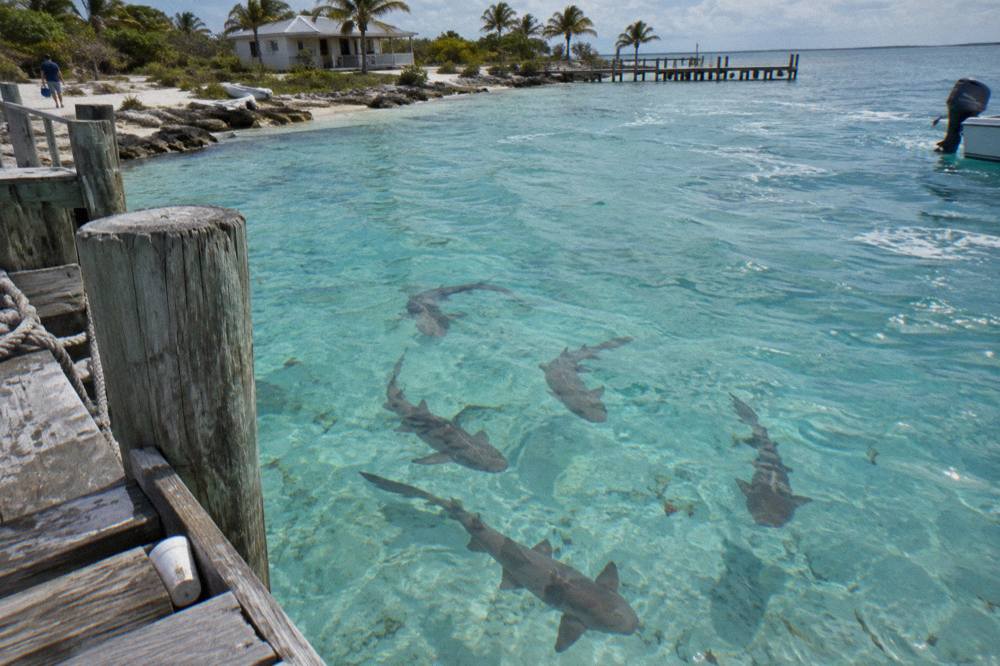
Guests step off the boat onto the marina dock at Compass Cay, get a short safety briefing from crew or marina staff, and then enter shallow, sandy-bottomed water where nurse sharks circle near the jetty. The sharks are typically four to seven feet long, visibly muscular but sluggish, and accustomed to people. Most stops last well under an hour before the boat moves on to the next cay. Before you wade in, our guide to whether it's okay to swim with nurse sharks in Exuma covers the safety rules, the ethics, and what a tour actually costs.
The setting surprises some first-time visitors. This is not a reef, a beach or a penned lagoon; it is a working marina basin with startlingly clear water, and the sharks congregate in the few feet of depth right against the dock pilings. You can stand in much of the swim area. That makes it one of the more accessible wildlife stops in the Bahamas for weaker swimmers and children, though each tour sets its own age and supervision policies, so check the booking page for your specific trip.
The briefing is genuine and worth taking seriously. Operators report that visitors are told not to step on the sharks, not to grab or chase them, and to avoid sudden movements that stress the animals. Nurse sharks are docile by shark standards, but they are still wild animals with powerful jaws and a lot of muscle, and the briefing rules exist because the encounter works only when the sharks stay calm. The Bahamas' official ecotourism guidance names protected species and responsible viewing principles that frame how operators run these stops.
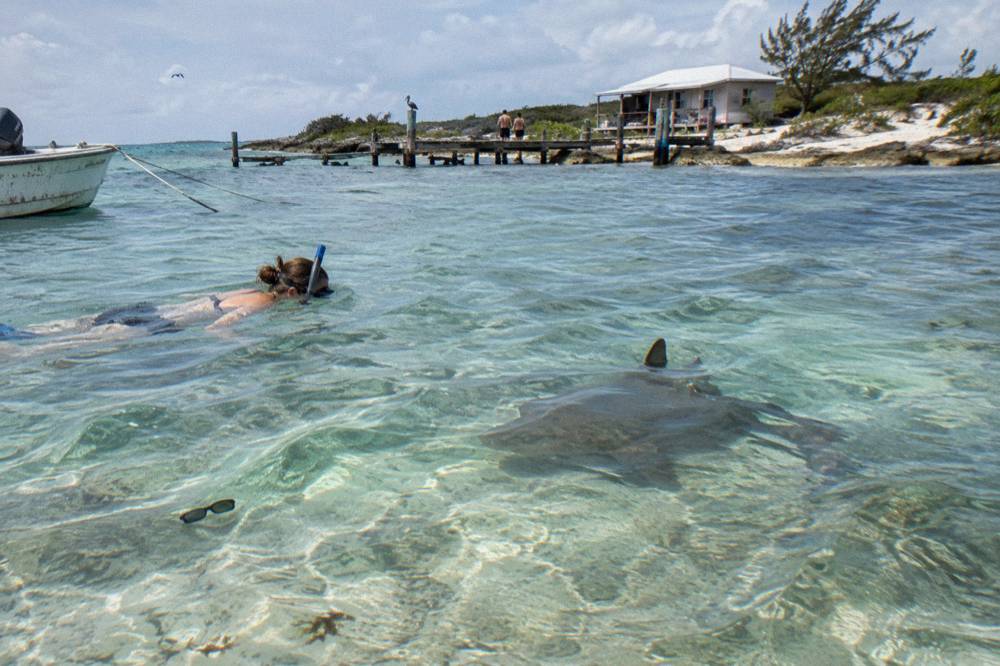
Photography is the other thing people underestimate. The water clarity and the pale sand make the sharks unusually easy to photograph, and because they hold position near the dock rather than fleeing, you do not need a specialist camera. A waterproof phone pouch is enough for most people. Crew on the full-day trips usually help with photos at this stop since the sharks stay so close, but conditions and crew practice vary, so treat that as a bonus rather than a promise.
If you are weighing the shark swim against the other headline stops, the safety question gets a fuller treatment in is it okay to swim with nurse sharks, and the neighbouring cave stop is covered in the Thunderball Grotto snorkeling guide.
Which Tours From Nassau Actually Include The Compass Cay Stop?
Full-day powerboat tours from Nassau are the standard way to reach Compass Cay, typically running about eight hours with two to three hours of open-water crossing each way, and most advertise the shark stop alongside Pig Beach, Thunderball Grotto and an iguana cay. Prices cluster from roughly $329 to $440 per person. Fly-in options cut the crossing to under an hour of flight time and cost substantially more. If the grotto stop is on your itinerary, this guide to entering Thunderball Grotto at the right tide covers what to expect before you swim inside.
Among the bookable options, Original Exuma Powerboat Adventures runs about nine hours, is rated 4.7 across 553 reviews, and starts from $328.90 per person, which makes it the value anchor of the speedboat field. The Exuma Cays Swimming Pigs and Iguanas Tour starts from $378 per person and covers the same constellation of cays; its review pool is still small, at 12 reviews, so judge it on its itinerary rather than its rating. At the premium end, the Exuma Elite Escape, a roughly six-hour, seven-stop trip rated 4.8 across 580 reviews, runs from $850 per person, and the private plane pig-and-shark trip runs from $4,000 per group.
| Tour | Duration | Price basis | Rating and reviews |
|---|---|---|---|
| Original Exuma Powerboat Adventures | ~9 hours | from $328.90 per person | 4.7 across 553 reviews |
| Exuma Cays Swimming Pigs and Iguanas Tour | ~8 hours | from $378 per person | 12 reviews, too few for a rating |
| Exuma Island Hopping Swimming Pigs Tour with Lunch | ~8 hours | from $438.90 per person | 4.8 across 689 reviews |
| Exuma Elite Escape: 7-Stop Luxury Tour | ~6 hours | from $850 per person | 4.8 across 580 reviews |
| Exuma Swimming Pigs and Sharks Tour by Plane | ~7 to 9 hours | from $4,000 per group | 7 reviews, too few for a rating |
Notice what the table does not show: a dedicated "Compass Cay only" tour. None exists in this market. The shark stop is always one leg of a multi-stop day, which is actually good news for value, since you get the pigs, the grotto and the iguanas in the same ticket. Confirm on the booking page that Compass Cay is a named stop for your chosen date, because sea conditions and itinerary order sometimes shift a stop.
For readers starting from Great Exuma rather than Nassau, the calculus differs: you are already much closer to the cays, and tours from George Town reach the northern stops in a long day on the water. The Nassau to Exuma day trip guide covers that trade-off in detail, and the Staniel Cay tours guide is the right read if you can fly in, since Compass Cay is only minutes from Staniel Cay by boat.
How Much Does The Compass Cay Stop Cost And Who Charges It?
The Compass Cay marina charges a day-use landing fee of about $15 per person for access to the nurse shark area, an operator-reported figure rather than a published government fee, and full-day tours normally absorb it in the ticket price along with the other cay landing fees. What you pay out of pocket at the dock is usually nothing.
The fee structure across the whole route has several layers, and knowing which ones are yours to pay prevents surprises. The marina fee covers the shark pool access and upkeep of the cay's facilities. Separately, the Exuma Cays Land and Sea Park charges charter vessels landing fees, BSD 6.36 per person at most park locations and BSD 12.73 per person for guided tours at Warderick Wells, per the official park fee page, and operators normally absorb those in the tour price too. The Bahamian dollar is pegged one to one against the US dollar, so BSD figures read directly as dollars.
| Fee | Amount | Who pays it | Where it comes from |
|---|---|---|---|
| Compass Cay marina day use | about $15 per person | Operator-reported; usually in tour price | Marina, not government |
| Park day-tour landing fee, most locations | BSD 6.36 per person | Operator absorbs in tour price | Bahamas National Trust |
| Park guided landing at Warderick Wells | BSD 12.73 per person | Operator absorbs in tour price | Bahamas National Trust |
| Park charter mooring supplement | BSD 14.00 per person per day | Operator, for moored trips | Bahamas National Trust |
A 10 percent VAT is added at the park's checkout, again at the operator level. The practical takeaway for a day guest: your per-person tour price is the real all-in figure for the standard stops, and the only on-the-day spending worth budgeting is a tip for the crew and anything you buy at the marina or Staniel Cay Yacht Club. The how much does swimming with pigs cost guide applies the same cost logic to the pig stop.
One caution on pricing language: tour pages sometimes describe fees as "included" without itemising them, and per-group trips such as the private charters from $6,000 per group price the whole boat, not a per-person shark ticket. Never divide a per-group figure by headcount and call it a per-person price. Where a detail is not itemised on the page you are booking, ask the operator directly.
Is Swimming With The Nurse Sharks At Compass Cay Safe?
Nurse sharks are among the most placid shark species, the water at the marina is shallow and calm, and the encounter is supervised by crew who brief guests before anyone enters the water; no official government regulation governs the interaction, and the safety framework is the marina's rules plus your crew's judgement on the day. Serious incidents are rare, but the animals are wild and the rules are not decorative.
The realistic risk picture: nurse sharks have small teeth suited to crushing shellfish, they do not view swimmers as prey, and the Compass Cay population has been around boats and people its whole life. The documented problems come from guests ignoring the briefing, stepping on a resting shark, grabbing a tail, or cornering an animal. Every rule you are given exists because someone once did the opposite. Sudden movements and crowding stress the sharks, and a stressed large animal in shallow water near a dock full of people is the scenario the briefing is designed to prevent. Other pages covering the same trip are gathered on Exuma Tours.
| Briefing rule | Reason it exists |
|---|---|
| Do not step on the sharks | They rest on the bottom in shallow water, underfoot |
| Do not grab tails or fins | Wild animals bite when restrained |
| No sudden movements | Stress changes behaviour fast |
| Follow crew instructions on where to stand | Dock pilings and shallow sandbars vary |
| Keep children within arm's reach | Sharks are strong even when calm |
Families ask about this stop constantly, and the honest answer is that the shallow setting suits children better than the grotto snorkel does, but each operator sets age guidance individually and some group boats do not recommend the trip for very young children. The Exuma with kids family tours guide covers which formats work for which ages. For the wider safety picture around the pigs and other stops, is it safe to swim with pigs in the Bahamas addresses the sibling question.
Sea state is the other safety variable, and it is outside anyone's control. The crossing from Nassau is two to three hours of open water each way on most speedboat itineraries, and rough conditions mean rescheduled or re-routed days. That is a weather reality, not a defect in any particular tour. If a calm-water day matters more to you than a fast one, the fly-in formats described below swap the crossing for a short flight and a short boat ride.
When Is The Best Time Of Day And Year For The Shark Stop?
Mid-morning is the busiest window at Compass Cay because the Nassau speedboats arrive after their long crossing, so fly-in and Staniel Cay based trips reach the sharks earlier and find fewer boats at the dock; for the calendar, December through May brings the calmer seas and clearer water, while the August to October hurricane peak carries the highest chance of disruption.
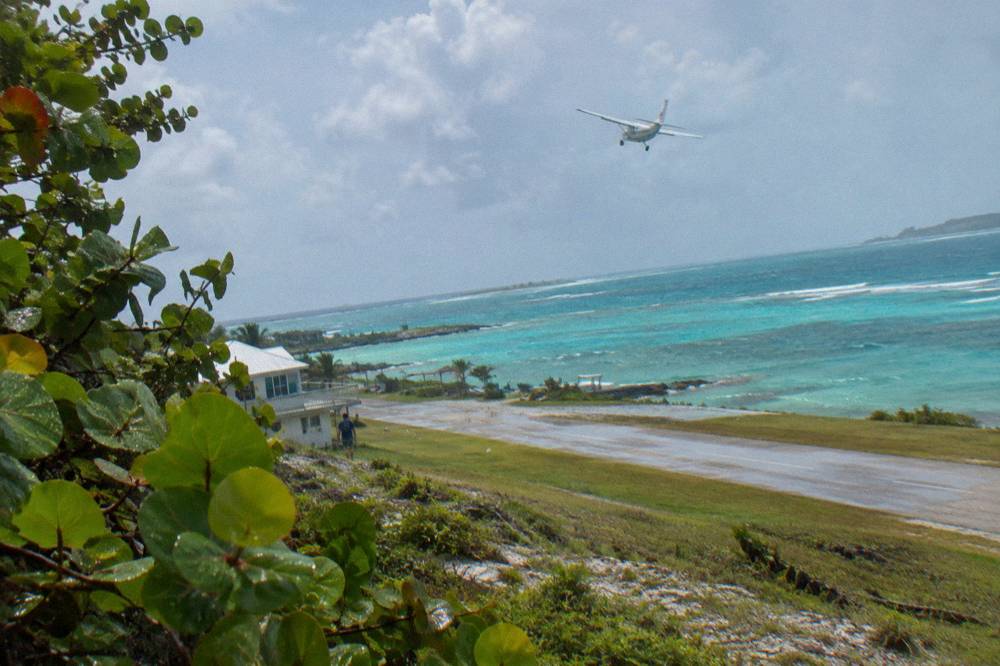
The timing logic follows the geography. A speedboat leaving Nassau around 9 AM reaches the northern cays late morning, and since most full-day tours run the same route in roughly the same order, the marina gets crowded in the middle of the day. Flights from Nassau to Staniel Cay take under an hour, so guests flying in can be on the water before the speedboat fleet arrives.
Seasonally, the Atlantic hurricane season runs 1 June to 30 November with its peak from August to October, and boat tours in that window can be rescheduled or cancelled when seas build. It is late October as this guide is written, which places the season's end within weeks, and no active tropical systems were listed near the Bahamas in late October. The calmer, clearer months of December through May are the standard recommendation for this route, and the best time to visit Exuma guide works through the trade-offs month by month.

Tide matters less at Compass Cay than at Thunderball Grotto next door, where low or slack tide is the safe entry window, but it still shapes visibility in the marina basin. Ask your crew on the day; they watch the tide tables for the whole route and sequence stops around them. Nothing about timing is guaranteed by any operator, and the honest framing is that crews make the call each morning.
What Should You Bring And Know Before The Shark Stop?
Bring reef-safe sunscreen applied before you arrive, water shoes for the dock and rocky patches, a waterproof phone pouch, a towel, and a dry layer for the fast boat ride; leave food, drinks and any personal snacks aboard, because feeding rules at every wildlife stop on this route require operator-provided food only, and that applies to the sharks, the pigs and the iguanas alike.
The feeding rule is the one that catches people out. Operators ask guests to use only the food the crew provides, never personal snacks or alcohol, and to let the animals come to them rather than chasing or cornering them. At the iguana cays the protocol is grapes offered on wooden sticks, since the rock iguanas are a protected species; at Pig Beach the crew feed the pigs in the water, never on sand, a practice operators trace to the 2017 pig deaths linked to sand ingestion. No government regulation mandates any of this; it is operator practice, and crews take it seriously.
| Item | Why it matters at Compass Cay |
|---|---|
| Reef-safe sunscreen | Applied before entering the water, per operator guidance |
| Water shoes | Dock, rocks and shallow sand |
| Waterproof phone pouch | Sharks hold position, photos are easy |
| Towel and dry layer | Fast open crossings are windy and wet |
| Cash or card for the marina | Small purchases and tips |
Entry formalities sit far from most people's minds on a day trip, but they matter if you are connecting through Nassau internationally: a passport valid six months beyond entry and a departure tax of $29 per person aged six and over, usually collected in the airfare. The Bahamas entry requirements guide holds the details. For packing at the level of the whole day, the what to bring on an Exuma boat tour checklist is the fuller version of the table above.
How Do You Choose A Tour If The Sharks Are Your Priority?
If the shark encounter is the reason you are booking, pick a tour that names Compass Cay as a stop rather than a generic "swim with wildlife" itinerary, weigh speedboat versus fly-in on how much open water you want to cross, and check the duration: the premium seven-stop trip runs about six hours while the classic powerboat days run eight to nine, and the shorter day trades some sea time for comfort.
Start with the flagship option. Original Exuma Powerboat Adventures, from $328.90 per person and rated 4.7 across 553 reviews, is the most reviewed speedboat day covering this route from Nassau, and it pairs the sharks with a private island stop and lunch. It is the natural default for a first-time visitor whose priority list reads pigs, sharks, grotto, in whatever order the sea allows. You can check availability on the operator's page alongside the full tour profile.
For a budget-conscious variant on the same geography, the Exuma Cays Swimming Pigs and Iguanas Tour runs from $378 per person across roughly eight hours; its review pool of 12 is too small to mean much yet, so the itinerary, not the rating, is the argument. Check availability on the operator's page and confirm the shark stop is named for your date.
If your base is Great Exuma rather than Nassau, Exuma Island and Cays Tour, about seven and a half hours, from $330 per person and rated 4.9 across 111 reviews, covers the cays from the southern end of the chain, a materially different departure point. The how to get to Exuma guide sorts out which island you should actually be sleeping on for the itinerary you want.
At the top of the market, the choice is between time and intimacy. The Elite Escape's seven stops in about six hours, from $850 per person, suits travellers who want the full checklist without the longest day. The private plane trip from $4,000 per group suits families or friend groups who want no strangers on the boat and a schedule built around the tides. Both are covered in the Exuma private boat charter guide if the fully private route is where your budget lands.
Common Questions About Compass Cay Nurse Sharks
Are The Compass Cay Nurse Sharks Dangerous?
Nurse sharks are docile, slow-moving bottom dwellers, and the Compass Cay population is habituated to people in shallow, calm water. The encounter has a strong safety record when guests follow the briefing: no stepping on sharks, no grabbing, no sudden movements. The animals are wild, so the rules are not optional.
Do You Have To Pay To See The Sharks At Compass Cay?
The marina charges a day-use fee of about $15 per person, an operator-reported figure. On organised tours this fee is normally included in the ticket price along with the park landing fees, so most guests pay nothing extra at the dock.
Can You Visit Compass Cay Without A Tour?
Not realistically. The cay is privately owned and reachable only by boat, and the shark area is accessed through the marina. Independent visitors would need their own vessel and marina permission, which is why virtually everyone visits as part of a multi-stop tour.
How Long Do You Get With The Sharks?
Most tours spend well under an hour at the dock, since Compass Cay is one stop among several in a full day. The water is shallow and the sharks stay close, so even a short window is usually enough for a swim and photos.
Is The Shark Stop Suitable For Children?
The shallow, calm setting suits children better than deeper snorkel stops, and many families do it. Age policies vary by operator, and some group boats set minimum ages for the whole day trip, so check the booking page for the specific tour.
Which Tour From Nassau Includes Compass Cay?
Most full-day Exuma island-hopping tours from Nassau include it, among them the Exuma Island Hopping Swimming Pigs Tour with Lunch, rated 4.8 across 689 reviews, from $438.90 per person. Always confirm the shark stop is named on the booking page for your date, as sea conditions can reorder itineraries.