Is It Okay To Swim With Nurse Sharks In Exuma?
A straight answer on the safety, rules and ethics of swimming with nurse sharks at Compass Cay in the Exuma Cays, with tour prices and what the day looks like.
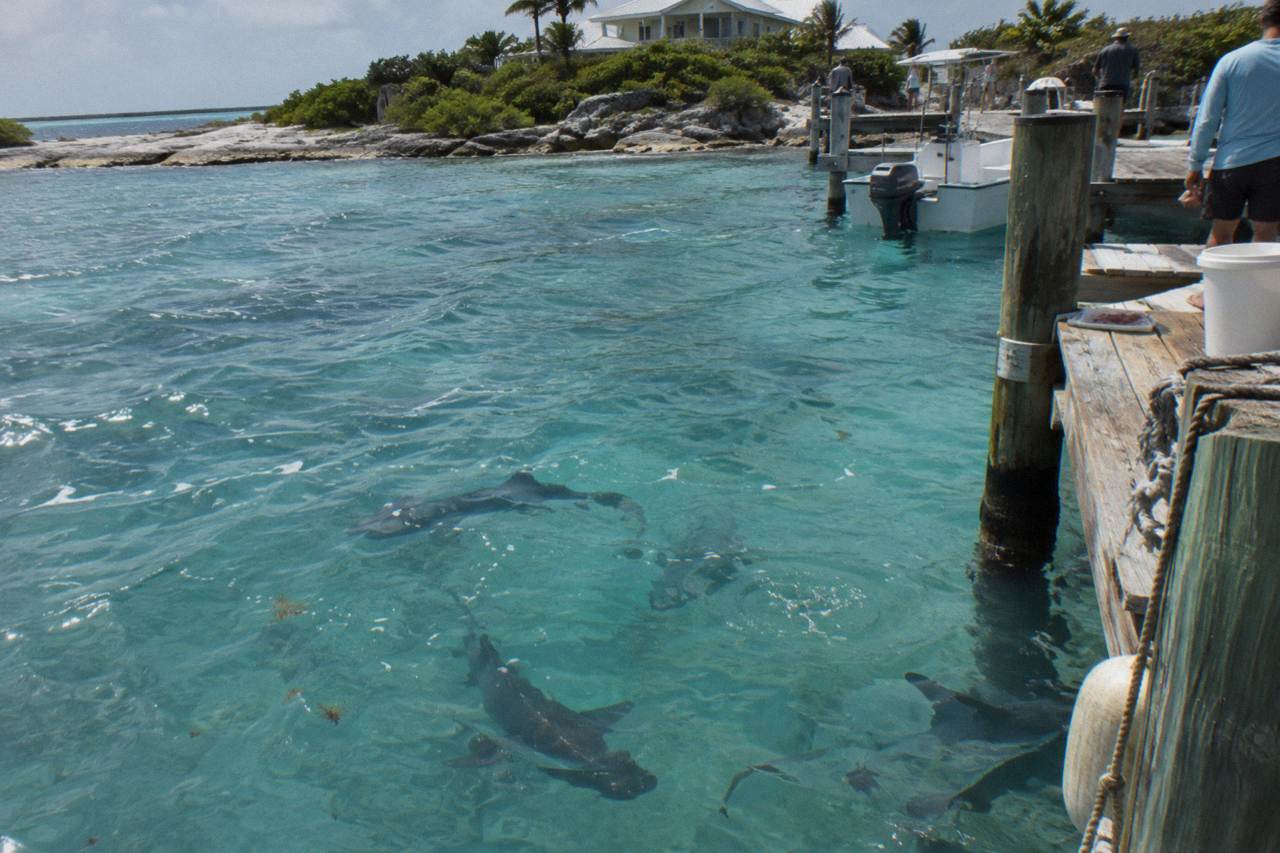
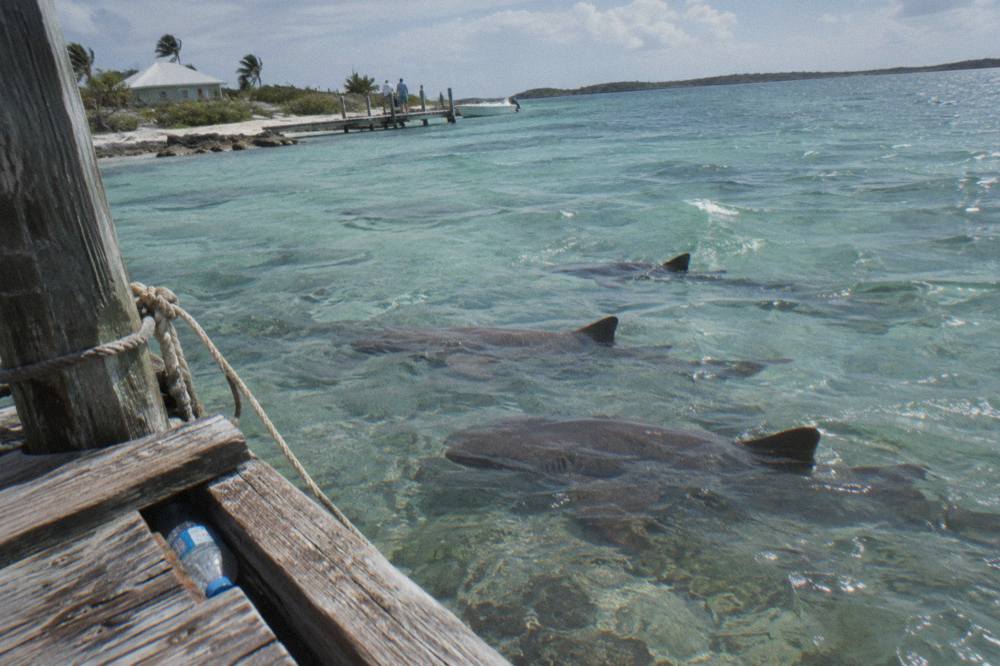
Nurse sharks have been gathering around the Compass Cay marina dock for years, drawn by the steady rhythm of boat traffic and feeding that comes with it. Visitors wade in beside them, sometimes a dozen animals at once, lying motionless in the shallow sand. The sight unsettles some people and delights others, and both reactions are reasonable.
This article separates three questions that tend to get tangled together. Are nurse sharks dangerous? What rules govern the Compass Cay interaction? And is taking part an ethical choice? Each has a different answer, and only the first one is really about the shark.
Is It Okay To Swim With Nurse Sharks?
Yes, for most people swimming with nurse sharks is physically okay, because the Compass Cay sharks are accustomed to people, move slowly, stay in shallow water beside a dock rather than open ocean, and the interaction is supervised under posted rules. It is not okay to treat them like pets: they are still wild sharks, the safety briefing exists for real reasons, and the ethical call is yours to make with honest information. If you're weighing the same questions about the islands' other famous animal encounter, our guide to swimming pig safety in the Bahamas gives you the same honest rundown before you get in the water.
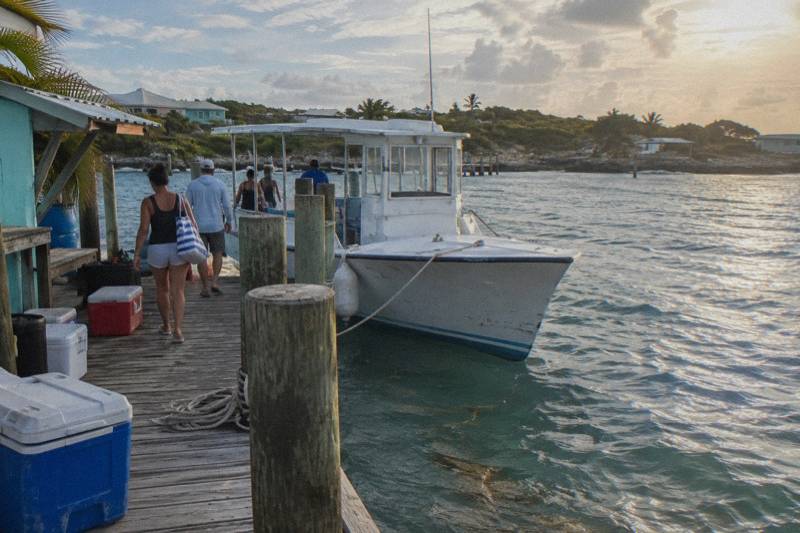
The honest information starts with what the experience actually is. Compass Cay is a small private cay in the northern Exuma Cays, and its marina has become one of the most photographed wildlife stops in the Bahamas. The nurse sharks that congregate at the dock are adults, often resting on the seabed in water shallow enough to stand in. Tour boats tie up, guests step down into the water, and the sharks largely ignore them or drift past slowly. If you're wondering what else shares these waters, this guide to the sharks around Exuma covers the other species you might encounter and how much risk they actually pose.
There is no government regulation governing the interaction. Verified checks of the official Bahamas tourism and Bahamas National Trust pages found no official rule text covering nurse shark encounters, no permit requirement for visitors, and no wildlife code specific to Compass Cay. What exists instead is a set of operator-run rules: a safety briefing before anyone enters the water, and expectations about behavior that the crew enforces. That matters for how you read the experience. The safety net here is a briefing and a crew, not a statute.
So the okay-ness splits into layers. Physically, the risk is low but not zero, and we will quantify that in the next section. Behaviorally, there are rules, and following them is the price of entry. Ethically, reasonable people land in different places, and later sections lay out the welfare considerations without telling you which side to pick.
If you already know you want to include the stop, the practical choice is which boat gets you there.
What Are Nurse Sharks And How Dangerous Are They?
Nurse sharks are a bottom-dwelling coastal species that grows to about seven to ten feet, moves slowly, and feeds mainly on shellfish, crabs and small fish caught at night near the seabed. They are not aggressive toward people, and bites on humans are rare and almost always defensive, typically triggered when someone grabs, steps on or restrains the animal. Standing calmly in shallow water beside them is a very different act from handling one.
The species, Ginglymostoma cirratum, is common in warm western Atlantic waters from Florida through the Caribbean. It has a broad head, a stout body, small eyes and a mouth designed for suction rather than for shearing prey. During the day it rests, often in groups, under ledges or on open sand. At night it forages. The animals at Compass Cay have adjusted their rhythm around the marina, which is part of why they are so approachable: they associate the dock area with rest and with the occasional meal, not with hunting.
The danger statistics favor calm. Nurse sharks are not counted among the species implicated in serious unprovoked attacks on humans, a category dominated by larger predatory sharks. When nurse sharks do bite people, the documented pattern is defensive: a diver grabbing one, a swimmer stepping on one, someone trying to ride or lift it. The bite itself can still do real damage, because the animal has thousands of small serrated teeth and bites with strong suction and does not let go quickly. "Docile" is not the same as "harmless," and the distinction is exactly why the Compass Cay briefing exists.
Practical safety comes down to four behaviors, all of them covered in the crew briefing. Do not step on a shark, and look down when walking, because a resting animal underfoot is the classic bite trigger. Do not grab tails, fins or heads. Do not chase or corner an animal that is moving away. And avoid sudden splashing and lunges, which can stress the sharks and startle the people around you. Guests who follow those rules and simply stand or float in the shallows are doing the interaction the way it is designed to be done.
One more honest note. Conditions matter as much as behavior. The water is usually clear and calm inside the marina basin, but sea state varies day to day, and anyone with limited mobility or a real fear of deep water should check with the crew about depth and footing on the day. A fuller treatment of the site and its access is in the Compass Cay nurse shark tour guide.
What Are The Rules At Compass Cay?
Compass Cay charges a published day-use fee of $15 per person to access the nurse shark area at the marina dock, and crews give a safety briefing before anyone enters the water covering no stepping on sharks, no grabbing or chasing, and no sudden movements. The rules are operator-enforced animal-welfare guidelines, not government law, and tour packages normally fold the fee into the ticket price.
The $15 landing fee is published by the marina and repeated across operator sites, and day visitors who arrive independently pay it at the dock. If you arrive on a scheduled tour, the fee is typically already inside your ticket. Don't assume the Compass Cay landing fee is covered in your tour price. Check the inclusions on the live booking page before you book, whether you're on a Great Exuma boat day or a fly-in trip to the cays. If your tour's inclusions are not spelled out, check the booking page before assuming.
The briefing itself is short and worth taking seriously. It covers the behaviors listed in the previous section, plus spacing: give resting animals room, let any shark that approaches you come to you rather than reaching toward it, and keep children within arm's reach. Crews cover a safety briefing and do the feeding themselves, which surprises guests who have just come from the pig beach stop, where feeding is part of the visit. The difference is deliberate. The pigs are fed operator-provided food in the water as a managed activity. The sharks at Compass Cay are fed by the crew, and visits begin with a short safety briefing before anyone gets in the water.
It is worth being clear about the legal status of all this, because articles online often blur it. No official Bahamian regulation of the Compass Cay interaction was found on government or Bahamas National Trust pages. The sharks themselves, like all sharks in Bahamian waters, benefit from the country's long-standing shark protections, and the Bahamian rock iguana and West Indian flamingo are named protected species on the official Bahamas ecotourism page. But the conduct rules at the dock are the operator's and the marina's, enforced by crew presence rather than by wardens. That is a workable system when guests cooperate, and it depends on guests cooperating.
Neighboring sites have different setups, which is useful context. The Exuma Cays Land and Sea Park, established in 1958 as the first marine reserve in the wider Caribbean, leaves the grotto and Pig Beach outside its protected waters, operators report, and inside it nothing living or dead may be taken, as the Bahamas National Trust park page states. Operators report that Thunderball Grotto and Pig Beach lie just outside the park's southern boundary, so the three most famous stops of a northern cays day trip sit in a zone with no take rules but no landing permits either. The overall picture is one of light formal regulation and heavy informal management by the people who work there every day.
For a sense of how the stops stack up in practice, this table summarizes the recurring fee and access facts for the northern cays.
| Stop | Access | Typical fee | Who collects it |
|---|---|---|---|
| Compass Cay nurse shark dock | Boat, marina basin | $15 per person day use | Marina, usually via tour package |
| Pig Beach, Big Major Cay | Boat only, roughly 10 to 15 minutes from Staniel Cay | No entrance fee | Nobody; tour price covers transport |
| Thunderball Grotto | Boat, entered by swimming at low or slack tide | No admission fee | Nobody |
| Allen's or Bitter Guana Cay iguanas | Boat landing | Usually folded into tour price | Tour operator |
One practical implication follows from the table. A full-day northern cays tour bundles several free or fee-based stops into one ticket, which is why the per-person price of those tours is less about any single site and more about the boat, the fuel, the lunch and the crew covering a long day on the water.
Is Swimming With Nurse Sharks Ethical?
The ethics are genuinely contested rather than settled: critics worry that marina feeding reinforces the sharks' presence, that close contact can stress wild animals, and that the spectacle invites imitation, while supporters point out that the interaction is shallow and brief, the rules reduce handling to near zero, and visitor revenue funds stewardship of the remote cay. With no official welfare assessment, the call is yours.
Start with the strongest version of the case against. Wild sharks that learn to gather at a dock are, in a limited sense, dependent, and dependence on a food source tied to tourism is a real welfare question for any species. Dense gatherings can also alter natural behavior, and the constant stream of visitors means the animals never fully escape human proximity during the day. People who hold this view usually still visit the Exumas; they simply watch the sharks from the boat or the dock rather than standing among them.
The case for is not frivolous. Nurse sharks at the marina are not handled, carried or ridden, in contrast to some wildlife attractions elsewhere. The interaction is passive, the animals are free to leave, and the ones that stay are choosing shallow, protected water, which is also where they rest naturally. The $15 fee and the tour economy around it give a small private cay a financial reason to keep its waters healthy, and shark tourism across the Bahamas has historically aligned economic incentives with shark conservation rather than against it. The country's sharks are worth more alive and visited than they would ever be as catch.
What should temper any confident claim in either direction is the absence of data. No published study of the Compass Cay population's stress levels, health or site fidelity was found in the sources reviewed. Nobody can honestly tell you the sharks are thriving, and nobody can honestly tell you they are harmed. What is documented is the rules set and the absence of official oversight, and both of those facts favor visitors who behave conservatively: stand still, touch nothing, take your photos, leave.
Readers wrestling with the same question about the pigs a few cays north often find the welfare debate around the swimming pigs covers similar ground, including the past incidents behind today's feeding rules at Big Major Cay. The pig feeding guidelines that followed, operator-provided food only, never fed on sand, no chasing or picking up piglets, come from the same 2026 operator guidance that shapes the shark-side rules. Both sites run on the same model: managed informality, with the crew as the enforcement layer.
If your own line is that passive observation is fine but intervention is not, the nurse shark stop is one of the easier wildlife experiences in the Bahamas to take part in on your own terms. You can stand waist-deep two feet from a shark and never extend a hand.
What Does A Tour With Nurse Sharks Cost?
Full-day tours from Nassau that include the Compass Cay stop start from about $328.90 per person on the most reviewed powerboat option, with luxury small-group versions from $850 and fly-in packages from $4,000 per group. All are long days, roughly 6 to 9 hours door to dock to door, and the price differences track boat type, group size and whether lunch and extra stops are included.
The anchor option is Original Exuma Powerboat Adventures, rated 4.7 across 553 reviews, running about 9 hours from Nassau from $328.90 per person. Note its shark encounter happens at the operator's private Ship Channel Cay. For a Compass Cay stop, tours like the Day Away excursion from $378 also fit, and its price sits at the accessible end of the range. The listing describes the full northern cays circuit with wildlife stops and lunch; check the booking page for the current inclusions, since packages are adjusted between seasons.
Two or three rungs up sits the Exuma Elite Escape, a 7-stop luxury trip rated 4.8 across 580 reviews, from $850 per person for a shorter, roughly 6-hour day. You are paying for a smaller group and a faster, more comfortable boat, not for different sharks. And at the top end, the Exuma Swimming Pigs and Sharks Tour by Plane replaces the long speedboat run with a flight, from $4,000 per group; it carries only a handful of reviews so far, too few to support any star rating, so judge it on its itinerary rather than its feedback.
The table below places the three side by side with the figures the operators publish.
| Tour | Length | Rating | Price | Best for |
|---|---|---|---|---|
| Original Exuma Powerboat Adventures | ~9 hours | 4.7 across 553 reviews | from $328.90 per person | The full-day classic at the lowest entry price |
| Exuma Elite Escape 7-Stop Luxury Tour | ~6 hours | 4.8 across 580 reviews | from $850 per person | Small-group comfort, shorter day |
| Exuma Swimming Pigs and Sharks Tour by Plane | ~7 to 9 hours | 7 reviews | from $4,000 per group | Flying instead of the speedboat crossing |
Two cost notes worth carrying. First, the per-group prices are exactly that: per group, not per person, and dividing them by six guests does not produce a bookable figure. Second, the Compass Cay fee and similar landing costs are normally inside the ticket already, so resist the urge to budget them separately unless your tour says otherwise.
What Does The Day Actually Look Like?
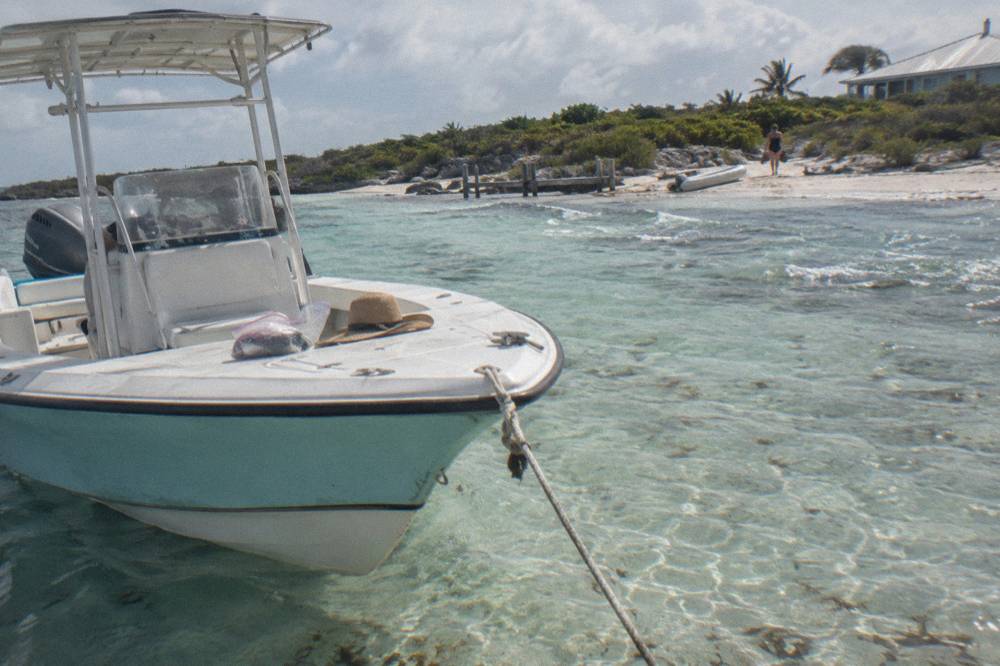
Expect a full, committed day on a fast boat: you check in around 8:45 AM near the Paradise Island ferry terminal, cross open water for roughly two hours to the northern cays, rotate through wildlife stops like iguanas, nurse sharks, the pigs and a grotto or sandbar, eat lunch on a private island or at a cay settlement, and cruise back by about 4:30 PM. If the grotto stop is what convinced you to book, our honest take on whether the Thunderball Grotto boat ride is worth it walks through what that part of the day really involves.
The rhythm matters as much as the itinerary. The crossing out is long and can be bumpy depending on sea state, and it happens first, before any of the famous sights. Guests who expect a gentle sightseeing cruise are sometimes surprised by the outbound run; guests who know it is coming treat it as the price of reaching a chain of cays that is otherwise a flight away. Once in the cays, the pace flips to short hops: ten or fifteen minutes between stops, with time ashore or in the water at each.
A representative order runs iguanas first, where the animals come down to the shoreline and are fed grapes on wooden sticks under crew supervision, then Compass Cay for the sharks, then Pig Beach for the pigs, then the grotto or a sandbar, with the timing of the grotto stop tied to the tide. Thunderball Grotto is best entered within an hour or two of low tide, when the entrances are most exposed and the interior is calmest; at high tide the entries sit deeper and the current inside strengthens, so captains plan around the tide tables rather than the clock.
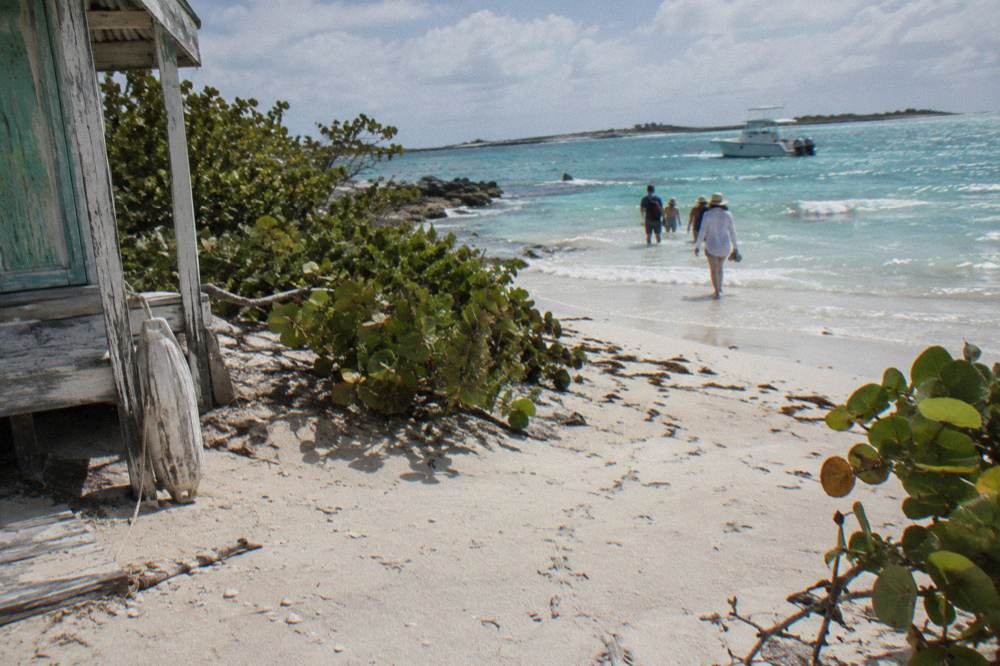
Cruise ship passengers should read the schedule twice. Some full-day powerboat tours list cruise guests among those the experience may not suit, because the early check-in and the late return do not reliably fit a port day. If that is you, a fly-in trip or a shorter Great Exuma-based excursion is the safer fit, and the operators can confirm port-day feasibility directly.
For what to carry, operator guidance is consistent: reef-safe sunscreen, a hat, sunglasses, a towel, a waterproof phone pouch and water shoes. The last item earns its place specifically at Compass Cay and the iguana cays, where you will be standing and walking in shallow water over sand and broken coral. A fuller packing rundown lives in the what to bring on an Exuma boat tour guide.
Do Season And Weather Change The Answer?
Yes. Hurricane season runs from 1 June to 30 November with its peak from August to October, and rough-sea days in that window can reschedule or cancel boat tours outright, while the December to May stretch typically brings calmer conditions and clearer water. The sharks themselves are present year round, so the variable is whether the boat can run, not whether the animals are there.
This is worth saying plainly in late October, at the tail of the season: the crossing from Nassau is two to three hours each way over open water, and captains make the call on the day. Booking in the peak hurricane months means accepting a possible cancellation, and it also means asking about the refund or reschedule policy before you pay. Outside those months the question mostly answers itself, with winter and spring offering the flatter seas and visibility that make the grotto and the sandbars look the way they do in the photos.
Timing within the day matters too. Nassau speedboat tours arrive at the marquee stops in the middle of the day, which is when they are busiest. Fly-in and Staniel Cay-based trips can reach Pig Beach and the sharks earlier or at off-peak hours, a flexibility advantage worth weighing if crowds are your main concern rather than price. Whichever you choose, the underlying resource is the same, and the team behind Exuma Tours keeps the tour pages current so the figures you plan on are the figures you meet at the dock.
Common Questions About Swimming With Nurse Sharks
Is It Okay To Swim With Nurse Sharks?
For most people, yes, in the physical sense: the sharks are slow, accustomed to people, and encountered in shallow water under crew supervision and a posted rule set. Ethically it is a personal call, since the interaction is operator-managed rather than government-regulated and no independent welfare study exists.
Are Nurse Sharks Dangerous To Humans?
They are not an aggressive species, and unprovoked serious attacks are not part of their record. Bites that do occur are usually defensive, triggered by someone stepping on, grabbing or restraining the animal. Standing calmly in the shallows is very different from handling one.
What Are The Rules At Compass Cay?
A $15 per person day-use fee applies at the marina, and crews brief guests before entry: no stepping on sharks, no grabbing or chasing, no sudden movements. The rules are operator-enforced guidelines rather than law, and tour packages normally include the fee.
Can You Touch The Nurse Sharks?
The briefing and the operators' guidance discourage handling. Passive presence in the water is the intended experience, and the animals may drift close to you on their own. Reaching, grabbing or riding is against the posted rules and is the main documented trigger for defensive bites.
How Much Does A Tour With The Sharks Cost?
Full-day Nassau tours that include Compass Cay start from $328.90 per person on the most reviewed option, from $850 per person on a luxury small-group version, and from $4,000 per group on a fly-in package. Check the booking page of the specific tour for current inclusions.
When Is The Best Time Of Year For The Trip?
December to May typically brings calmer seas and clearer water. Hurricane season runs 1 June to 30 November, peaking August to October, and rough-sea days in that window can reschedule or cancel boat tours. The sharks themselves are present year round.