Best Beaches In Exuma
Exuma's famous sand comes in two kinds: beaches you can walk to on Great Exuma, and the wild cays of the Exuma Cays that only a boat or a plane can reach. Knowing which is which decides your whole trip.
Short answer
The best walk-in beach on Great Exuma is Tropic of Cancer Beach, free with no facilities. The most famous sand, Pig Beach and the sandbars around the Exuma Cays, is reachable only by boat tour, from roughly $330 per person for a full day from Great Exuma, with Nassau departures starting near $329.
Exuma's reputation rests on a simple geological accident: the islands sit on a shallow bank of pale limestone sand, so the water over it stays turquoise even a mile from shore. The result is a chain of beaches that photographs like nowhere else in the Bahamas. What the photographs do not show is the split that defines every Exuma beach holiday. Some of the best sand is on Great Exuma, the main island, where a rental car and a cooler will get you there. The rest, the famous pig beach, the grotto, the shifting sandbars, sits on uninhabited cays in the Exuma Cays chain to the north, and the only practical way onto that sand is a boat tour or a fly-in package. If you are already wondering which of those boat-only cays holds the finest sand, our rundown of the prettiest beach in Exuma names the leading candidate and explains what a day on the water to reach it costs.
This guide walks through both halves. It names the beaches worth the drive, explains which tour products reach the boat-only cays and what they cost, and flags the fees and rules that catch visitors out, from the nurse shark landing fee at Compass Cay to the strict no-take rules inside the Exuma Tours coverage area's marine park. Where a detail is not settled, the honest answer is to check the booking page, and this guide says so plainly.
Which Beaches In Exuma Can You Reach Without A Boat?
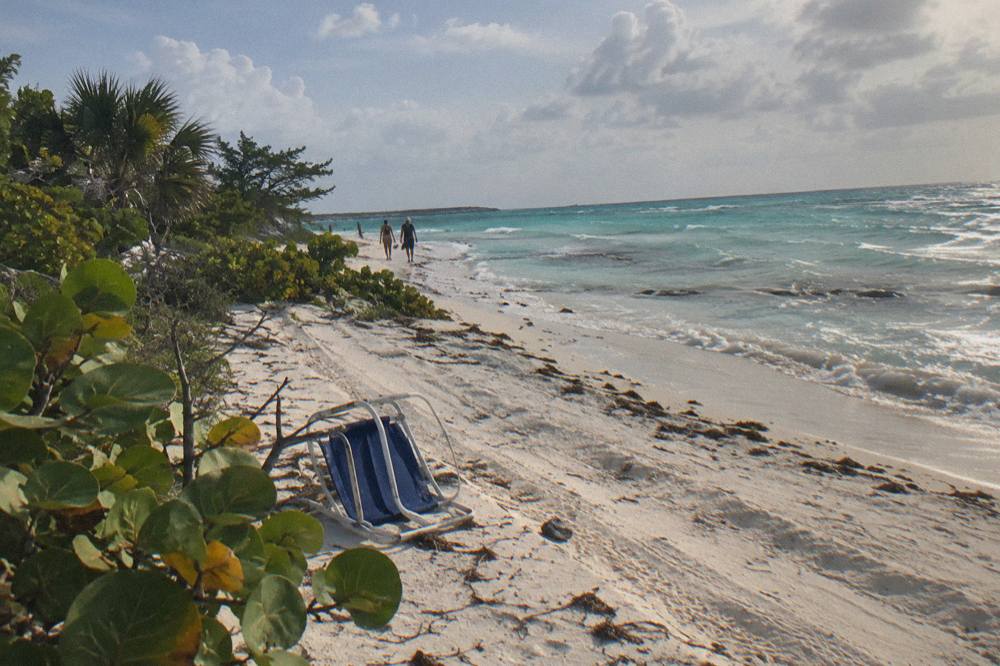
Great Exuma and Little Exuma hold the drive-up beaches, and the standout is Tropic of Cancer Beach on Little Exuma, which is free to access with no entry fee and no facilities. Most road-accessible sand sits within thirty minutes of George Town, the island's hub. Everything north of Great Exuma, the entire Exuma Cays chain, has no roads at all and needs a boat or a plane.
Tropic of Cancer Beach is the one locals and guides consistently point to first. It runs along Little Exuma's shore with the pale, fine sand and shallow gradient the island is known for, and its free, unfacilitated character is confirmed in current guides: no entry fee, nothing to book, nothing to rent. Bring water and shade, because there is neither. The name comes from the line of latitude the beach sits on, and the drive from George Town crosses onto Little Exuma by a small causeway.
Around George Town itself there are smaller options within easy reach of the harbor and the airport, and the west coast of Great Exuma generally delivers the calmer, shallower swimming water. Two practical points shape any drive-up day. First, a buggy rental is a popular way to cover them, and one operator lists a 6-seater buggy at from $300 for a day, though with only a handful of reviews so far. Second, sea state matters even on the big island: the official hurricane season runs 1 June to 30 November, and operators report rescheduling and rough water through the peak months of August to October.
The honest limitation of the drive-up beaches is that none of them is the Exuma you have seen in photographs. The postcard sand, the pigs, the grotto, the empty sandbars, is all in the cays.
| Beach or stop | Island | How to reach it | Entry cost |
|---|---|---|---|
| Tropic of Cancer Beach | Little Exuma | Car or buggy from George Town | Free, no facilities |
| George Town area beaches | Great Exuma | Short drive from town or airport | Free |
| Pig Beach (Big Major Cay) | Exuma Cays | Boat tour or charter only | No entrance fee |
| Thunderball Grotto beach | Near Staniel Cay | Boat tour or charter only | No admission fee |
| Compass Cay sand spit | Exuma Cays | Boat tour or charter only | ~$15 per person day use |
| Low-tide sandbars | Exuma Cays / Moriah Harbour Cay | Boat tour, tide dependent | Free |
What Are The Most Famous Beaches In The Exuma Cays?
The most famous is Pig Beach on Big Major Cay, home to the swimming pigs, followed by the sand spit at Compass Cay and the beach outside Thunderball Grotto near Staniel Cay. None has a road, and Pig Beach itself has no entrance fee, with costs coming entirely from the boat trip that gets you there. All three are standard stops on full-day cays tours.
Pig Beach is the reason most visitors book an Exuma tour at all. The Bahamas Ministry of Tourism's own page describes roughly twenty pigs and piglets living wild on the uninhabited cay, reachable only by boat, with origins unknown. The beach is a short strip of sand where the pigs wade in and swim out to approaching boats, and tour stops typically run about twenty to sixty minutes depending on the operator and how busy the anchorage is. No official government rule on feeding or landings was found on any Bahamas authority page, so treat the conduct you see as operator practice: crews hand out the food, ask guests to feed the pigs in the water rather than on the sand, and discourage chasing or picking up piglets. Those habits trace back to the 2017 deaths linked to sand ingestion, which reshaped how tours run the stop.
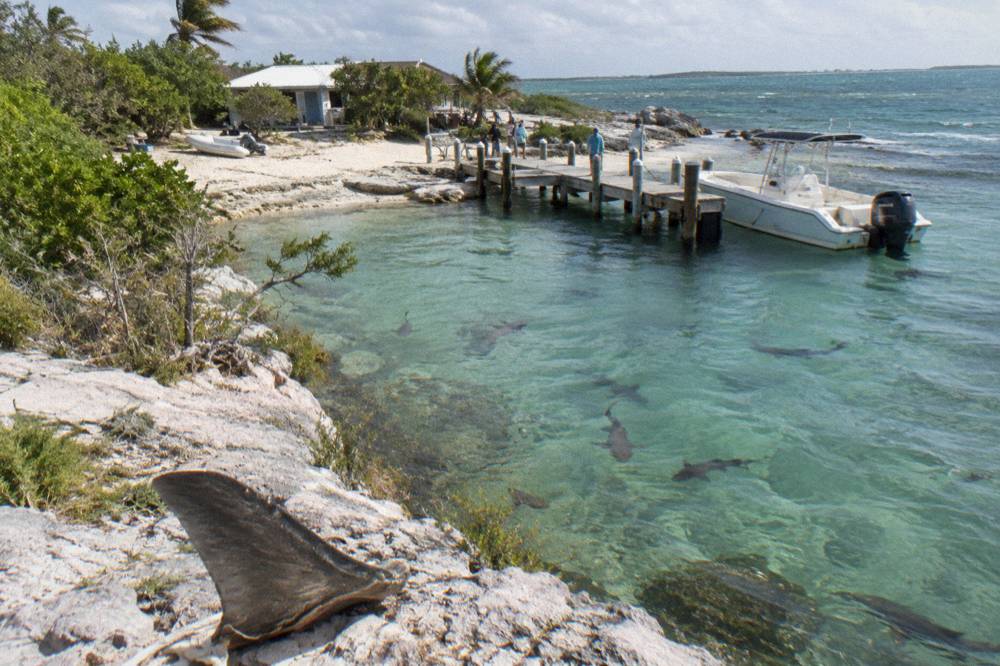
Compass Cay is famous less for its beach than for what swims beside its dock: nurse sharks that gather in the shallows where day visitors stand. The marina charges a published day-use fee of about $15 per person, usually absorbed into tour prices, and crews give a safety briefing before anyone steps in. Thunderball Grotto, the flooded cave sitting just off its own tiny beach near Staniel Cay, is a standard snorkel stop on the same circuit, and snorkelers enter at low or slack tide when the entrances are most exposed. No permit is required to snorkel it, and there is no admission fee.
A curiosity worth knowing: both Thunderball Grotto and Pig Beach are reported by operators to sit just outside the southern boundary of the Exuma Cays Land and Sea Park, which is why neither carries a park fee. Tour operators report the boundary stops near Compass Cay.
Which Boat Tours Reach The Best Beaches?
Full-day cays tours run from roughly $328.90 to $499 per person from Nassau, and cheaper options exist from Great Exuma, such as the Exuma Island and Cays Tour at from $330 for about seven and a half hours. Every mainstream product covers Pig Beach plus iguanas, nurse sharks or a sandbar. The real choice is speedboat versus plane, and group tour versus private charter.
The volume of product is concentrated on Nassau departures, because that is where most visitors stay. The pattern is consistent: a fast boat ride of two to three hours each way across open water, a full eight-hour day, and a circuit that touches pigs, iguanas and sharks. Original Exuma Powerboat Adventures, rated 4.7 across 553 reviews, runs about nine hours from $328.90 per person. The Exuma Island Hopping Swimming Pigs Tour with Lunch, rated 4.8 across 689 reviews and the most reviewed trip in this category, is from $438.90 for about eight hours. The Exuma Cays Swimming Pigs and Iguanas Tour comes in from $378, though its review pool is still too small to quote a rating with confidence.
Departing from Great Exuma instead shortens the boat ride dramatically, since George Town is already inside the Exumas. That is the logic behind the island and cays day tour, rated 4.9 across 111 reviews at from $330 per person for roughly seven and a half hours, a strong fit if you are staying on Great Exuma rather than Nassau. Check availability once your dates are fixed, since small-boat seats move with the weather.
At the premium end, fly-in products swap the speedboat for a plane. The Exuma Swimming Pigs and Sharks Tour by Plane runs from $4,000 per group, and the Exclusive Fly-In Trip for a Premium Beach Day is from $838.35 per person with a 4.7 rating across 138 reviews. Flying puts you at the cays in under an hour, which operators say allows quieter, more flexible timing at Pig Beach than the boat convoys from Nassau. Fully private options run from $6,000 to $8,500 per group per day.
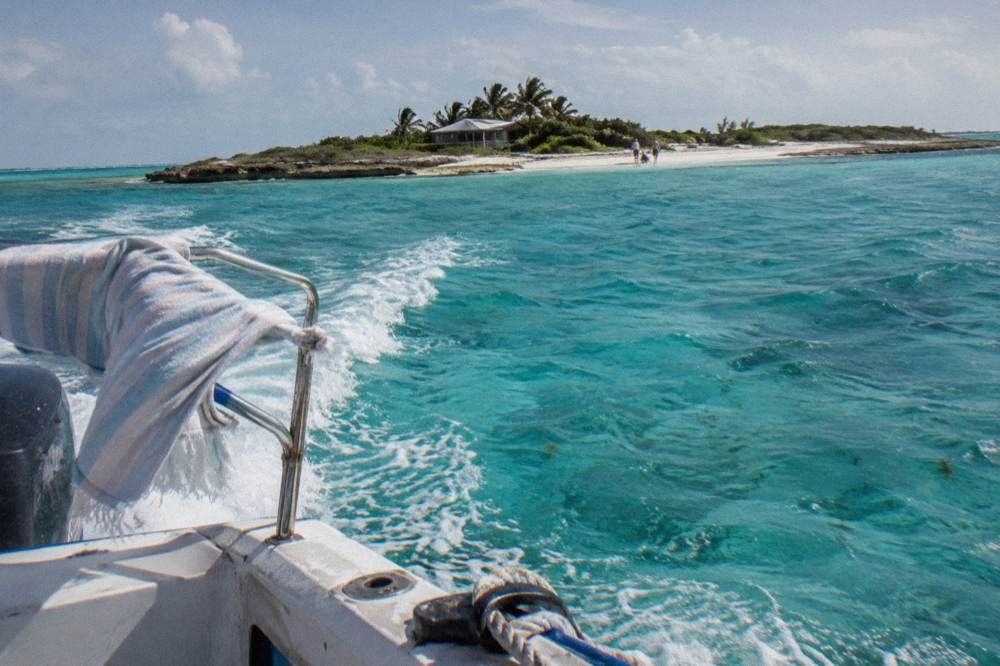
For a mid-priced taste of private-island sand without the charter price, the powerboat day trip to a private island, rated 4.7 across 171 reviews from $328.90 per person, pairs the boat ride with a beach day on an operator's own island, a different rhythm from the multi-stop cays circuit.
The comparison below pulls the main options together.
| Tour | Departs | Duration | Price basis | Rating |
|---|---|---|---|---|
| Exuma Island and Cays Tour | Great Exuma | ~7 hrs 30 min | from $330 per person | 4.9 across 111 reviews |
| Original Exuma Powerboat Adventures | Nassau | ~9 hrs | from $328.90 per person | 4.7 across 553 reviews |
| Island Hopping Swimming Pigs with Lunch | Nassau | ~8 hrs | from $438.90 per person | 4.8 across 689 reviews |
| Exuma Day Away, Original Pigs Excursion | Nassau | ~8 hrs 30 min | from $378 per person | 4.5 across 474 reviews |
| Elite Escape 7-Stop Luxury Tour | Nassau | ~6 hrs | from $850 per person | 4.8 across 580 reviews |
| Exclusive Fly-In Premium Beach Day | Nassau | ~7 hrs | from $838.35 per person | 4.7 across 138 reviews |
If the comparison leaves you torn between a pigs-focused day and a broader boat day, the tour comparison guide breaks the differences down stop by stop.
What Does A Beach Day By Boat Actually Look Like?
A typical full day from Nassau starts with check-in near 8:45 AM and a 9 AM departure, returns around 4:30 PM, and packs in two to four cay stops plus lunch on the water. From Great Exuma the days start later and ride shorter legs. Expect about two to three hours of boat travel each way on the Nassau runs, which is the honest cost of the price.
The schedule on the classic Nassau powerboat day is well established across operators. Check-in is early morning, around 8:45 AM at the Paradise Island ferry terminal area, with the boat away by about 9 AM. The ride north is fast and exposed: these are high-performance boats crossing open bank water, and operators are candid that the crossing is long. Stops then stack up through the middle of the day, typically an iguana cay such as Allen's or Leaf Cay, Pig Beach, the Compass Cay shark area. Thunderball Grotto, timed to the tide, appears on fly-in and private charter itineraries rather than the speedboat day., and a sandbar if the tide allows. Lunch is included on most products, often on a private island or at a yacht club, and many runs include drinks.
Operators list some Nassau full-day tours as unsuitable for cruise ship passengers, because the early check-in and the late return do not fit port windows. If you are arriving on a ship, check the booking page before assuming a tour fits your day.
Weather moves these days more than anything else. Rough seas in the peak hurricane months of August to October can reschedule or cancel a departure outright, and operators decide on the morning. The flip side is that water conditions from December to May are typically calmer with better clarity, which matters for grotto snorkeling. For a shorter version of the same idea, Great Exuma operators run half-day options that trade the original Big Major Cay colony for closer pig cays such as White Bay Cay, which cuts the boat time sharply.
Titan Air lists Nassau to Staniel Cay flights at $125 one way. Check current status before planning a self-built trip.
What Role Do The Sandbars Play In An Exuma Beach Day?
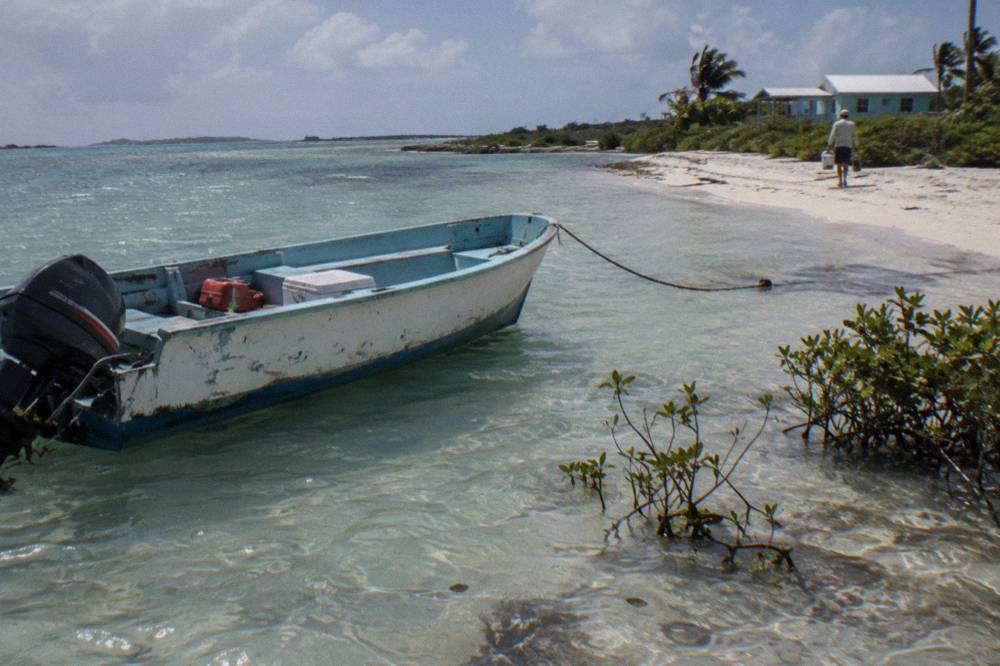
The sandbars are the Exuma beaches' shape-shifting cousins: strips of sand that surface only at low tide, most famously around the Exuma Cays and at Rolle Town and Moriah Harbour Cay near Great Exuma. They appear and vanish with the tide, so tours time them carefully, and they are usually the most photographed stop of the day.
A sandbar is not a beach in the permanent sense. It is sand deposited by current, sitting a foot or less under water at high tide and emerging as a walkable island at low. Operators build itineraries around that window, and when the tide cooperates you stand on a ribbon of sand in the middle of open turquoise water with nothing else in sight. When it does not, the stop is skipped or shortened, and crews make that call on the day, not in advance.
The two sandbar families are distinct. Around the northern cays, sandbars near Compass Cay and the grotto are folded into the big full-day tours as one stop among several. Around Great Exuma, the Moriah Harbour Cay National Park area and the Rolle Town sandbar anchor local half-day and full-day tours out of George Town, often combined with beaches and snorkeling closer to home. Private charters from the Great Exuma area for four to eight hours on the water start at around $1,800 per boat, with the full private products listed here running from $6,000 per group for a full-day Exuma Cays charter. If you would rather chase bonefish than hop between sandbars, the Exuma fishing and bonefishing charter guide covers what trips cost, where you can legally fish, and how to choose between the flats and offshore water.
Sandbars carry two practical warnings. They are fully exposed: there is no shade, so sunscreen and a hat matter, and operators recommend reef-safe sunscreen, water shoes and a waterproof pouch for phones. And the tide is unforgiving of delay, so a sandbar stop is a scheduled moment, not a lingering base for the day.
Do Any Exuma Beaches Or Stops Charge Fees?
The beaches themselves are free, including Tropic of Cancer Beach and Pig Beach, but specific stops and the marine park charge fees that tours normally absorb: about $15 per person at Compass Cay, and park day-tour landing fees of BSD 6.36 to 12.73 per person inside the Exuma Cays Land and Sea Park. Self-guided boaters pay their own mooring and anchorage fees plus 10% VAT.
The fee map is simpler than it first looks. Thunderball Grotto carries no admission fee and no permit. Pig Beach has no entrance fee; the entire cost of the stop is the boat that brings you. Compass Cay's marina publishes its $15 per person day-use charge for the nurse shark area, which tour prices generally include. Iguana feeding uses grapes on sticks supplied by crews, and the iguanas themselves are a protected species named on the Bahamas ecotourism pages.
The exception is the Exuma Cays Land and Sea Park, the 1958 reserve covering 112,640 acres, whose rules are strict and official. It is a no-take zone: no fishing, no shelling, no conching, no removal of anything living or dead, and wardens plus Royal Bahamas Defence Force officers enforce it with fines on the table. Day visitors arriving on charter tours pay landing fees, BSD 6.36 per person at most locations or BSD 12.73 at Warderick Wells with the guided tour, and operators normally absorb these into the ticket price. Private vessels pay mooring fees starting around $27 per day for boats under 40 feet, and everything carries 10% VAT at checkout on the official payment platform. The details are on the Bahamas National Trust park page.
| Stop or area | Who charges | Amount | Who pays on a tour |
|---|---|---|---|
| Pig Beach (Big Major Cay) | Nobody | No entrance fee | Covered by tour price |
| Thunderball Grotto | Nobody | No admission fee, no permit | Covered by tour price |
| Compass Cay nurse shark area | Marina day use | ~$15 per person | Normally included in tour price |
| Park landing, most locations | Bahamas National Trust | BSD 6.36 per person | Normally absorbed by operator |
| Park landing, Warderick Wells guided tour | Bahamas National Trust | BSD 12.73 per person | Normally absorbed by operator |
| Private vessel mooring, under 40 ft | Bahamas National Trust | ~$27 per day plus 10% VAT | Paid by the boater |

For context on the animals themselves, the official swimming pigs page is the primary source, and it confirms no government feeding regulation exists, only operator practice.
When Is The Best Time Of Year For Exuma Beaches?
The calmest water and best clarity run December through May, outside the official hurricane season of 1 June to 30 November. Peak storm frequency is August to October, when boat tours face the highest risk of rescheduling. Sea temperatures stay warm year round, around 29 degrees Celsius even in late October, so the choice is about sea state, not warmth.
The trade-off is straightforward. Winter and spring deliver the postcard conditions: lighter seas, clearer water over the sandbars, and reliable grotto snorkeling, at the price of high-season flights and crowds. Late autumn is the gamble, with October sitting at the tail of the peak storm window but delivering emptier anchorages at Pig Beach and shoulder-season pricing when a system is not nearby. As of late October 2026 no active tropical systems were listed near the Bahamas, but that is a daily question, not a planning assumption.
| Period | Conditions reported by operators | What it means for beach plans |
|---|---|---|
| December to May | Calmer seas, better water clarity | Most reliable window for cays tours and grotto snorkeling |
| June to July | Hurricane season underway, storms less frequent | Workable, watch forecasts |
| August to October | Peak storm frequency, rough-seas risk | Highest chance of rescheduled boat days, quietest cays |
| Late October 2026 | No active systems listed near the Bahamas | Sea temperature about 29 degrees Celsius |
For fly-in travelers the seasonal flight picture matters as much as the weather. Exuma International Airport has year-round Miami service plus seasonal Atlanta and Charlotte routes, and the three added daily Miami flights from mid-December 2026 widen the window considerably for a short beach break. If your whole trip hinges on one specific boat day, build a spare morning into the itinerary; operators decide crossings on the day. Once you land, the guide to arriving at Exuma International Airport covers ground transport options and how tour pickups work straight from the terminal.
Whenever you go, the packing list operators agree on is short: reef-safe sunscreen, a hat, sunglasses, a towel, a waterproof phone pouch and water shoes, the last of which earns its place on the rocky grotto entries and iguana cays more than on the sand itself. The full packing breakdown is in the what to bring guide, and first-time visitors weighing Great Exuma against staying in Nassau will find the Exuma versus Nassau comparison useful before booking anything.
For a premium, shorter day that maximizes water time over boat time, the Elite Escape seven-stop luxury tour, rated 4.8 across 580 reviews from $850 per person, compresses the cays circuit into about six hours, and the fly-in premium beach day at from $838.35 per person skips the crossing entirely.
Common Questions About Exuma Beaches
What Is The Prettiest Beach In Exuma?
Tropic of Cancer Beach on Little Exuma is the usual answer for a beach you can drive to: free, unfacilitated and lined with pale sand. For the famous boat-only sand, the Pig Beach strip on Big Major Cay and the low-tide sandbars of the Exuma Cays are the most photographed in the country.
Can You Visit Pig Beach Without A Tour?
Not practically. Big Major Cay has no dock, no road and no services, and the pigs are reached by a boat ride of about ten to fifteen minutes from Staniel Cay. Independent rentals are not how the stop is run, and crews set the feeding rules on site. A tour or charter from Nassau, Great Exuma or Staniel Cay is the standard route.
Are Exuma Beaches Free?
The beaches themselves are. Tropic of Cancer Beach, Pig Beach and Thunderball Grotto charge no admission. The payable stops are Compass Cay at about $15 per person for the nurse shark area and the marine park landing fees, BSD 6.36 to 12.73 per person, which tour prices normally absorb.
Do You Need Water Shoes For Exuma Beaches?
For the big sandy beaches, no. For the cays circuit, yes: grotto entries are rocky and low-tide, iguana cays have rough limestone, and operators consistently list water shoes in their recommended kit alongside reef-safe sunscreen and a waterproof pouch.
Which Exuma Beaches Can You Drive To?
The drive-up sand is concentrated on Great Exuma and Little Exuma, mostly within half an hour of George Town, with Tropic of Cancer Beach the standout. Everything in the Exuma Cays north of Great Exuma is roadless and reachable only by boat or floatplane.
Is October A Good Month For Exuma Beach Tours?
It is the tail of the peak hurricane window, so sea state is the daily deciding factor and tours can be rescheduled. The compensation is warm water around 29 degrees Celsius, quieter anchorages and shoulder pricing. December through May is the reliable window for calm crossings.